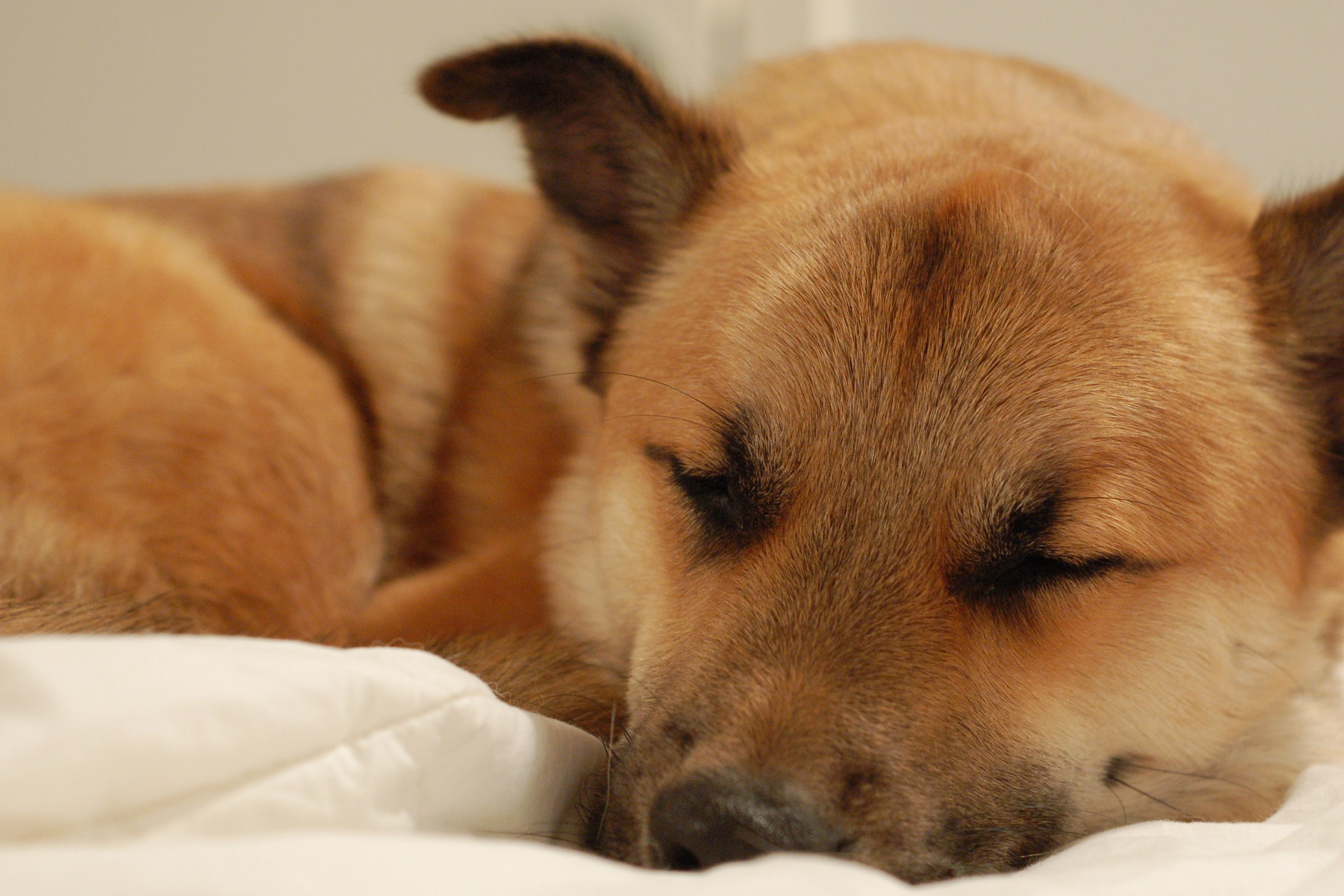
**The Effect of Bed-Sharing Between Owners and Dogs on Sleep: Research from the University of Toronto**
A recent investigation by the University of Toronto offers fascinating revelations regarding the impact of canine bed-sharing, particularly with huskies and malamutes, on the sleep of their owners. Contrary to widespread beliefs that pets may interfere with human rest, the research found no notable difference in sleep duration or quality, as measured by trackers, between owners who permitted their dogs on the bed and those who did not.
**Main Findings and Research Approach**
The study, released in PLOS One on October 7, 2023, included 25 human subjects and 38 dogs from southern Ontario. Participants were categorized into three groups according to their responses at the study’s conclusion: those who always allowed their dogs on the bed (four participants), those who sometimes did (ten participants), and those who never did (eleven participants). During the four-week study period, 777 sleep nights were recorded, showing no significant effect on overall sleep time or efficiency linked to bed-sharing practices.
**Comparison With Earlier Research**
Notably, these results challenge findings from a 2017 study by Patel and colleagues, which reported decreased sleep efficiency in dog owners whose pets shared their bed compared to those whose dogs rested elsewhere in the room. The Toronto researchers aimed to examine the reciprocal impact of owners and their dogs on each other’s sleep, monitoring both movements. Data revealed that in 22 pairs with applicable information, both parties stirred within a five-minute timeframe, predominantly initiated by the owner.
**Thorough Analysis and Study Constraints**
Lead author Ming Fei Li, now a postdoctoral associate at Duke University, emphasized the application of movement data to conclude that dogs were not substantially disturbing human sleep. However, the study encountered limitations, including a one-minute data sampling rate that might overlook more nuanced interactions. Additionally, the devices employed were not validated for distinguishing between sleep and wake states in dogs, potentially affecting perceptions of dog behavior.
Rebecca Spencer from the University of Massachusetts Amherst expressed concerns regarding the zero threshold for canine movement, indicating it could mistakenly interpret normal movements during dreaming as indications of wakefulness. Moreover, the influence of other human co-sleepers, who were not accounted for, might impact the findings.
**Generalizability and Wider Implications**
The study’s authors and affiliated experts warn against extrapolating the findings across all dog breeds, as the research concentrated on huskies and malamutes due to their genetic relation to wolves. In broader examinations, like a 2023 study on Finnish dogs, these breeds ranked lower in human sociability and insecurity compared to others. The study utilized the Pittsburgh Sleep Quality Index for subjective sleep evaluation, concluding no significant effect of bed-sharing on sleep quality and highlighting poorer self-reported sleep among owners with multiple dogs.
**Final Reflections**
The results challenge common narratives regarding pets as disruptors of sleep, indicating a more intricate relationship between pets and their owners during sleep. Despite statistical results indicating no significant effect of bed-sharing on sleep metrics, personal preferences and feelings of comfort and security, which were not measured quantitatively, may still shape individual sleep experiences. Future research could gain from more detailed data collection and a broader demographic range to enhance understanding of these interactions.