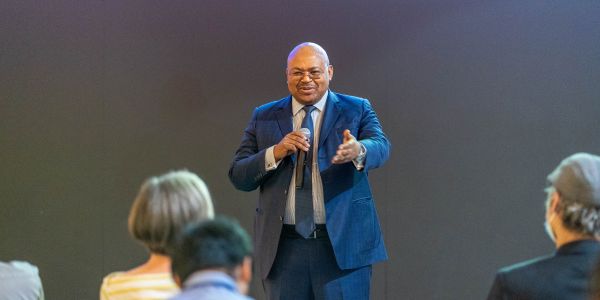
The Advanced Research and Invention Agency (Aria), a funding organization focused on high-risk, high-reward research, made headlines last year after granting £57 million for various initiatives centered on controversial climate cooling methods. Jamie Durrani interviewed Mark Symes, an electrochemist at the University of Glasgow, who leads this geoengineering initiative.
What initially drew you to the role at Aria?
I learned about the position through the Royal Society of Chemistry. An email informed me that the UK government had launched this new organization seeking programme directors, promising significant autonomy over these exhilarating new projects. I clicked through, and the presentation of the opportunity was remarkable. At first, I thought I was too busy—my academic career was demanding. However, I contemplated it during every free minute. My motivation stemmed from being convinced by the job advertisement that this was a fresh opportunity to make a meaningful impact at a scale unattainable in academia.
What distinguishes Aria from other funding organizations?
I greatly admire UKRI and their structure, which underpins much of the UK’s fundamental science, providing the foundation for initiatives like Aria. However, we take a slightly different approach; programme directors have a distinct vision, usually revolving around something that could be profoundly transformative for society or particularly difficult to tackle. We then assemble small teams around each programme director to address those critical issues in a manner that is unique in the UK – while the US has DARPA and ARPA-E with similar frameworks, Aria encompasses all R&D, including social sciences. This grants us the authority to investigate any area deemed significant using any appropriate methods to do so effectively.
We are here to fund groundbreaking projects that are unlikely to find financial support elsewhere.
What makes a proposal to Aria exceptional?
We aren’t interested in financing initiatives that another entity could or should support. Our purpose isn’t to rival UKRI but to pursue avenues that UKRI isn’t designed to tackle. Consequently, we receive numerous proposals better suited for the EPSRC, and our feedback typically reflects that: this is commendable, but it’s not for us. We focus on supporting transformational projects that have minimal chances of attracting funding elsewhere, either due to requiring special oversight, being highly interdisciplinary, or seeming overly ambitious, yet we have confidence in the credibility of the proposers. Our appetite for risk surpasses that of many other funding bodies, influencing the types of projects we choose to finance.
What responsibilities does the programme director position entail?
Programme directors engage with numerous individuals. The nature of conversations evolves over time. Initially, when I started at Aria, discussions largely revolved around educating myself about the current landscape, given my lack of expertise in climate interventions. The first few months were primarily about understanding existing research and identifying key stakeholders in the field. Gradually, the focus shifted more toward potential funding opportunities and methodologies, and now it leans toward exploring how the programme could operate and defining what success may entail—conversing with a wide array of professionals, from engineering academics to social scientists, policymakers, and media representatives. It’s broad in scope and feels both thrilling and impactful.
Why did you choose climate engineering for your programme?
I had originally proceeded through the entire application process with a completely different programme idea, centered around self-actuating polymers. Essentially, these polymers would consume fuel, oxidizing it spontaneously and actuating similarly to our muscles. Developing such materials could benefit swarm robotics. I was actually brought on board with that concept.
However, between accepting the position and starting, I experienced a change of perspective. I asked myself: what is the primary challenge of our time? While swarm robotics is intriguing, the existential threat we face is climate change. What if we fail to meet the Paris climate targets? Are we risking missing them? My research confirmed that yes, we are. What happens if we fail? Well, then we face dire consequences.
My chemistry background informed the decision to allow, under specific conditions, these outdoor experiments.
The climate cooling initiatives faced considerable backlash. Why pursue those projects?
We aimed to finance projects covering the entire spectrum of necessary activities required in research.