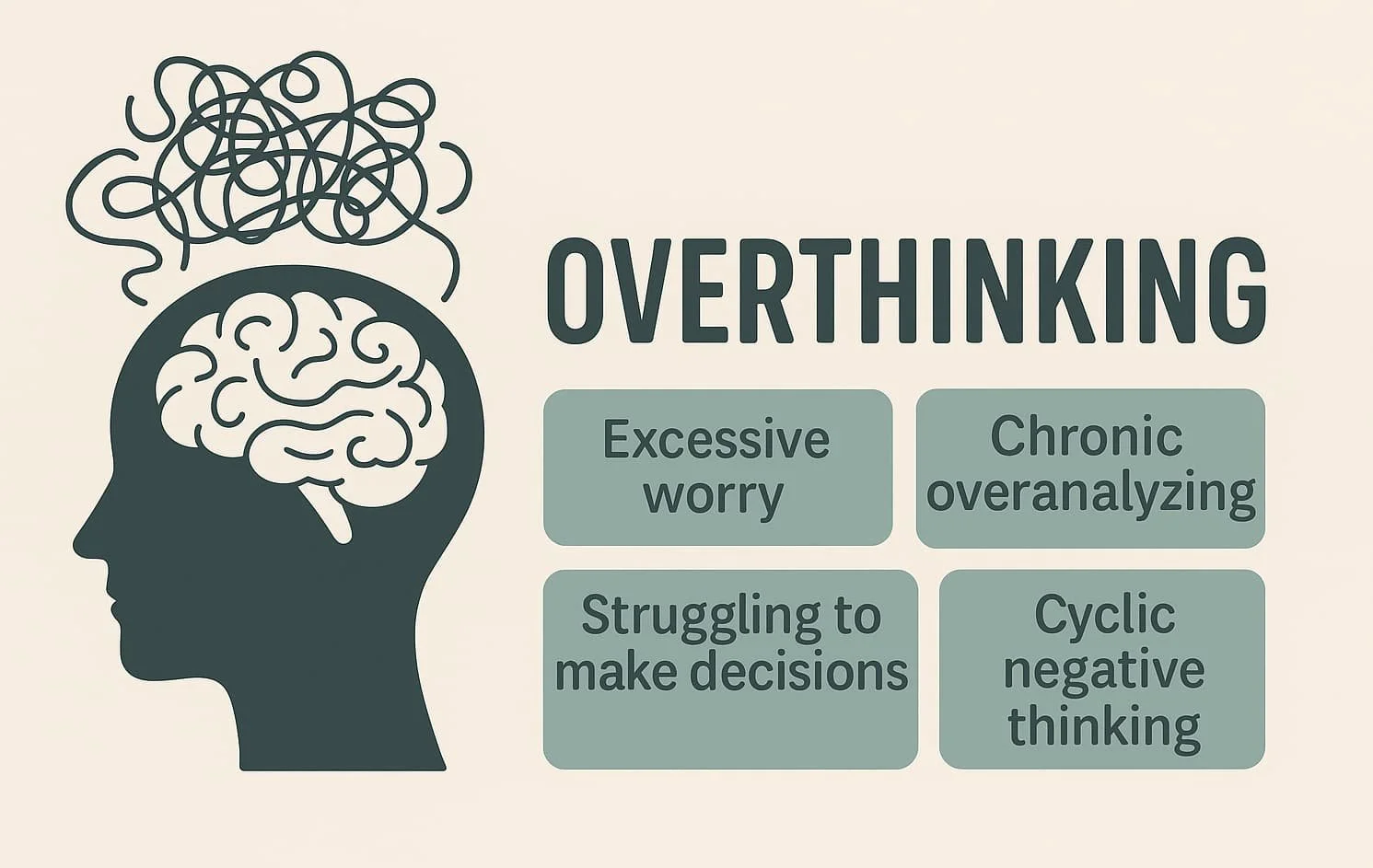
A nervous individual completes a test question. They are aware of the answer. Then they pause, re-evaluating. Thirty seconds later, their confidence diminishes. A minute thereafter, they believe they have failed. The additional time didn’t aid their clarity of thought. It provided their mind more space to imagine worst-case scenarios.
Women engaged in the same activity exhibit a different trend. Initial uncertainty, indeed. However, the more they linger on their decision, the more that uncertainty dissipates. Similar hesitation outwardly. Contrasting dynamics internally.
Researchers at University College London have conducted four experiments to uncover the reasons, and the findings aren’t linked to personality or social factors. It’s about computation. The two groups process information with different mental frameworks, both resulting in underconfidence but achieving it in distinct manners.
What Occurs in the Interval
Most psychological studies regard the interval between making a choice and expressing confidence as unproductive time. Dr. Sucharit Katyal’s team meticulously monitored this period. They examined 1,447 individuals through straightforward perceptual activities—more red dots versus blue dots, and similar tasks—measuring not just the confidence ratings but also how long participants waited before providing them.
For participants with high anxiety, extended pauses led to decreased confidence. Conversely, for women, it was the opposite.
“We found two distinct forms of underconfidence,” states Katyal. Same outcome, different sources.
Negative Drift
The researchers applied drift-diffusion modeling, originating from neuroscience, to replicate how evidence is gathered in the brain. Typically, once a decision is made, the accumulation of evidence halts for most people. The conclusion is reached.
Not so for anxious participants. Their brains continued to gather evidence even after the task was completed, but the new information was flawed. Biased. Laced with negativity. The technical term is “negative drift,” which doesn’t fully capture its severity: your mind persistently contests your own conclusions even when there are no grounds left to challenge.
The longer an anxious individual contemplated, the more their metacognitive efficiency deteriorated. This term describes how accurately your intuitive sense of performance aligns with reality. Anxiety transformed that intuitive sense into noise.
Thresholds, Not Spirals
Women exhibited no negative drift whatsoever. Uncertainty peaked right after a choice was made, then diminished. No overthinking. No fabricated disasters. Just a stricter benchmark for what qualifies as “confident.”
The model indicates that women aren’t misinterpreting their performance. They are utilizing a stricter conversion method when translating “I believe I succeeded” into a numerical value. Additional time allowed them to verify the actual evidence rather than rely solely on instinct.
Importantly, non-anxious women maintained normal metacognitive efficiency. Cautious, not inaccurately calibrated.
“By uncovering the mechanisms behind these biases, we may be able to develop targeted interventions,” says Professor Steve Fleming, a co-author at UCL. “For instance, assisting anxious individuals in halting the buildup of negative self-assessments.”
The practical takeaway applies in both directions. Anxious individuals may perform better by trusting their initial responses before the spiral commences. Women—or anyone experiencing threshold-based doubt—could gain from intentionally slowing down. One visible issue, two unseen processes. In a hiring context or an operating room, understanding the type of doubt present might be more significant than the doubt itself.
DOI: https://doi.org/10.1017/S0033291725102808
If our reporting has educated or inspired you, kindly consider making a contribution. Every donation, regardless of size, enables us to keep delivering precise, captivating, and reliable science and medical news. Independent journalism necessitates time, effort, and resources—your support guarantees we can continue revealing the stories that matter most to you.
Join us in making knowledge accessible and significant. Thank you for your support!