Every collision of black holes in the universe produces ripples throughout spacetime. Most of these ripples are too weak and originate too far away for any Earth detector to capture. Yet, they exist — a form of cosmic background noise, an unresolved hum arising from billions of distant disasters. Now, a group of physicists believes that this hum, or rather the absence of it, could reveal essential details about the universe’s size and age.
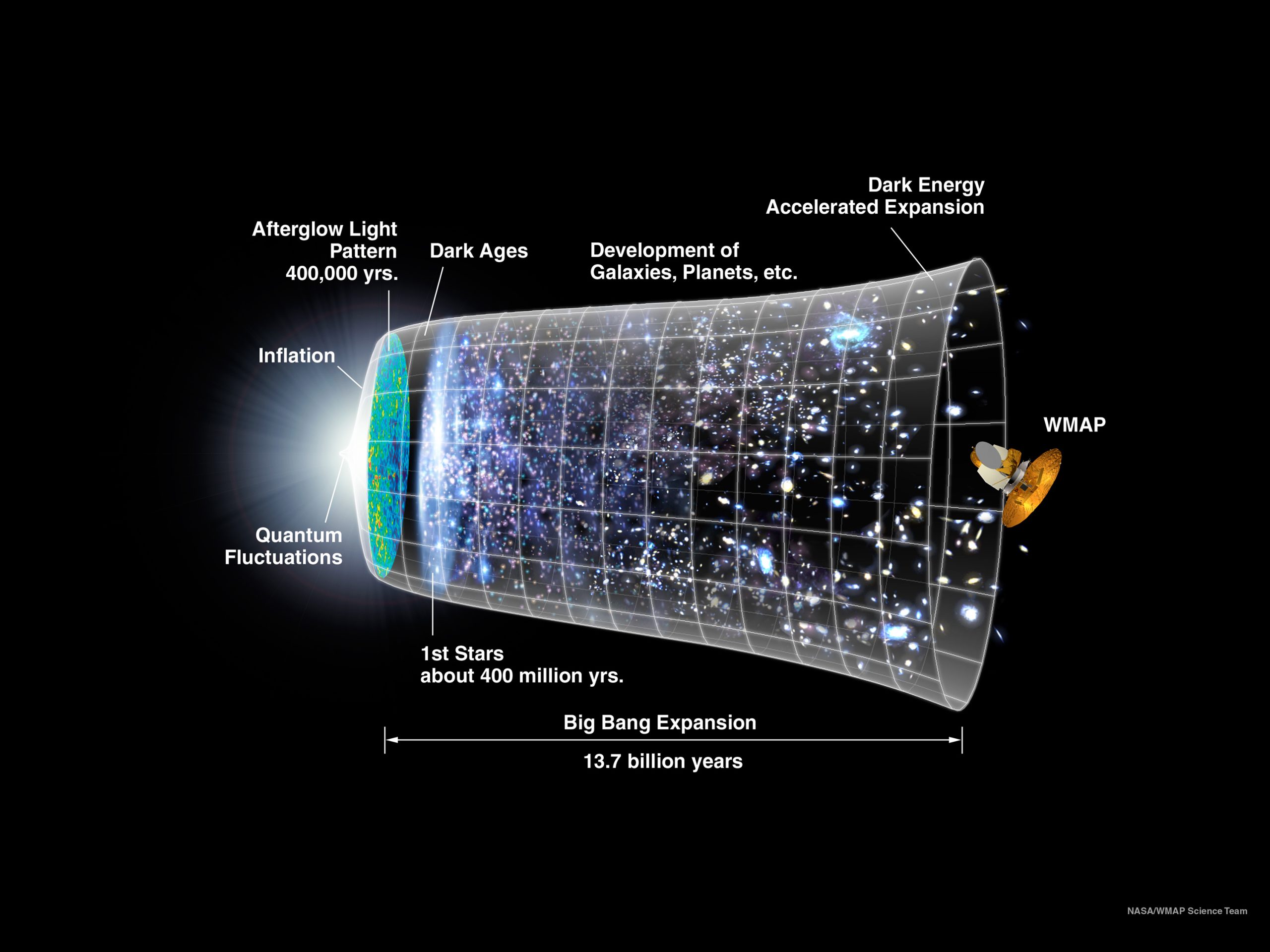
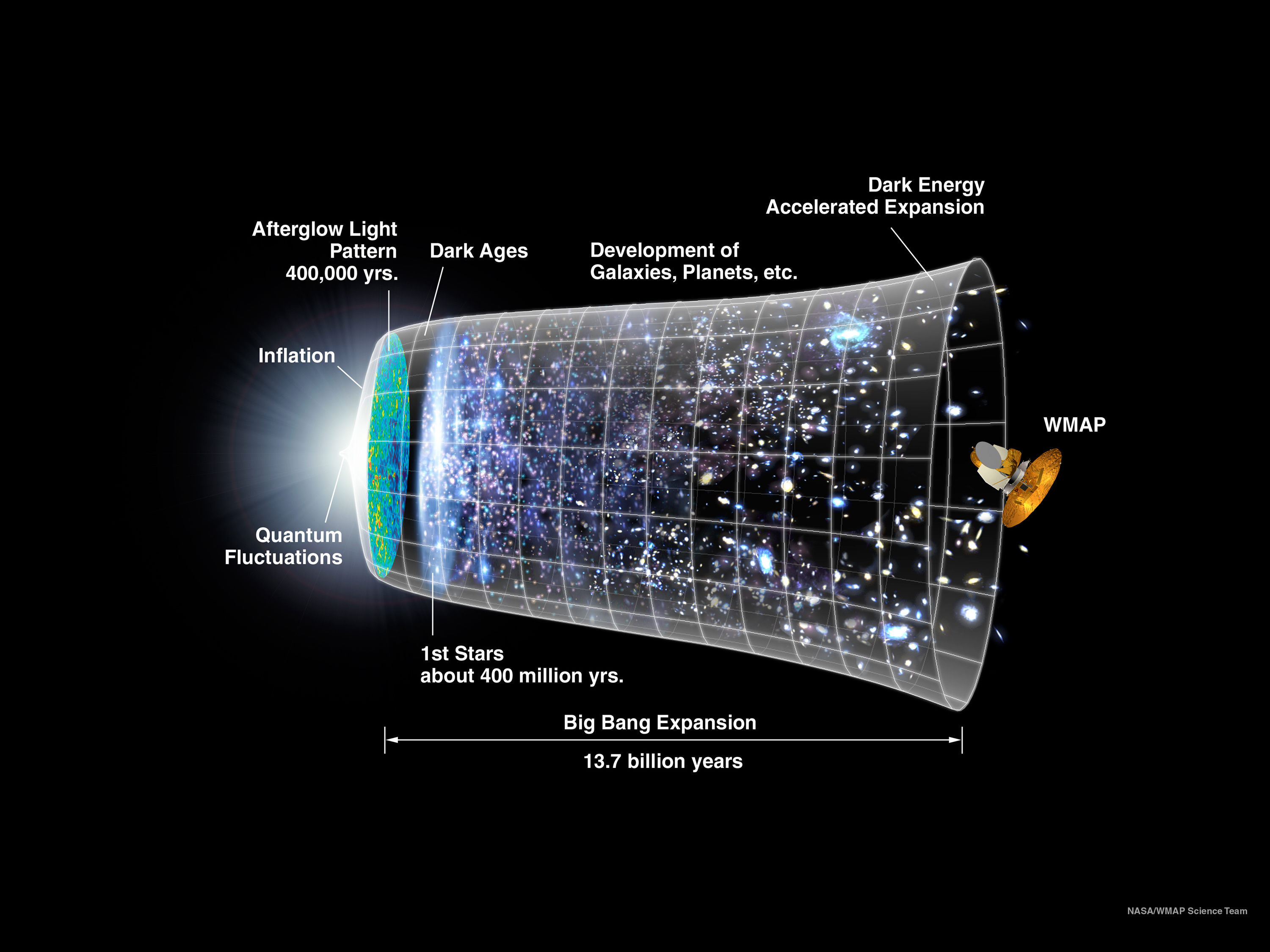
The challenge they face is known as the Hubble tension, a term that fails to convey its importance. For nearly a century, cosmologists have been quantifying the rate at which the universe is expanding — a value referred to as the Hubble constant. The complication arises because two distinct methods of measuring it yield different results. Calculations stemming from the early universe, utilizing the cosmic microwave background, indicate a slower expansion rate compared to measurements derived from nearby supernovae and other late-universe indicators. The discrepancy between the two is small — perhaps ten percent — yet it persists stubbornly. This suggests either inaccuracies in some measurements or a truly unusual phenomenon occurring in cosmic physics.
“It’s not every day that you develop an entirely new tool for cosmology,” states Daniel Holz, a physicist at the University of Chicago involved in the new research. “We demonstrate that by leveraging the background gravitational-wave hum from merging black holes in far-off galaxies, we can gain insights into the age and makeup of the universe. This represents an exciting and entirely novel path.”
The concept builds on a previously established method. When two black holes spiral together and merge, they create a flash of gravitational waves — ripples in spacetime that propagate outward at light speed, eventually reaching Earth. The global array of gravitational wave detectors under the LIGO-Virgo-KAGRA collaboration has now identified hundreds of such occurrences. From each one, physicists can directly determine the merger’s distance. By pairing that with the speed at which the source is moving away from us due to space’s expansion, one can derive an independent estimate of the Hubble constant, referred to as the standard siren method.
The challenge lies in the recessional velocity — the rate at which that segment of space is moving away from us. It can’t be measured directly from the gravitational waves. To accomplish this, you must locate the host galaxy using optical telescopes, a challenging task, or identify another electromagnetic counterpart to the event, which is even more difficult. Progress has been slow.
What Bryce Cousins, a graduate student at the University of Illinois Urbana-Champaign and lead author of the new paper, and his colleagues discovered is that one can extract information from mergers that are not visible, in addition to those that are. “By observing individual black hole collisions, we can ascertain the rates of these collisions happening throughout the universe,” Cousins elaborates. “We anticipate there are many more events we can’t observe, which is termed the gravitational-wave background.”
Consider it this way. You are at a loud party, and you can hear a few distinct conversations around you. Beneath those, you can faintly perceive the general hum of everyone else speaking simultaneously. The gravitational-wave background is that hum — thousands upon thousands of distant mergers whose individual signals merge into collective noise.
This is where the Hubble constant becomes relevant. The intensity of that hum relies on the volume available for collisions to occur. A lower value for the Hubble constant implies a smaller observable universe — lesser total volume, greater density of mergers, stronger background signal. Conversely, a higher Hubble constant means increased volume, lower density, and a weaker signal. Therefore, if you quantify the strength of the background, or even if you just establish an upper limit by not detecting it at all, you gain insights into which values of the Hubble constant are or aren’t feasible.
The team dubbed their method the stochastic siren method, named for the randomness — technically, stochasticity — in the distribution of background mergers. When applying it to existing LIGO-Virgo-KAGRA data, which has yet to detect the background, they found that the mere absence of detection was sufficient to eliminate certain slower expansion rates. Together with measurements from distinctly detected mergers, it repositioned the overall estimate of the Hubble constant into the range where the tension is evident — marking, for the first time, a gravitational-wave measurement that directly examines the contested region.
Nicolás Yunes, an Illinois physics professor and co-author who is the founding director of the Illinois Center for Advanced Studies of the Universe, expresses the significance clearly. “This finding is of great consequence — it’s crucial to obtain an independent measurement of the Hubble constant to address the ongoing Hubble tension. Our method presents an innovative approach to enhance the precision of Hubble constant estimations utilizing gravitational waves.”