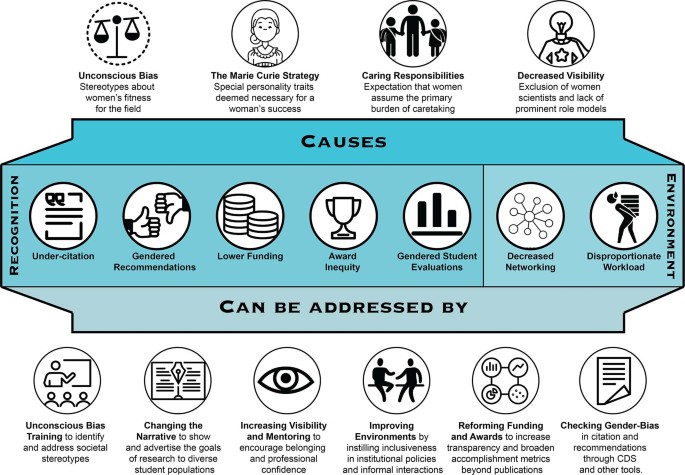
Women still experience notable underrepresentation in scientific organizations relative to their proportion in the global workforce, as pointed out by a recent report from the International Science Council, the InterAcademy Partnership, and the Standing Committee for Gender Equality in Science. The report highlights that women constitute an average of merely 19% of national academy memberships, with less than a fifth of these organizations led by women. This inequality signals a lack of acknowledgment for women’s contributions in the scientific realm.
National academies and international unions play pivotal roles in shaping the scientific environment, affecting global research priorities and setting standards for scientific practice. Despite women representing 31% of global scientific researchers, their presence in influential scientific organizations is markedly low. Although there is a gradual improvement, substantial underrepresentation continues, particularly in areas like chemistry and physics.
The report assessed 136 organizations and 598 scientists, uncovering that the disparity is most pronounced in national academies, where distinguished scientists are appointed to enhance research standards and counsel governments. Even though there has been a rise in women’s representation from 12% in 2015 to 19% now, these figures are still inadequate. For example, the UK’s Royal Society indicates that only 14% of its fellows are female, and merely one-fifth of the surveyed academies are directed by women, with nearly half having no women in leadership positions.
This underrepresentation frequently results from informal gatekeeping in nomination and evaluation procedures, where while formal processes are accessible, women are underrepresented in nomination pools. Systemic obstacles, such as caregiving duties and harassment, further impede women’s advancement. Drug discovery chemist Kate Harris from the University of Newcastle emphasizes these issues, expressing her astonishment at the extent of these challenges and noting that equality frameworks exist but lack effectiveness.
Once nominated, women have fair prospects of securing positions, illustrating that structural challenges rather than overt restrictions are central to membership diversity. International unions, which do not depend on nominations for membership, exhibit varied female participation rates ranging from 14% to 59%, based on the discipline. The International Union of Pure and Applied Chemistry (Iupac) reported a 33% female membership and 40% of leadership roles occupied by women.
The Royal Society and Iupac recognize the findings from the report and have begun policy reforms to tackle barriers hindering women’s progress. A spokesperson from the Royal Society underscored the necessity for renewed efforts throughout the academic pathway, highlighting inclusion initiatives like nomination committees. Likewise, Iupac President Mary Garson emphasized the significance of retaining diverse talent and ensuring openness in decision-making processes to enhance women’s acknowledgment and advancement in science.