**Exploring Alternatives to Fossil Feedstocks: Innovations and Disruptions**
The ongoing conflict between the US and Israel with Iran has exacerbated a crisis in the availability of fossil-based oil and polymer feedstocks. The disrupted production and transportation through the Strait of Hormuz have markedly diminished, affecting petrochemical and polymer manufacturers worldwide, including in regions such as Asia and Europe. This uncertainty has rekindled interest in alternative feedstocks, underscoring recent progress in oils obtained from chemically recycled waste plastic as significant advancements.
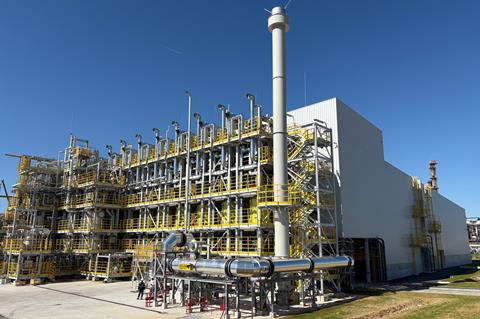
Neste, a frontrunner in biofuels and chemicals, has achieved a significant milestone by launching what it claims to be the largest facility in the world for upgrading liquefied waste plastic at its refinery in Porvoo, Finland. This cutting-edge unit aims to process up to 150,000 tonnes per year of raw oil from pyrolysis and chemical recycling methods, such as Neste’s Alterra reactors. The procedure entails catalytically enhancing the material into a usable feedstock for petrochemical steam crackers, acting as a direct substitute for conventional petroleum. The facility’s construction commenced in 2023 and is expected to complete by the end of 2025, with output scaling dependent on market conditions and legislative influences.
In France, Plastic Energy has commenced the production of pyrolysis oil from its fourth chemical recycling facility developed in partnership with Total Energies. This plant, which has the capacity to manage 15,000 tonnes of plastic waste yearly, transforms this waste into Tacoil feedstock, which can subsequently be refined at Total Energies’ petrochemical installations. Plastic Energy operates similar facilities in Spain and the Netherlands.
On a smaller scale, Clariant, in collaboration with Borealis and Sintef, successfully trialed a pilot upgrading facility at Sintef’s research center in Norway. Clariant’s hydrotreatment technology proved capable of fully saturating dienes and removing impurities, thereby generating a feedstock that meets Borealis’s refining specifications.
While still in the early stages of development, chemical recycling of plastics presents several potential benefits. It can process mixed materials that are challenging for traditional recycling methods, resulting in feedstocks compatible with current production systems and generating materials with characteristics similar to virgin polymers. However, it is more energy-consuming than mechanical recycling, and not all input materials are transformed into new polymer feedstock—a portion generally converts to low-grade hydrocarbons, often used as fuel for the process. This approach has initiated intricate regulatory discussions and has faced critiques from environmental advocates.
Recently, this technology received a regulatory endorsement from a change in EU policy allowing certain chemically recycled inputs to count toward recycled content targets, utilizing a mass-balance method. This approach considers the overall quantity of recycled feedstock used alongside fossil feedstocks rather than precisely monitoring recycled content throughout the entire manufacturing process. Furthermore, the US is contemplating regulatory amendments that would cease to classify pyrolysis plants as incinerators under the Clean Air Act, a change welcomed by industry stakeholders.
Chemical recycling shows potential but necessitates considerable advancements to significantly affect the decrease of plastic waste. Nonetheless, evolving technological and regulatory landscapes suggest a move toward establishing a circular plastics economy.