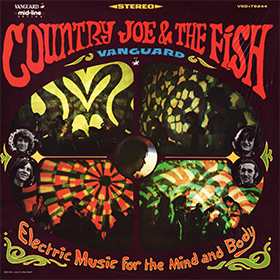
On March 7th, Joseph Allen McDonald, widely recognized as Country Joe, passed away from complications related to Parkinson’s in Berkeley, California. Country Joe, a musician, songwriter, singer, and political activist, had a profound influence on my life through his music and principles.
In 1966, following the tragic loss of my mother, life took a dark turn. My brother had already left home to marry and start a family. In his footsteps, my two older sisters began their careers, leaving me alone with my father. We moved to London for his work, and I was placed in the boarding house of my grammar school in Colchester. This time marked the start of my descent into disillusionment, culminating in my expulsion during the 1968/69 academic year.
After my expulsion, my father enrolled me in Holland Park Comprehensive School, a respected institution favored by numerous influential families. Despite its large size, the school had a small sixth form mainly consisting of students, like me, who had been expelled from other prestigious schools.
Living with my father and stepmother in central London, I soon became friends with a student who introduced me to DSK, a fellow rebel known for his psychedelic escapades. DSK and I embraced a lifestyle characterized by frequent LSD use, exploring the vibrant streets of Soho on euphoric journeys. Our mutual musical interests led us to attend concerts and immerse ourselves in the captivating soundscapes of that time.
Two albums that had a significant impact on me were the Grateful Dead’s “Live Dead” and Country Joe and the Fish’s “Electric Music for the Mind and Body.” The latter sparked my enduring affection for Country Joe’s music.
The era of grand rock festivals provided an exhilarating experience in 1970, as I set off for the Bath Festival of Blues and Progressive Music primarily to see Country Joe perform. My job at the Fitzroy Tavern helped finance my journey to Shepton Mallet. Each act delivered spectacular performances, culminating with Country Joe’s unforgettable set in the rain, captivating a huge audience with his charm and moving melodies such as “Fixin’ to Die Rag” and the touching “Jean Desprez.”
Eventually, I made my way to University College Cardiff to study archaeology, inspired by connections from an archaeological dig in Usk. My engagement with the Student’s Union thrived as I took on various roles in organizing events, despite academic challenges stemming from my psychedelic indulgences.
In 1973, the Paris Sessions album by Country Joe introduced a new facet of his artistry, and his concert in Cardiff was a memorable experience. My responsibilities as concert manager led to a meaningful personal interaction with Country Joe, where we exchanged views over drinks and cannabis.
Years later, a duo concert featuring Country Joe and Barry Melton revived fond memories. In 1976, witnessing the original lineup of Country Joe and the Fish perform before Bob Marley in Cardiff was another highlight, with the pouring rain adding a nostalgic touch reminiscent of Bath.
In 2015, during SciFoo at Google in Mountain View, a chance conversation revealed Country Joe as a neighbor of Eugenie Scott, the esteemed executive director of the National Council for Science Education. This connection stirred a well of memories and nostalgic reflections on the significant influence of Country Joe’s music in my life.
Although Country Joe has passed away, his legacy lives on in the grooves of four treasured copies of “Electric Music for the Mind and Body,” each resonating with memories of a transformative era.