Senses are the means by which our brains perceive our surroundings. Many of us were taught in school that humans possess five senses — sight, sound, smell, taste, and touch. We also learned that various animals possess similar senses, albeit within different ranges. For instance, while humans can perceive red, green, and blue light, numerous bird species can detect not only these colors but also UV light; conversely, dogs can only see yellow and blue light. Meanwhile, humans can hear frequencies up to approximately 23,000 Hz, while dogs are capable of hearing sounds up to 45,000 Hz. Nevertheless, these are not the sole five senses. Depending on how one defines a sense, many scientists believe humans have at least nine, with some even suggesting there are several dozen! Moreover, many other animals possess additional senses as well. Here are just a few of these senses.
### Awareness of Your Body
Proprioception refers to the capacity to perceive your body’s position, while kinesthesia pertains to sensing its movement. These senses assist in maintaining your balance and applying the right amount of force for your daily activities. The capability to walk with your eyes closed is due to the fact that proprioception and kinesthesia do not depend on visual input. Rather, they depend on sensory organs in your muscles known as spindles. Each muscle spindle is wrapped around muscle fibers. When a muscle is extended, the spindles send information regarding the length and velocity of the stretch to your spinal cord and brain, which utilize this data to determine your body’s position.
### Pain
The experience of physical pain is referred to as nociception. When your tissue sustains damage from an injury, pain receptors known as nociceptors become activated and transmit an electrical signal via a nerve to your spinal cord. The nerve fibers responsible for carrying pain signals differ from those that transmit information about proprioception and touch. Once the spinal cord receives the signal, it may prompt a reflex reaction, such as withdrawing from the source of pain. Simultaneously, your spinal cord sends signals to your brain, enabling it to process these signals and make you aware of the pain. This awareness aids you in avoiding the source of pain in the future.
### Temperature
Humans possess a variety of thermoreceptors that can perceive warmth, cold, or both. Information about temperature travels on the same nerve fibers as pain signals do. This explains why extreme temperatures can be perceived as painful.
### Balance
Our balance sense is dependent on the vestibular system found in the inner ear. This system includes three semicircular canals filled with fluid containing hair cells that detect the movement of this fluid. Each canal is specialized for sensing balance in a unique direction.
### Echolocation
Humans have depth perception due to possessing two eyes that view the world from different perspectives. This allows the brain to gather sufficient information to assess distance. However, numerous animals, particularly nocturnal and burrowing species, cannot depend on vision to identify obstacles. These creatures, including certain bats, toothed whales (like dolphins), and small mammals employ echolocation to measure distance. An animal utilizes echolocation by emitting a series of clicking sounds and interpreting the echoes of these sound waves bouncing off obstacles. Since sound requires time to travel, animals can ascertain their distance from an obstacle based on how long it takes for the sound to return. Bats utilize echolocation to hunt and navigate around obstacles, producing extremely high-pitched sounds, typically beyond the human hearing range, and increasing the speed of their clicks as they approach their prey for greater precision. Toothed whales, including dolphins, also employ echolocation for similar reasons. These marine mammals possess a melon, a fat deposit on their head, which enhances the clarity of the reflected sound waves. Interestingly, humans can learn to echolocate, which can assist visually impaired individuals in sensing their environment.
### Electricity
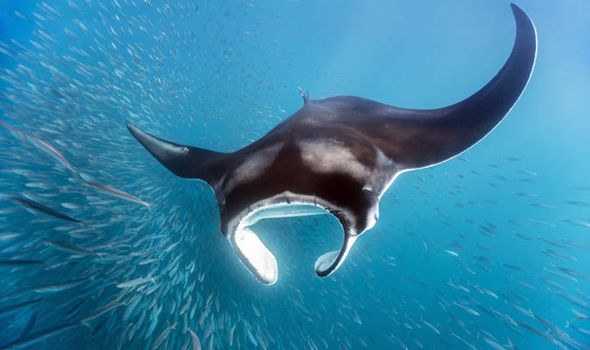
Electroreception is primarily found in aquatic creatures due to the high resistance of air to electricity, making it challenging to detect any current. Some animals that utilize electroreception include sharks, rays, various fish species, and bees. Sharks and rays, in particular, have electroreceptors known as ampullae of Lorenzini embedded within their skin. These sensory organs can sense the electrical currents from their prey, even if it is concealed beneath the sand. Additionally, some fish species use electricity for communication purposes. Moreover, bees utilize electroreception to detect currents emitted by flowers.
### Magnetic Fields
Birds, turtles, bees, and many other animals can perceive the Earth’s magnetic field, aiding in annual migrations and navigation in the ocean. Scientists have not fully unraveled how this sense, termed magnetoreception, functions. One primary hypothesis is that animals detect the orientation of the field lines with the help of the protein cryptochrome in their