It is a recognized truth that medieval Islamic science achieved extraordinary advancements and later faced a decline, presenting an intriguing story for science historians. A widely believed misconception in this realm is the idea that Abū Ḥāmid Muḥammad ibn Muḥammad Ghazālī Ṭūsi, commonly known as Al-Ghazali (c.1058–1111), undermined Islamic science with his work, “Tahāfut al-Falāsifa” (“The Incoherence of the Philosophers”). This notion, frequently perpetuated by individuals like Neil deGrasse Tyson, has been disproved by historians and academics, including Tim O’Neill on his blog “History for Atheists.” He challenges the assertion that Al-Ghazali brought an end to Islamic science, supported by the vibrant scientific endeavors that continued long after Al-Ghazali’s time, such as the 15th-century observatory of Ulugh Beg in Samarkand. Sally P. Ragep underscores the flourishing mathematical and astronomical research in Samarkand, with hundreds of students and many scholars actively participating in the scientific dialogue.
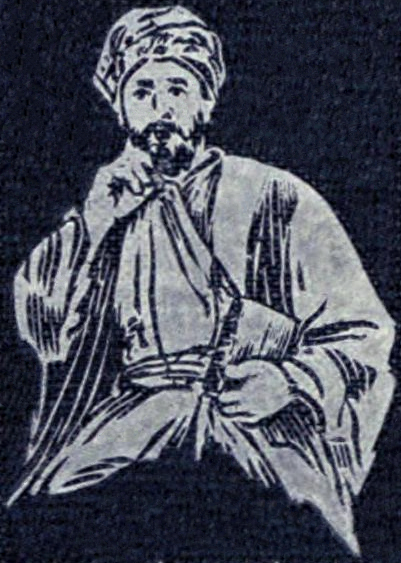
Additional empirical support is found in a review of fifteenth-century Islamic astronomical literature, documenting the contributions of around 120 authors resulting in approximately 489 treatises. These writings, represented by thousands of manuscripts, encompass both practical and theoretical topics, including cosmology, instruments, guides, tables, calendars, timekeeping, and astrology. This illustrates the vast scientific enthusiasm and scholarship that thrived in the medieval Islamic context, effectively disproving the myth that Al-Ghazali’s philosophical critiques halted the advancement of Islamic science.
Sally P. Ragep, Fifteenth Astronomy in the Islamic World, in Rivka Feldhay & F. Jamil Ragep eds., Before Copernicus: The Cultures and Contexts of Scientific Learning in the Fifteenth Century, McGill-Queen’s University Press, 2017, pp. 143-160, p. 144