The enigma of the Mary Celeste, regarded as one of the most fascinating maritime mysteries of the 19th century, may have received a reasonable explanation through research conducted by chemists Jack Rowbotham and Frank Mair at the University of Manchester, UK. Their study suggests that a swift explosion of ethanol vapors aboard could clarify why the ship was discovered deserted but intact in December 1872. Detected off the Azores coastline with its cargo largely undisturbed, the Mary Celeste’s captain, his family, and the crew were missing, igniting theories that ranged from piracy to paranormal occurrences.
The vessel was transporting approximately 1,700 barrels of potent industrial ethanol meant for wine fortification, nine of which were discovered to be empty. Rowbotham and Mair indicate that porous wood may have facilitated some ethanol leakage and evaporation. When combined with turbulent weather that compelled the crew to secure the ship’s hatches, the confined vapors could have overheated beyond their flashpoint as the ship entered warmer waters. A small spark, potentially from a smoking pipe or metal friction, might have ignited the vapor, resulting in a sudden explosion that would either compel the crew to flee the vessel or catapult them overboard without leaving any apparent damage.
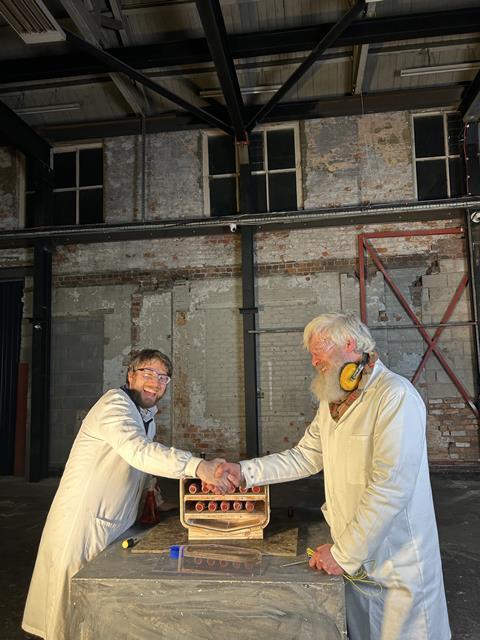
The chemists evaluated their theory by utilizing a scale model of the Mary Celeste, effectively mimicking conditions that would trigger an explosion without combusting or scorching the ship’s wood. Their results correspond with a previous experiment by Andrea Sella using alternative materials and scenarios, providing a captivating narrative of the unfortunate incidents that may have transpired on the Mary Celeste.
This groundbreaking methodology not only illuminates a historical conundrum but also acts as an instructional resource to encourage scientific exploration and comprehension of chemical reactions. As stated by Rowbotham, although the specific consequences remain unclear, the evidence advocates a robust argument for this novel theory regarding the Mary Celeste’s abandonment.