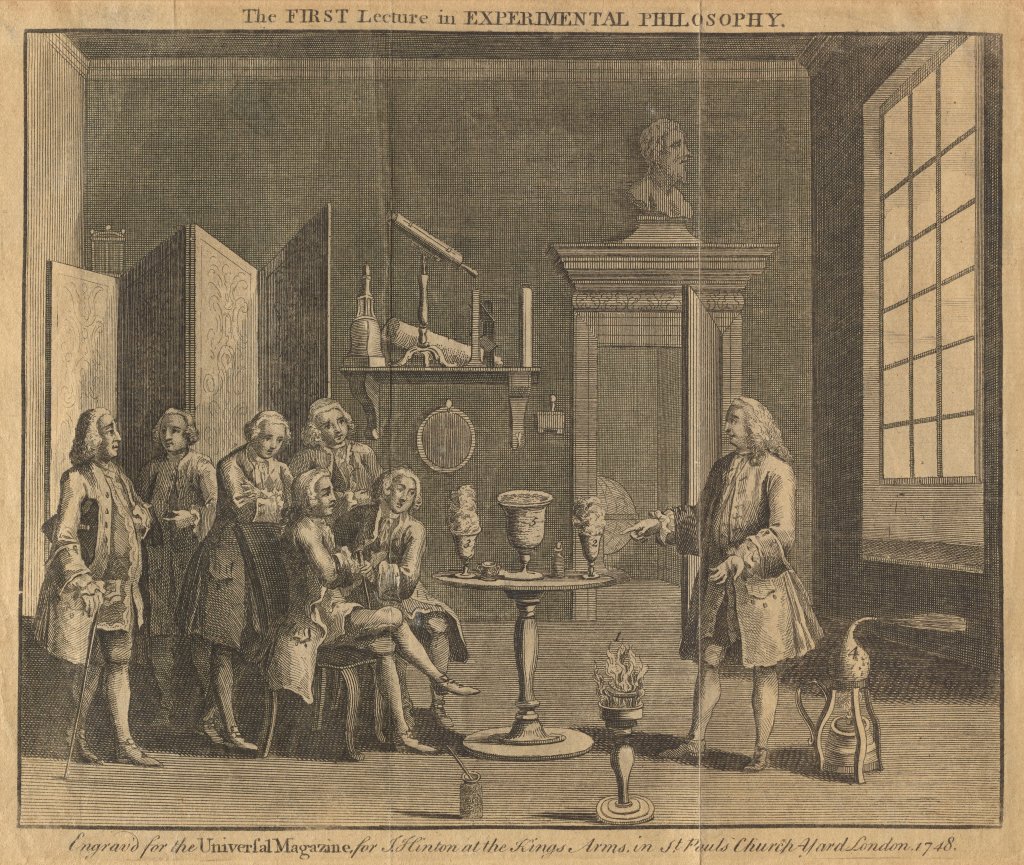
1023 days prior, a fascinating journey commenced, charting the development of physics from Aristotle’s τὰ φυσικά to the point where the term “physics” assumed its contemporary meaning. Now, in its sixty-fourth episode, this exploration reaches its conclusion. Initially, the inquiry investigated the word “physics,” tracing its Aristotelian origins and its evolution over the ages to its current interpretation, which was officially acknowledged in 1715.
The emergence of the term physics, while not directly associated, is certainly linked to the release of Newton’s “Principia.” Although its title includes “Philosophiæ Naturalis” or “Natural Philosophy,” it was “Principia Mathematica,” or “Mathematical Principles,” that represented a significant shift. Aristotle’s “ta physika,” referring to the study of nature, avoided mathematics, as numbers were not perceived as natural entities capable of describing nature. Mathematics was reserved for subordinate fields such as astronomy and optics, not natural philosophy. In contrast, Newton’s depiction of nature was inherently mathematical, a fact criticized by his contemporaries Huygens and Leibniz, who noted that Newton’s gravity lacked a concrete physical explanation.
Regardless of these critiques, Newton’s mechanics gained popularity, evolving into the widely accepted standards known today as classical or Newtonian mechanics. However, contemporary Newtonian physics diverges from Newton’s original theories. Initially, mathematicians on the continent supplanted Newton’s analytical Euclidian geometry with Leibniz’s calculus and later with Lagrange’s notation. Conversely, British mathematicians adhered to the complex Newtonian analysis, leading the Analytical Society campaign at Cambridge to humorously champion “d-ism over the dot-age,” a witty phrase coined by Charles Babbage.
Newton merged the astronomical perspectives of Kepler and Borelli with advances in mechanics from prominent figures such as Stevin, Beeckman, Galileo, Borelli, Descartes, and Huygens to formulate an integrated terrestrial-celestial mechanics. Nevertheless, even as he amended his masterpiece in successive editions, it remained flawed, particularly in comet theories, which were further refined by Edmond Halley in 1706.
The eighteenth century saw additional developments within Newton’s framework, chiefly outside Britain, where the high regard for Newton’s contributions hindered advancement. The Swiss Bernoullis and Leonard Euler, the Italian Joseph-Louis Lagrange, and French scholars including Pierre Simon Laplace, Adrien-Marie Legendre, Jean le Rond d’Alembert, Pierre Louis Maupertuis, and Émilie du Châtelet made notable progress.
Daniel Bernoulli advanced kinetic theory and hydrostatics. Laplace’s celestial mechanics successfully addressed the lunar orbit problem in his “Exposition du système du monde” and the extensive “Traité de mécanique céleste,” solidifying the legacy of Newtonian mechanics.
In the midst of these advancements, energy and work emerged as pivotal concepts. Newton identified kinetic energy as mv, while Johann Bernoulli and Leibniz suggested mv², supported by Willem ’s Gravesande’s experiments. Émilie du Châtelet endorsed Leibniz’s theory, propelling energy research forward.
The word “work” was first utilized in 1826, though Descartes broached the topic as far back as 1637 in discussions with Huygens, defining it in modern terms as energy transfer through force and displacement. Leibniz expanded on this in 1686. John Smeaton conducted experiments on power and kinetic energy, advocating for the conservation of energy and supporting Leibniz’s mv², which sparked contention within the Royal Society. His definition closely paralleled Gaspard-Gustave de Coriolis’s formulation in the 1829 “Calcul de l’Effet des Machines.”
By the nineteenth century, classical physics, based on Newtonian foundations, was well-established, although optics, magnetism, and electricity only fully integrated with the explorations of electromagnetism and spectrum discovery by Michael Faraday and James Clerk Maxwell. Maxwell’s Equations, refined by Oliver Heaviside, signaled the decline of Newtonian physics and ushered in Einstein’s relativistic physics, marking a substantial shift in the comprehension of the physical universe.