The instrument was never intended for kids. The Klemera-Doubal Method, a formula derived from blood chemistry and cardiovascular information, was created to assess biological age in adults, indicating whether an individual’s body is aging more rapidly than their birth certificate indicates. Researchers at Penn State have now undertaken something quite unique with it: they’ve modified it for children aged 8 to 13, incorporating data from 461 children, and focused it on one of the most challenging questions in child health. Can abuse leave a discernible physiological mark, something identifiable in blood and blood pressure, within just a year of the damage occurring?
The response appears to be affirmative. Although the narrative is more intricate than that straightforward term suggests, and significantly more captivating.
The research, published in Molecular Psychiatry, utilized the Penn State Child Health Study, a comprehensive longitudinal project enrolling children with and without recorded experiences of maltreatment investigations. Most children in the neglected group had been scrutinized by county child welfare agencies within the last year. Families arrived early in the day at a research center, fasting, for blood sampling and health assessments; the nine biomarkers ultimately chosen varied across blood cell composition, cholesterol levels, systolic blood pressure, and heart rate. Since no reference standard existed for children regarding these metrics, the researchers had to construct one from the ground up, aligning participants by age, gender, race, and ethnicity against data from the National Health and Nutrition Examination Survey, a large national study that gathered comparable physiological information from children with no recorded welfare involvement.
The findings of the comparison depended significantly on the type of maltreatment a child had suffered. And on whether the child was male or female.
Two Distinct Signatures
Physical abuse was linked to what researchers refer to as homeostatic dysregulation, approximately the body’s ability to maintain its internal systems operating steadily within normal limits. Children who had endured physical abuse exhibited greater deviation from the normal physiological profile for their age group. Exposure to various types of maltreatment, referred to in the study as polyvictimization, was connected with even more dysregulation, but solely in boys. Girls with comparable histories of polyvictimization exhibited no equivalent indication. The reason for this gender difference remains unclear; one possibility is that boys and girls are at different developmental stages during the 8-to-13 age range, and the timing of maltreatment exposure in relation to developmental phase may be crucial.
Sexual abuse revealed an entirely different pattern. In boys, it was associated not with expedited biological development, as some earlier theories might have anticipated, but with something closer to the opposite: a younger physiological age, indicating delayed development relative to peers. “Boys demonstrated a reduced ability to regulate their bodies’ internal systems following specific types of abuse,” stated Idan Shalev, associate professor of biobehavioral health and the principal author of the study.
This finding contradicts a prominent concept in evolutionary biology known as the disposable soma hypothesis, which posits that organisms under stress will redirect energy toward growth and reproduction instead of long-term bodily upkeep. When applied to child development, this framework would suggest that maltreatment hastens maturation, steering the body toward earlier reproductive preparedness at the expense of long-term health. The Penn State data, at least for boys experiencing sexual abuse, indicates that something rather different is at play, although Shalev and his colleagues are cautious to highlight a complication: it’s possible the relationship may be reversed. Less physiologically mature boys might, for reasons not yet understood by researchers, be more susceptible to sexual abuse initially.
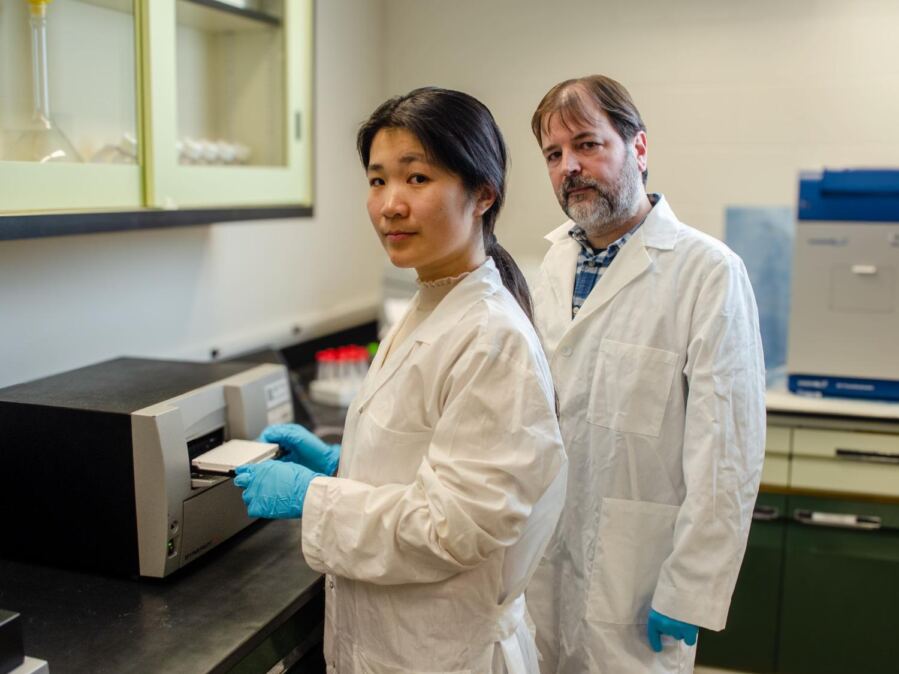
“Genetic information can disclose a lot about an individual,” mentioned first author Qiaofeng Ye, who earned her doctorate at Penn State and is now a postdoctoral researcher in Shalev’s lab. “Yet to make that information beneficial, we must comprehend how it is expressed and connected to specific health outcomes, so that we know how and when to assist individuals.” She described the Physiological Age Index as enabling the team to investigate biological alterations “more closely associated with health outcomes” than genetic data alone, which may be another way of stating that the body retains a record, and that record is interpretable.
A Tool Created for This Moment
There are genuine limitations to consider here. The findings were statistically significant in name but did not consistently withstand correction for multiple comparisons, suggesting that the results should be regarded as indicative rather than conclusive. The sample was primarily white and non-Hispanic, which limits the broader applicability of the conclusions. Additionally, the study captured only a cross-sectional snapshot; it cannot yet determine whether the physiological disruptions observed are temporary or whether they persist and accumulate over time. The cohort is being monitored every two years.