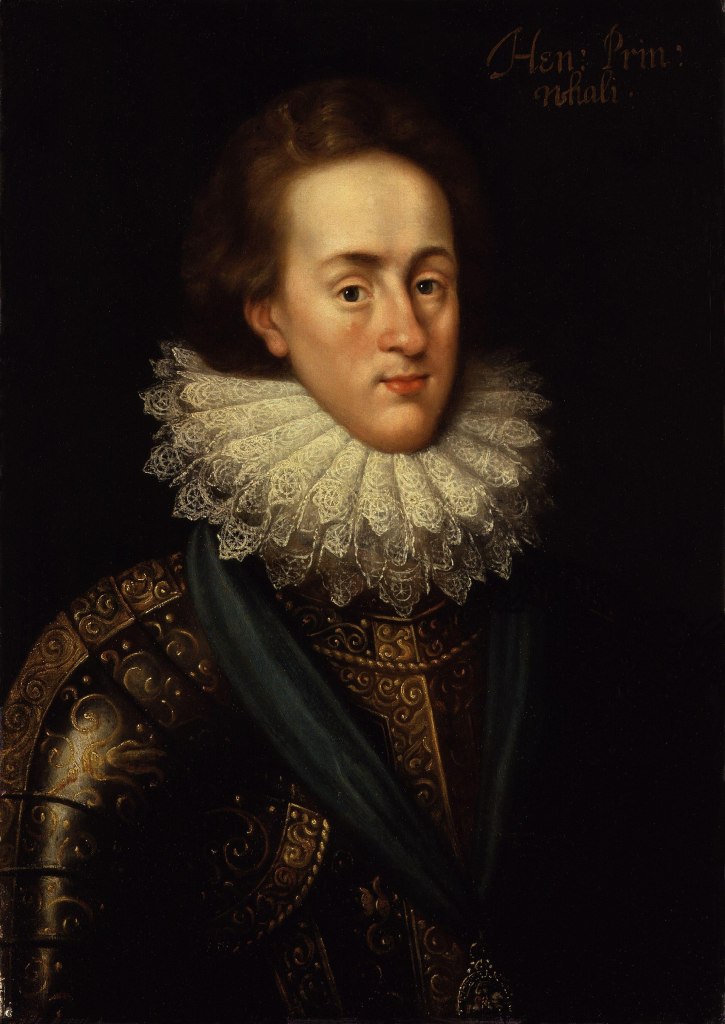
Henry Frederick Stuart: The Promising Crown Prince
Henry Frederick Stuart, born on February 19, 1594, at Stirling Castle, was the firstborn of King James VI of Scotland (later James I of England) and Anne of Denmark. Named after his grandfathers, Henry Stuart and Frederick II of Denmark, Henry embodied a legacy of vigor and exploration. His arrival signified a significant event as he represented a crucial alliance between Scotland and Denmark and epitomized the growing ambitions of his father’s reign.
Separated from his mother during childhood, Henry spent his early years under the care of guardians at Stirling Castle. His education was extensive, blending scholarly pursuits with physical activities like sports, dancing, and music. This combination mirrored James’s vision for a “courtly college,” equipping Henry for his eventual rule.
In 1603, when James ascended to the English throne, young Henry relocated south, assuming titles including Duke of Cornwall and Prince of Wales, establishing him as the heir apparent to both the English and Scottish crowns. His teenage years were enriched with academic influences. In contrast to his father’s doubts about colonies, Henry eagerly endorsed ideas of exploration and empire, inspired by figures such as John Dee and Richard Hakluyt, igniting a personal enthusiasm for geography and military matters.
The young prince’s exposure to naval construction came through Charles Howard, the Lord High Admiral, and Phineas Pett, a renowned shipbuilder, who created model ships for him. Taking the initiative, Henry cultivated relationships with explorers and prioritized efforts that could boost England’s imperial prominence.
Henry’s support extended to the fields of arts and sciences. He allied with mathematicians like Edward Wright, deepening his understanding of navigation and geography, and showed interest in scientific studies and tools that would facilitate exploratory endeavors.
His curiosity about the wider world was apparent as he advocated for the discovery of a North-West Passage, funded exploratory missions, and played a role in the establishment of colonies, notably endorsing efforts such as the Jamestown settlement and promoting exploratory voyages to the New World.
His sudden demise in 1612 at the age of eighteen abruptly halted a bright future. Speculation about Henry’s potential reign suggests he might have significantly influenced British colonization and exploration, given his evident passions and initiatives. Although his life was cut short, Henry’s youthful dynamism and visionary perspective left an enduring mark on the historical trajectory of England and its expansionist and knowledge-seeking endeavors.