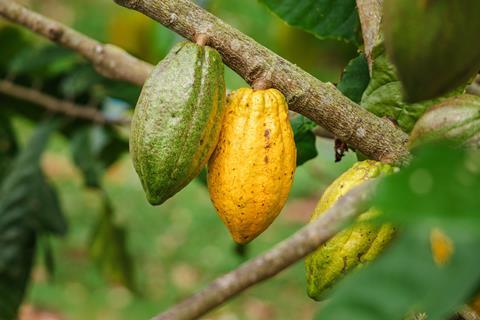
The idea of cell-cultured, or ‘lab-created’, chocolate is gaining traction amidst climate-driven supply chain challenges and a notable surge in cocoa prices.
Researchers at the University of California, Davis are collaborating with the food technology firm California Cultured to create innovative bioreactors capable of growing plant cells, bringing this kind of alternative chocolate closer to reality.
Climate change has led to a swift reduction in cacao, the source of cocoa. Unpredictable weather patterns, including heavy rainfall, flooding, and extended droughts, have diminished yields in the West African nations of Ivory Coast and Ghana, where the global cocoa supply is primarily concentrated, as noted by Radad International, a top cocoa exporter.
A plant virus known as cocoa swollen shoot has also ravaged the crops in the West African area in recent years, where about 70% of the world’s cocoa is cultivated. Estimates suggest that cocoa production in West Africa dropped by as much as 40% from 2023 to 2025. This caused a supply crisis in 2024 and part of 2025, with cocoa prices soaring to $12,000 (£9000) per tonne in early 2025 – the highest seen in decades.
Since that peak, cocoa prices have significantly decreased due to more favorable weather conditions, but recent studies by Wageningen University in the Netherlands suggest that as much as half of the cocoa-growing regions in Ivory Coast could be lost by 2060 due to changing weather patterns.
These circumstances make it increasingly appealing for the industry to explore alternative methods for chocolate production that do not depend on a plant with a vulnerable supply chain.
Beyond meat
Cultured or synthetic meat has been in the spotlight in recent years, produced using animal cell cultures, while other alternative protein sources come from fermenting fungi or yeast. However, plant cell bioreactor cultures are now beginning to gain traction. This approach generally involves dedifferentiated plant cells that can develop in liquid media, utilizing basic components like sucrose, salts, vitamins, and plant hormones.
Chemical engineers at UC Davis are currently focused on reducing costs for cultured chocolate alongside California Cultured, aiming to enhance prototype bioreactor designs and operations to lower expenses.
The scientists involved in this project are assessing cultures for various phenotypes stemming from the natural genetic diversity of the cacao tree. They select cells that yield abundant flavanols and thrive in suspension cultures. These cacao cell cultures do not require light and can flourish in a simple, low-cost medium. Additionally, since they are cultivated in sterile and well-regulated environments, these cells remain unaffected by external factors such as drought, pests, and pollutants.
“Once we secured our cell line, we created economical bioreactor processes tailored to cultivate the cells on a larger scale,” explained Steve Lang, vice president of science and technology at California Cultured. He stressed that these cells, along with plant cells in general, do not need costly stainless-steel bioreactors and controls.
“Our bioreactors are significantly less expensive, costing thousands of dollars rather than millions as required for cultured meat or biopharmaceuticals,” Lang continued. “Our advancements in inexpensive cell culture processes will enable the domestic production of items not typically cultivated in the USA and simplify supply chains by centralizing on-demand cocoa production at the point of use, irrespective of seasons, climate challenges, and labor issues.”
After a bioreactor cycle, the scientists dry and mill the cells to produce cocoa powder. The flavanols and taste they provide originate directly from unaltered cacao cells, and the biomass can be utilized as an ingredient in itself or further processed—such as through roasting—to enhance the cocoa flavor profile.
“Crucially, our cells are free from heavy metals because we manage the raw materials in their growth media,” Lang added. In comparison, he noted that conventional cocoa products often contain heavy metals from the environment, meaning that around 30% of chocolate items have concerning levels of heavy metals.
Cell-based cocoa powder
Recent efforts by California Cultured have shown proof-of-concept for cultivating cells from the cacao tree in 1600-liter bioreactors. Lang expects that the company will kick off commercial cocoa powder production in early 2027 to accommodate their initial order from a chocolate manufacturer.
In March, California Cultured received generally recognized as safe status for its cell-based cocoa powder—a regulatory classification indicating that an ingredient can be used in food in the US without undergoing the difficult pre-market approval necessary for food additives.
In February, Puratos USA, a prominent food ingredient supplier, announced the introduction of the “world’s first professional chocolate with cultured cocoa,” through a partnership with California Cultured. The company anticipates that the product will hit the market in the US by late 2026.
Celleste Bio in Israel introduced what it referred to as “the world’s first milk chocolate bars made with genuine cocoa butter using cell suspension culture technology” in April. The company’s strategic ally, Mond