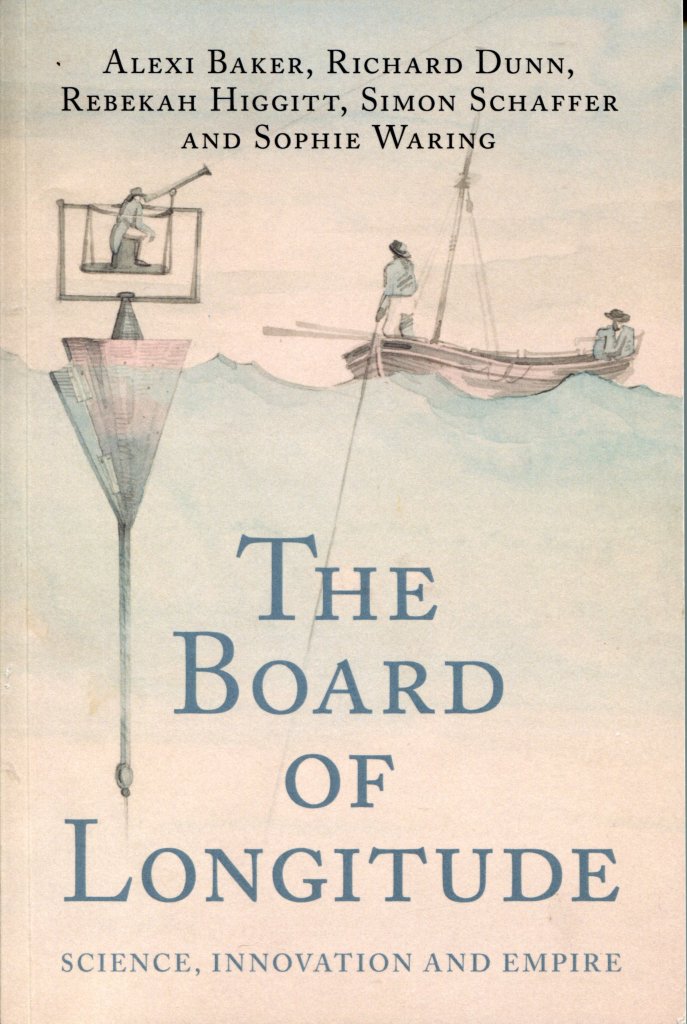
In 2010, the University of Cambridge and the National Maritime Museum at Greenwich initiated a six-year research initiative called “The Board of Longitude 1714–1828: Science, Innovation and Empire in the Georgian World.” Under the leadership of Simon Schaffer from Cambridge and Richard Dunn and Rebekah Higgitt from Greenwich, the aim was to create a comprehensive account of the British Board of Longitude, examining its significant impact on Georgian culture. The research team featured postdoctoral researchers Alexi Baker and Nicky Reeves, doctoral students Katy Barrett, Eóin Phillips, and Sophie Waring, as well as Engagement Officer Katherine McAlpine.
During the course of the project, the team used blogs to document their progress, resulting in various doctoral dissertations, scholarly articles, and important publications. Among the notable outputs are Richard Dunn’s “Navigational Instruments” (2016), the edited volume “Navigational Enterprises in Europe and Its Empires” by Richard Dunn and Rebekah Higgitt (2015), Rebekah Higgitt’s edited work “Maskelyne Astronomer Royal” (2014), and Katy Barrett’s “Looking for Longitude: A Cultural History” (2022). Additionally, Dunn and Higgitt led a significant exhibition at the National Maritime Museum, culminating in the widely acclaimed “Finding Longitude: How Ships, Clocks and Stars Helped Solve the Longitude Problem” (2014).
The programme’s concluding report, “The Board of Longitude: Science, Innovation and Empire” by Alexi Baker, Richard Dunn, Rebekah Higgitt, Simon Schaffer, and Sophie Waring, is expected to be released in 2025. This publication is recognized for its thorough insights while candidly admitting that certain questions remain unresolved. The introduction functions as an independent paper, and the complete book adopts a dual structure—providing a chronological narrative and concentrating on particular elements of the Board’s endeavors.
Each chapter in this meticulously researched book is designed to be self-contained, serving as a valuable reference for those interested in distinct episodes of British longitude history. Enhanced with illustrations, tables, and a comprehensive glossary, bibliography, and index, this book establishes a high benchmark for historical scholarship. It is an essential read for anyone captivated by maritime history, representing a major contribution to the discipline.