The peyote cactus has a dreadful taste. Take a bite and you’ll encounter a bitterness that appears designed to make you cease, which, in a sense, it was. The substance responsible, mescaline, is the same molecule that has propelled countless seekers into vivid visions. A group of Chinese scientists now believes that these two facts are not coincidental. The bitterness came first. The visions are an unintended consequence.
That, in essence, is the argument presented in a Perspective published in the Proceedings of the National Academy of Sciences on 24 June. The research, headed by Wang Xiaohui at the Changchun Institute of Applied Chemistry, poses a question that the psychedelic resurgence has largely overlooked.
Why does nature persist in creating these substances? Psilocybin from fungi, mescaline from cacti, DMT seemingly ubiquitously, the noxious secretion from a desert toad. These organisms are not connected. They exist on vastly different branches of the tree of life, yet have all separately discovered molecules that penetrate an animal’s brain and reconfigure it. The team proposes that hallucinogens are not peculiar chemicals or random evolutionary noise. They are instruments. Ecological instruments, shaped by the gritty necessities of survival, defense, and manipulation.
A Limited Toolbox, Reused Over Time
Here is the aspect that alleviates the mystery of convergence and, strangely, makes it more remarkable. Life operates with a modest toolkit. To create a psychoactive molecule, an organism selects a few starting materials, such as an amino acid like tryptophan, and applies a well-known sequence of chemical modifications: hydroxylation, methylation, phosphorylation, prenylation. Alter the sequence or swap out a group, and you generate structurally distinct compounds that all achieve the same effect. It resembles different culinary traditions arriving at dumplings without ever consulting one another.
The actual methodologies are now being examined closely. In fungi that produce psilocybin, researchers observe that a compact cluster of genes encoding the enzymes PsiD, PsiH, PsiM, and PsiK plays the role of converting tryptophan into the final psychedelic product. Moreover, comparative genomics suggests that this gene cluster has transferred between fungal lineages through horizontal gene transfer, the biological equivalent of one species duplicating another’s blueprint. The biosynthesis of mescaline in cacti is revealing its processes as well.
So if the chemistry is borrowed and reborrowed, what is it truly for? The team postulates that it serves as a means of defense, manipulation, and communication across the separations that typically keep species differentiated.
The Toad’s Perspective
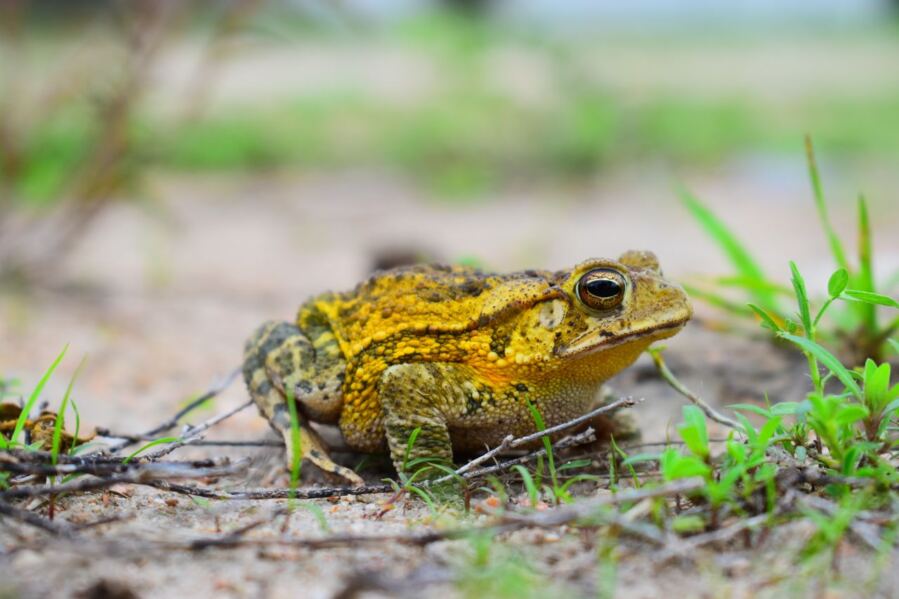
Consider the Sonoran Desert toad, Incilius alvarius, which has gained notoriety in the smokable-psychedelic community. This creature does not produce 5-MeO-DMT for the enlightenment of others. It excretes a mixture: 5-MeO-DMT, bufotenine, bufadienolides, cardiotonic steroids, and more—a sophisticated chemical defense that predators learn to regret. The hallucinogenic ingredient is contained within a package designed to convey, in a language understood by coyotes, leave me alone. The bitter mescaline of peyote likely serves a similar purpose against anything predisposed to munch on it. The drug effect we value is, according to this interpretation, a by-product of a warning signal.
The reason any of this operates at all can be traced back to a profound accident of shared ancestry. Animals, ranging from worms to whales, rely on a few ancient neurotransmitter systems, with serotonin signaling being among the oldest. The 5-HT2A receptor, the “lock” that classic psychedelics unlock, emerged early on and spread throughout the animal kingdom; it appears in both invertebrates and vertebrates. A plant or fungus that can influence serotonin can, in theory, affect the feeding, movement, learning, or avoidance behaviors of a wide array of creatures with a single small molecule. Conserved targets, conserved power. That is the engine the authors speculate has driven the repeated evolution of the same chemistry.
Not every tryptamine narrative aligns with the defense hypothesis, however, and the paper takes care to note this. The endogenous tryptamines found in mammals, including humans, have long lured individuals toward grand claims of inherent psychedelia.
The authors argue the opposite. The weight of evidence, they contend, indicates that these internal compounds function through the sigma-1 receptor in a protective, stress-buffering capacity for cells, rather than having any intrinsic hallucinogenic role. It’s a sobering note in a field often susceptible to mysticism, and likely a beneficial one.
From Wild Harvest to Fermenter
If this framework holds true, it shifts the approach to discovery. Treat hallucinogens as elements of chemical ecology and the inquiry turns predictive: which organisms encounter the types of pressures, herbivores to deter, pollinators to attract, symb