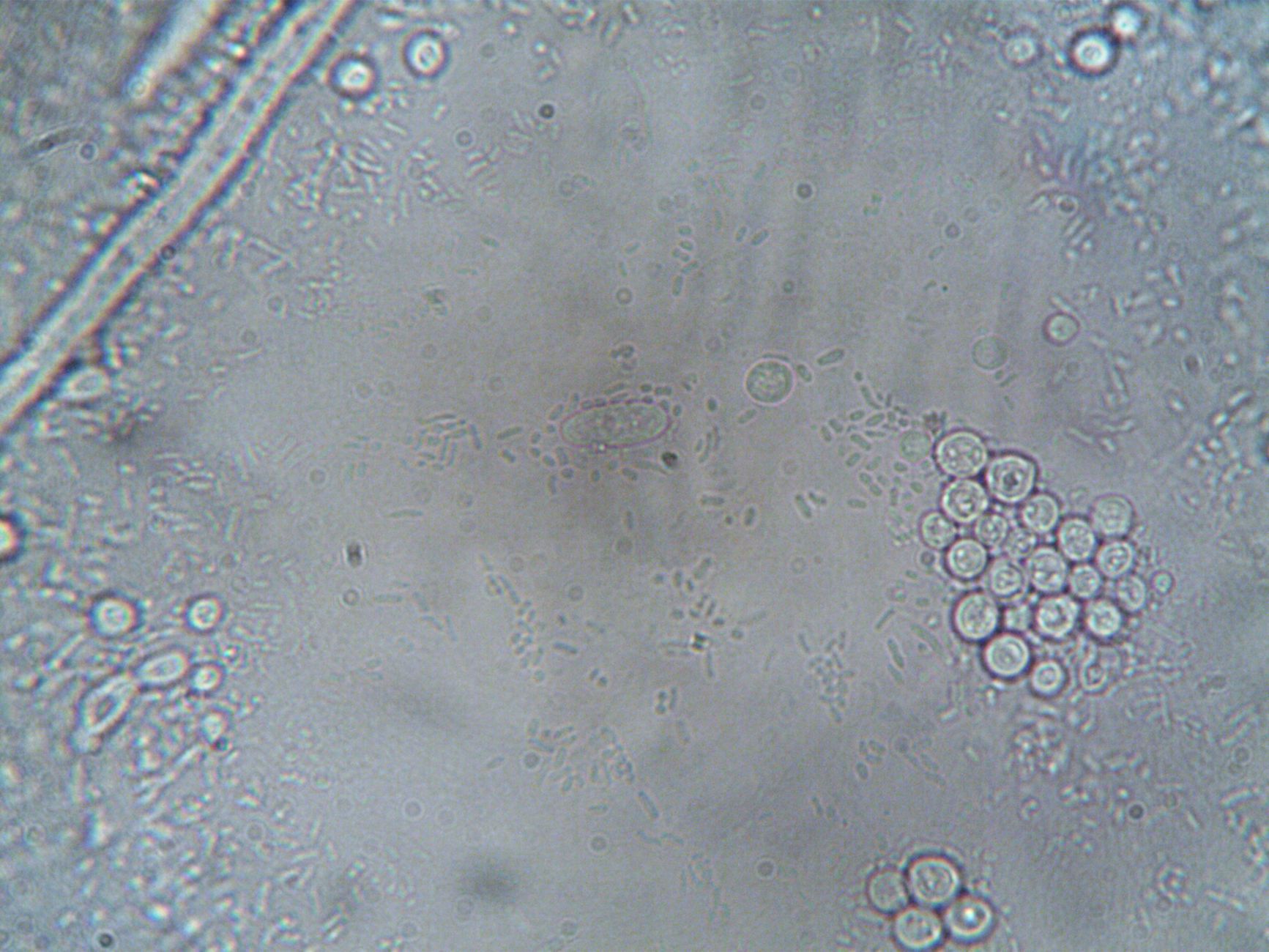
The gut performs more than just digesting food, hosting microbes, and preventing unwanted substances from entering the bloodstream. It also transmits signals. A study on mice published in *Aging Cell* in 2026 indicates that some of these signals, contained in small particles originating from the gut lumen, change with age in ways that may harm the intestinal barrier and disrupt metabolic processes.
These particles are referred to as luminal fecal exosomes, or LFEs. In this research, Abdelnaby Khalyfa, Lyu Zhen, Trupti Joshi, and David Gozal analyzed LFEs sourced from young 3-month-old mice compared to those from older 24-month-old mice. The particles from older mice compromised gut barrier integrity and metabolic function when introduced to younger recipients. Conversely, LFEs from younger mice seemed to induce some beneficial effects in older mice.
This research is limited to mice and does not represent an established consensus or provide treatment guidance. We are not doctors, dietitians, or clinical researchers. The goal is reporting and interpretation, not a suggestion to manipulate gut particles or seek any anti-aging intervention.
### What these particles are
Exosomes fall under the broader category of extracellular vesicles: tiny membrane-enclosed packets released by cells. They can transport proteins, lipids, and genetic material, including microRNAs, between different biological environments. Reviews in the *Journal of Extracellular Vesicles* explain that extracellular vesicles serve as a means for cells to communicate without direct contact.
The communication process involving the gut is particularly intricate. The intestinal lumen consists of host cells, food remnants, mucus, immune signals, and a complex microbial ecosystem. A 2021 review in the *Journal of Extracellular Vesicles* described microbiota-derived extracellular vesicles as part of “interkingdom communication” in the gut, highlighting the interplay between bacteria and host biology.
Khalyfa and colleagues concentrated on LFEs extracted from fecal samples. Their samples underwent filtration and processing to eliminate bacteria and were identified as exosome-like vesicles. The team then investigated what the particles carried and their effects in various models, including intestinal epithelial cells, 3D gut-barrier systems, and living mice.
### Old particles, young recipients
The most evident outcome was functional. LFEs from older mice were not merely distinct in composition; they induced quantifiable biological effects. In the paper’s abstract, the researchers highlight that LFEs from older mice compromised gut barrier integrity and metabolic function in younger recipient mice. Laboratory models of the intestinal barrier also exhibited changes in permeability, indicating how easily substances can traverse the barrier.
This is significant because the intestinal barrier represents one of the body’s primary defenses between the microbial environment in the gut and the immune system outside of it. A permeable or damaged barrier can facilitate the movement of microbial products and inflammatory signals to areas they should not easily access. The consequence isn’t necessarily a single severe illness. In the context of aging biology, the concern often lies in chronic, low-grade inflammation that gradually interacts with metabolism, immune response, and tissue repair.
This background highlights the relevance of the study to the concept of “inflammaging,” a term frequently used to describe the ongoing inflammatory state associated with aging and age-related diseases. A 2018 review in *Nature Reviews Endocrinology* characterized inflammaging as an immune-metabolic phenomenon rather than solely an immune-system issue. The new mouse study aligns with this perspective by integrating the gut barrier and gut-derived particles into the continuum between microbes, metabolism, and age-related dysfunction.
### The young-particle effect
The reciprocal aspect of the findings is particularly striking and warrants caution. The authors report that older mice receiving LFEs from young mice exhibited reciprocal effects, with the graphical abstract illustrating enhanced gut barrier function and metabolic health, along with a partial reversal of age-related gut and metabolic issues.
This does not imply that young gut particles reverse aging. Rather, it indicates that in this mouse study, particles derived from young subjects contained molecular cargo that shifted certain gut and metabolic markers toward a more favorable state compared to those from older subjects. The study was not a human trial and did not demonstrate extended lifespan, decreased clinical diseases, or a tangible therapy. It indicated that age-related gut particles can be functionally active.
The researchers also discovered that LFEs altered the gut microbiome of recipient animals. Following the administration of LFEs from older donors to young mice, the team employed 16S rRNA sequencing to analyze microbial composition. This suggests that the particles may not only travel from the gut to host tissues but also influence the microbial ecosystem that contributed to their development.
### What was inside them
The paper utilized multi-omics profiling to assess proteins and microRNAs in LFEs from both young and old male and female mice. The profiles varied by age and sex. Some cargo originated from the host, while some appeared to be linked to the gut microbiome. Bioinformatic analyses connected age-specific LFE cargo to pathways associated with insulin resistance, barrier disruption, immune regulation, stress responses, and metabolism.