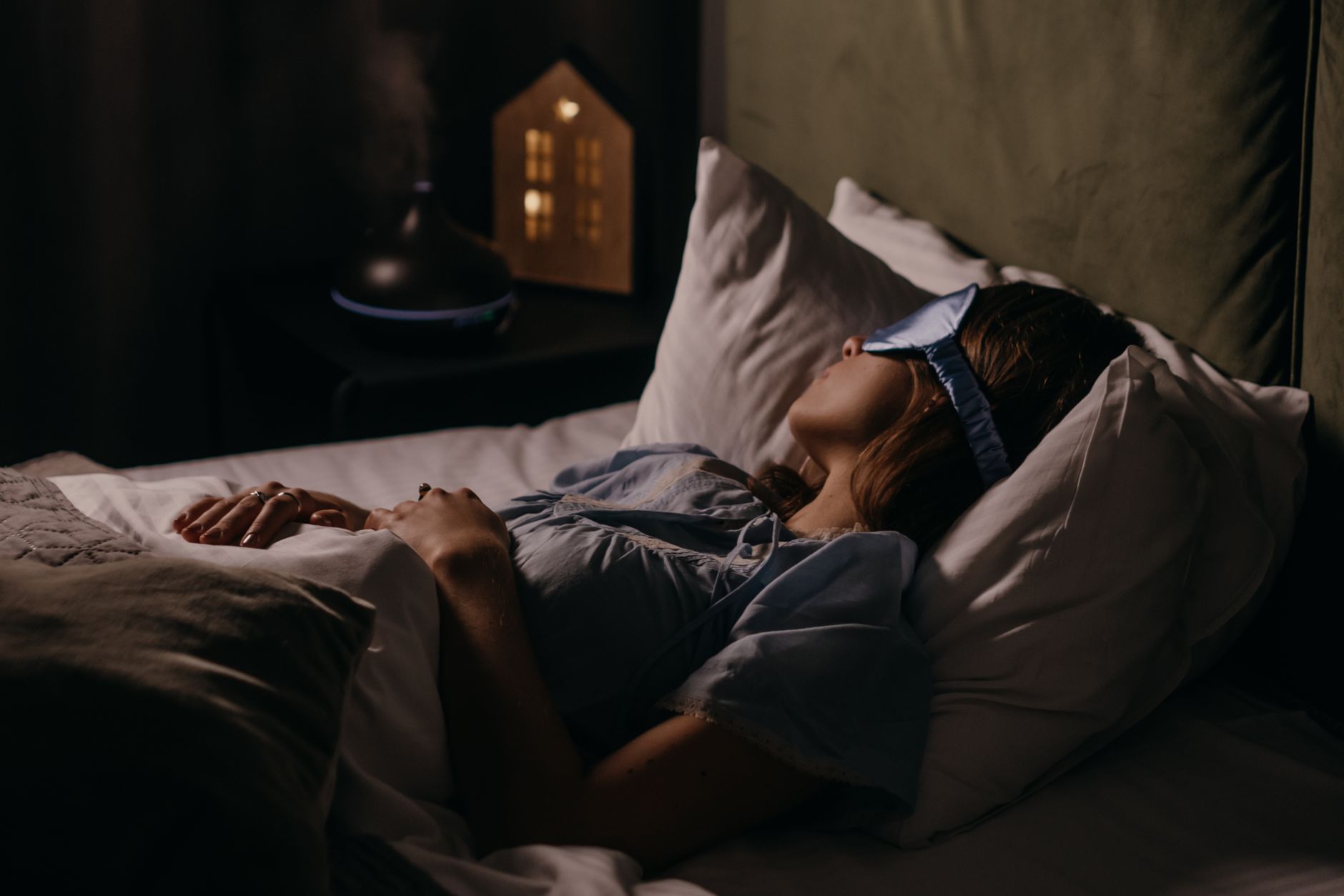
The full moon has been associated with insomnia for ages, often supported by more folklore than empirical evidence. However, a laboratory investigation from the University of Basel made this longstanding assertion more challenging to dismiss. In a controlled sleep study, participants during the full moon took longer to fall asleep, experienced less deep sleep, and exhibited reduced evening melatonin levels, despite the moon being invisible to them.
The result stems from a 2013 Current Biology article by Christian Cajochen and his team. The researchers did not aim to examine moonlight in the conventional manner. They retrospectively assessed sleep data, hormonal levels, and electroencephalogram readings obtained under strictly regulated circadian laboratory settings, and correlated them with lunar phases.
This detail is what propelled the study into the spotlight. The finding was not merely that individuals sleep poorly when moonlight seeps into a bedroom. The participants were analyzed in a lab devoid of standard time cues, and the authors noted that neither the participants nor the researchers were aware during or after the initial study that the data would subsequently be evaluated against lunar phases.
What altered around the full moon
The documented effects were slight in clock time but clear enough to capture interest. Near the full moon, participants took roughly five minutes longer to drift off. Their overall sleep duration, as recorded by EEG, was approximately 20 minutes shorter. Their EEG delta waves during non-rapid-eye-movement sleep, a marker tied to deep sleep, were about 30% diminished.
The same Current Biology article also indicated reduced subjective sleep quality and lowered endogenous melatonin levels around the full moon. Melatonin is a hormone produced by the body, chiefly at night, and plays a role in sleep timing and circadian rhythms. The critical point is that this was observed within a controlled laboratory setting, not inferred from whether participants believed the moon appeared bright.
With only 33 participants, this was not a large-scale population study. It was also a retrospective analysis, meaning the lunar inquiry was posed after the sleep data had already been gathered. These limitations are significant. The study is best interpreted as evidence of a potential circalunar signal in human sleep physiology, rather than as definitive proof that the full moon consistently interrupts sleep for everyone.
Why the laboratory environment is crucial
If an individual sleeps poorly on a bright night, the most straightforward explanation is light. Moonlight can change nighttime visibility, behavior, activity, and sleeping times. In everyday scenarios, it complicates the ability to determine if the moon is influencing biology directly or merely altering the environment.
Cajochen and his team endeavored to eliminate those apparent explanations by utilizing existing data from a circadian laboratory protocol. The summary of the paper highlights that the study controlled for confounding factors such as increased nighttime light and expectations about lunar effects. This does not confirm a mechanism. It does render the result stranger, as the simplest “they saw the moon” explanation is off the table.
The authors hypothesized that the observed pattern could indicate circalunar rhythmicity, a roughly 29.5-day rhythm linked to the lunar cycle. Such rhythms are well documented in certain marine creatures, yet whether humans possess a meaningful version remains a far more complex question. The study did not specify the biological pathway. It identified a pattern but left the mechanism unexplained.
Why caution persists among scientists
The narrative of asserted lunar influences is filled with missteps. Behavior, childbirth, hospital admissions, and mood have all been associated with the moon in popular culture, yet many such assertions have not withstood thorough statistical scrutiny. Sleep seems more plausible than many of those claims due to the tangible impacts of light and circadian biology, but plausibility does not equate to certainty.
Following the Basel study, other scientists voiced skepticism. A 2014 Current Biology article titled “Lunar cycle effects on sleep and the file drawer problem” examined larger sleep datasets and contended that the lunar influence was not substantiated there. Its title underscored a familiar scientific concern: positive results are more likely to be recognized, published, and remembered than null results which languish unseen in a file drawer.
There were earlier suggestions countering this perspective as well. A 2006 Journal of Sleep Research investigation identified variations in subjective sleep duration within a small sample in Switzerland related to lunar phases.