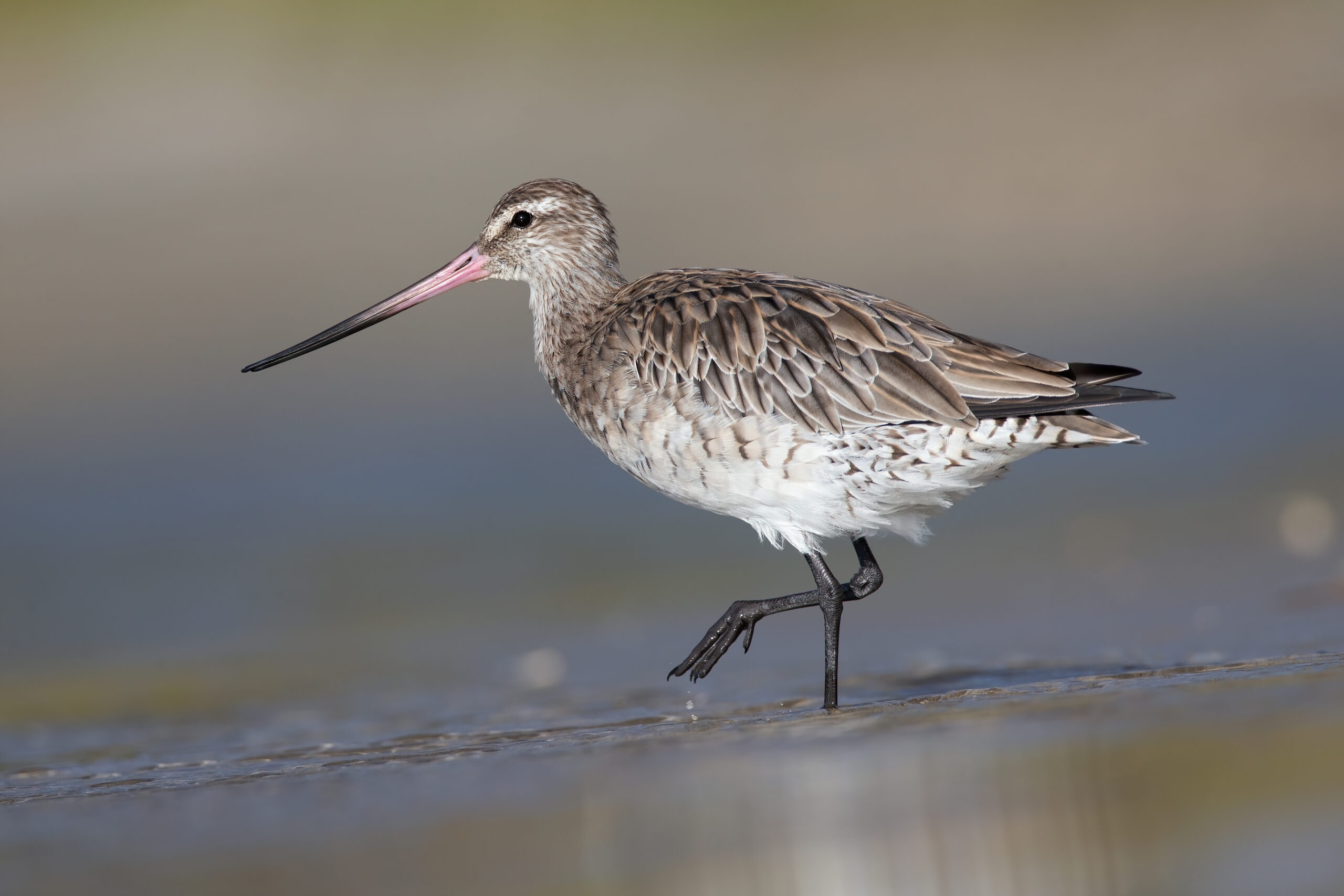
The bar-tailed godwit, an elongated shorebird characterized by its upturned bill, undertakes astonishing migrations across the Pacific Ocean. These birds, skilled at probing mudflats, amaze researchers with their continuous flights from Alaska to locations such as New Zealand and Tasmania, spanning distances between 8,117 to over 13,560 kilometers without taking breaks for rest or food.
A research effort in 2009 by Robert Gill and associates was the first to apply satellite telemetry to reveal the flight abilities of the godwit, demonstrating how the Pacific Ocean serves as a wind-assisted pathway rather than a hindrance for these birds. The record-breaking juvenile bar-tailed godwit B6 showcased this remarkable voyage in October 2022, traveling roughly 13,390 kilometers from Alaska to Tasmania in around 11 days.
Central to this journey is the godwits’ capacity for physiological transformation prior to departure, accumulating fat that can represent 30 to 45 percent of their body weight. This fat acts as high-energy fuel for flight and generates water through metabolism, which is vital during uninterrupted ocean passages. This adaptation is complemented by an inherent navigation system, allowing even novice juveniles to successfully traverse extensive distances.
Bar-tailed godwits display diverse migration paths. The subspecies Limosa lapponica baueri prefers direct routes from Alaska to the Southern Hemisphere, while other subspecies take advantage of stops in Asia, especially around the Yellow Sea, to recharge before proceeding to Arctic breeding areas. These strategic choices emphasize the godwits’ dependence on specific habitats during their annual travels.
Wind conditions and timing of departure significantly influence their migrations. Atmospheric factors can transform seemingly unachievable journeys into manageable tasks. It has been observed by researchers that godwits in New Zealand coordinate their departures with favorable wind patterns to minimize travel expense, illustrating their use of meteorological opportunities.
Although the godwits embark on prolonged flights, it remains uncertain how they deal with sleep and hydration. While they do not sleep in a traditional manner or pause to drink, their metabolic processes create water, and some birds have the ability to rest sections of their brains while in transit.
Despite their remarkable stamina, bar-tailed godwits are at risk from habitat degradation, especially in stopover zones like the Yellow Sea. A 2017 study in Nature Communications by Colin Studds and colleagues connected declines in migratory shorebirds to alterations in their habitat along the migration route. This reliance on various suitable locations underscores the vulnerability of their migratory pathway.
In the end, the extraordinary journey of B6 exemplifies the complex interplay of physiology, behavior, and environmental factors that facilitate such achievements. It highlights the necessity of conserving critical habitats for migration, ensuring that even one of nature’s most exceptional fliers does not lose access to the sky.