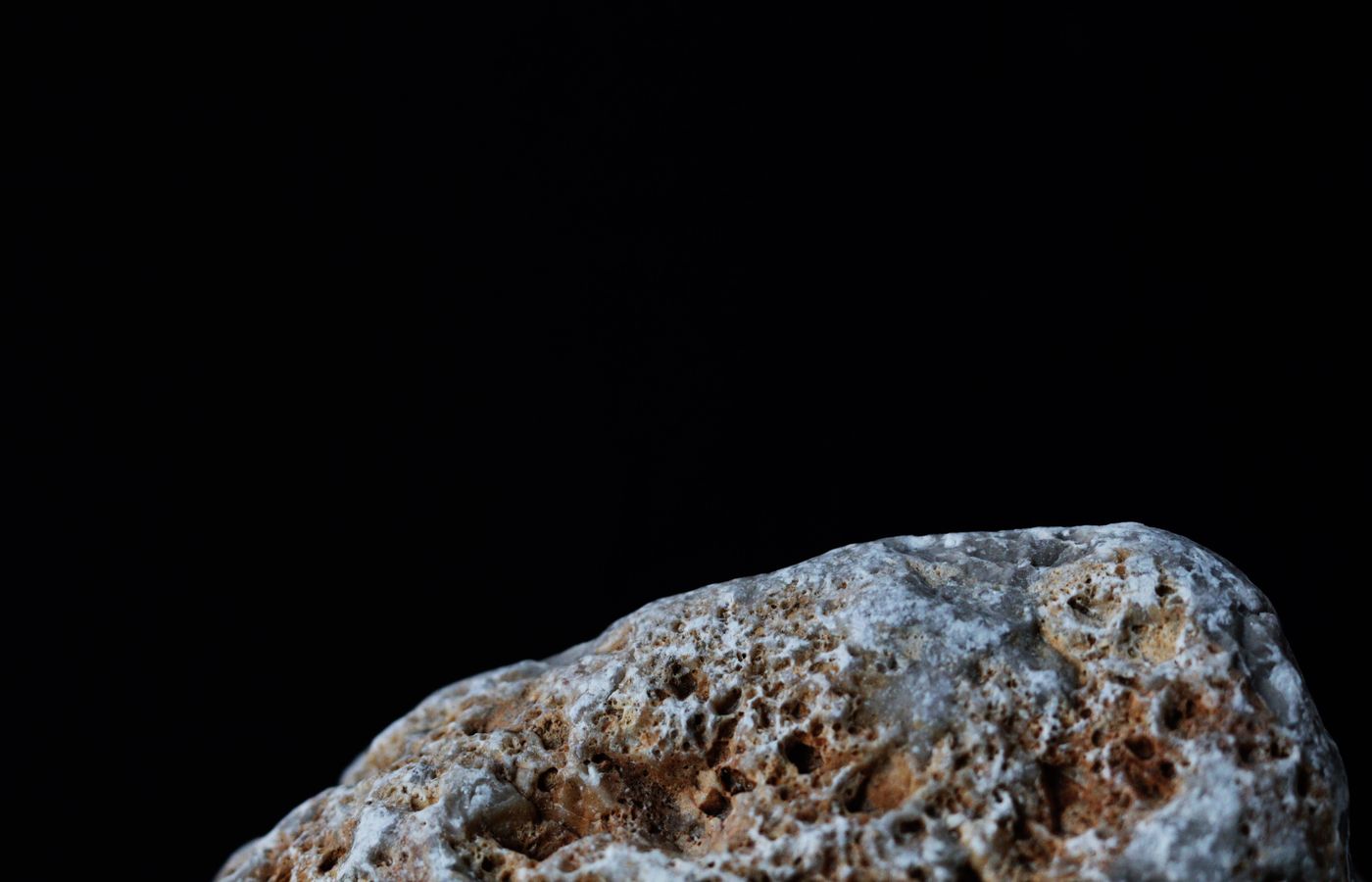
A fragment that descended from the heavens over rural Victoria in 1969 was found to harbor materials older than Earth, predating the Sun and all the planets in our solar system.
The Murchison meteorite, cataloged by the Meteoritical Bulletin Database as an observed fall close to Murchison, Australia, on September 28, 1969, is classified as a carbonaceous chondrite. This designation signifies that it belongs to a chemically primitive type of meteorites rich in carbon compounds and partially altered by water on the parent asteroid. For decades, it has been the subject of extensive study due to collections made shortly after its fall and its ability to retain clues from the formative history of the solar system.
However, one of its most astonishing findings predates the solar system itself: microscopic grains of presolar stardust.
In a study published in PNAS and spearheaded by Philipp Heck, researchers investigated presolar silicon carbide grains sourced from Murchison and utilized cosmic-ray exposure ages to determine how long those grains had traveled through interstellar space prior to being integrated into the material that formed the meteorite. The oldest grains within the sample were estimated to have emerged approximately 5 billion to 7 billion years ago, marking them as the oldest solid material identified on Earth to date.
What Stardust Signifies Here
While “stardust” might sound poetic, in this context it also conveys a literal meaning. Presolar grains are minuscule mineral particles that solidified around earlier stars preceding the existence of the Sun. As those stars expelled matter into the cosmos, some dust persisted in the interstellar medium—the sparse mixture of gas and dust located between stars. Subsequently, portions of that ancient dust became incorporated into the cloud of material that collapsed to create the Sun, planets, asteroids, and meteorites.
Most solid materials found in meteorites date back to the inception of the solar system around 4.6 billion years ago. Presolar grains, in contrast, diverge from this norm. Their isotopic compositions do not correlate with typical solar system materials, indicating they were formed in primordial stellar conditions. Effectively, they serve as laboratory samples from stars that existed prior to the formation of our own star.
The grains analyzed in the Heck study were silicon carbide, a robust mineral comprising silicon and carbon. They are so minuscule that even the largest would remain invisible without magnification. Nonetheless, their chemical composition encapsulates a chronicle of their time in space. As clarified by the Field Museum upon the paper’s release, researchers can gauge exposure ages by measuring byproducts produced when galactic cosmic rays collide with the grains.
How Scientists Assessed Grains Older Than the Sun
This method differs from dating a rock via uranium and lead. For the grains, the team examined neon isotopes generated by galactic cosmic rays. Cosmic rays are high-energy particles traversing the galaxy. Upon impacting solid matter, they can instigate nuclear reactions that form new isotopes. The longer a grain is exposed to space, the more cosmic-ray products accumulate.
This provides scientists with a type of exposure clock. While it does not deliver a complete history of every grain with absolute accuracy—since calculations hinge on cosmic-ray production rates, grain dimensions, and shielding—it can define real limits on how long individual grains drifted within interstellar space before being encased in the nascent solar system.
The PNAS group indicated that numerous grains had an interstellar exposure time of less than 300 million years, while some surpassed 1 billion years. When these exposure durations are combined with the solar system’s age, the oldest grains amount to approximately 7 billion years. Thus, the assertion is commonly expressed as “up to around 7 billion years old” rather than attributing a singular precise age.
A Meteorite as a Cosmic Archive
Murchison is renowned for an additional reason too. Carbonaceous meteorites can encompass a diverse array of organic molecules, and Murchison has significantly contributed to studies of extraterrestrial amino acids and prebiotic chemistry. Yet, the research on presolar grains poses a different inquiry. It primarily focuses on the lifecycle of stars and dust prior to the solar system’s birth, rather than the chemistry that may have nourished early Earth.
The distribution of grain ages also suggested a narrative extending beyond a single meteorite. The study uncovered multiple grains with ages clustering in a range consistent with an episode of intensified star formation preceding the Sun’s formation. If this interpretation holds, Murchison not only contains ancient dust but also evidence of a bustling era in the Milky Way’s past, during which numerous stars emerged and subsequently enriched space with fresh grains.
This renders the meteorite a peculiar kind of archive. A palm-sized fragment can encompass materials from a parent asteroid, chemistry from the early solar system, and grains that predate the Sun by billions of years. The oldest fragments may not be visually striking. They are minuscule, acid-resistant minerals extracted from meteorite powder in the laboratory. Yet their diminutive nature adds to the allure.
A rock that settled near an Australian township in 1969 bore within it solids created long before