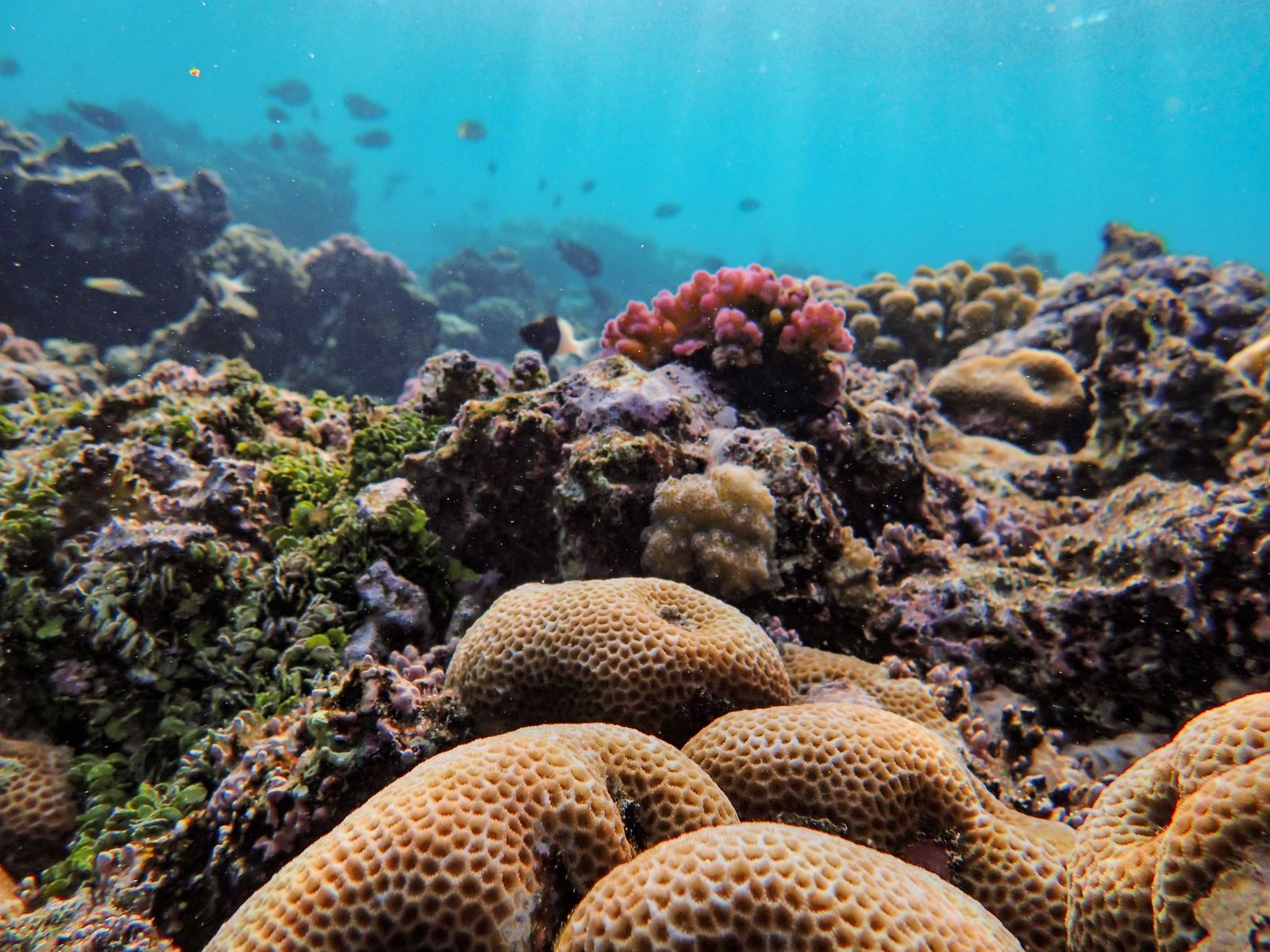
A Deep-Water Coral Reef Off the Coast of Benin Found Alive
An extraordinary rediscovery has occurred in the marine environment as a deep-water coral reef located off the coast of Benin, previously believed to be extinct from assessments in the 1960s, has been confirmed alive. Led by Gérard Zinzindohoué from the Institut de Recherches Halieutiques et Océanologiques du Bénin, this rediscovery is outlined in an article published in *Frontiers in Marine Science*. It signifies the first recorded existence of a living mesophotic coral ecosystem on the continental shelf of the Gulf of Guinea.
From April to December 2025, Zinzindohoué’s team employed advanced technology that integrated side-scan sonar, an underwater drone, and the baited Deep Sea Camera System from the National Geographic Exploration Technology Lab. These instruments facilitated a revisit to a location once deemed lifeless by mid-20th century scholars. The outcome yielded impressive footage of a flourishing coral reef at a depth of 54 meters. This ecosystem comprises various octocorals and harbors at least eight coral varieties and eight fish species, including golden African snappers, blackbar soldierfish, Guinean angelfish, West African goatfish, Monrovia doctorfish, three-banded butterflyfish, and two species of damselfish.
In the 1960s, surveys conducted from 1963-1964 off Benin detected hard structures underneath the ocean surface, utilizing limited technology primarily aimed at pinpointing fishing areas. As direct observation was unattainable, these reefs were presumed dead and remained recorded as such for sixty years. This oversight is attributed to the nature of mesophotic corals—reefs located between 30 and 150 meters deep, a zone frequently ignored as too deep for standard diving yet not deep enough for deep-sea studies.
The emergence of economical autonomous camera systems has transformed deep-water imaging. These systems can be launched from small vessels, enabling local research teams to perform thorough surveys without the need for costly international missions. For the Benin reef, the team’s approach involved mapping approximately 7 kilometers of seabed using sonar, followed by focused exploration with drones and cameras.
On a global scale, this advancement presents an economical method for coral reef research. While sonar generates the maps, cameras provide visual validation, allowing for exploration of the extensive, unphotographed ocean floor.
The rediscovery also brings forth new challenges. Once concealed and untouched reefs are uncovered, they risk becoming vulnerable to human activities. The Gulf of Guinea experiences considerable offshore oil and gas extraction and faces pressures from coastal agriculture and fishing. Zinzindohoué’s team has yet to perform physical coral sampling, leaving much still to be verified concerning species and health data. A return expedition with thorough sampling is prioritized in his plans.
Zinzindohoué speculates that the Benin reef might not be an anomaly but rather a reflection of the largely unrecorded marine biodiversity along West Africa’s coastline. Many marine ecosystems may still remain concealed, with new, affordable technology now making broader exploration possible.