Envision a dinosaur that mimics an ostrich: elongated legs, a lightweight body, a beak without teeth, and limbs reduced to nearly nothing.
Now picture uncovering an animal bearing that physique in rock dating back approximately 212 million years.
It appears exceedingly out of context. The dinosaurs most recognized for that form would not emerge until many tens of millions of years afterward. Nevertheless, paleontologists in New Mexico unearthed a creature with a strikingly analogous structure.
The surprise: it wasn’t a dinosaur at all. The organism, Labrujasuchus expectatus, occupies a branch of the reptile family tree that leads to contemporary crocodiles. That disparity between its appearance and its true identity makes it one of the more intriguing Triassic discoveries I have come across recently.
The assertion: it bore a remarkable resemblance to a later dinosaur
If you presented the skeleton to someone and requested their guess, “small ostrich-mimic dinosaur” would be a logical response. It stood erect on two legs, possessed significantly diminished forelimbs, and had a toothless mouth crowned with a beak. Its overall form closely parallels that of the ostrich-mimic dinosaurs that scientists refer to as ornithomimosaurs.
The team responsible for the description embraces that analogy. They characterize shuvosaurs as “graceful, bipedal, and toothless,” and generally convergent with ornithomimid theropod dinosaurs from the Cretaceous period. In simpler terms: slender, two-legged, and toothless, with a body structure remarkably akin to dinosaurs that would not materialize until much later.
Why it was not one, and what it truly was
The Triassic reptiles had diverged into two primary branches. One would ultimately give rise to dinosaurs and birds, while the other would lead to crocodiles and alligators. Labrujasuchus firmly resides within that second branch, as a member of a family of crocodilian reptiles that independently developed a dinosaur-like morphology.
Its toothless, beaked mouth and upright posture were not inherited from an ancestral ostrich-mimic dinosaur. Comparable traits evolved independently on the crocodilian side of the archosaur family tree. Labrujasuchus is merely the fifth formally recognized shuvosaur species, which contributes to its significance.
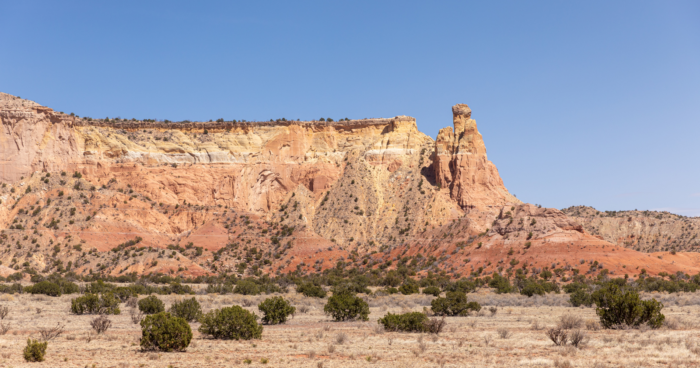
The name also carries a playful reference. It alludes to “Ranchos de los Brujos,” an old Spanish term connected with the Ghost Ranch locale, coupled with a Greek-derived term for crocodile. Thus the circulating nickname: “witch croc.”
How convergent evolution accomplished the feat
Convergent evolution is the mechanism by which distantly related species independently develop similar adaptations to comparable challenges. Bats and birds both developed wings without inheriting them from a common winged precursor. Sharks and dolphins both evolved sleek, hydrodynamic forms. During the Triassic, a crocodilian relative developed an ostrich-mimic-like configuration long before the Cretaceous dinosaurs it would later resemble.
Alan H. Turner, the paleontologist who spearheaded the study at Stony Brook University