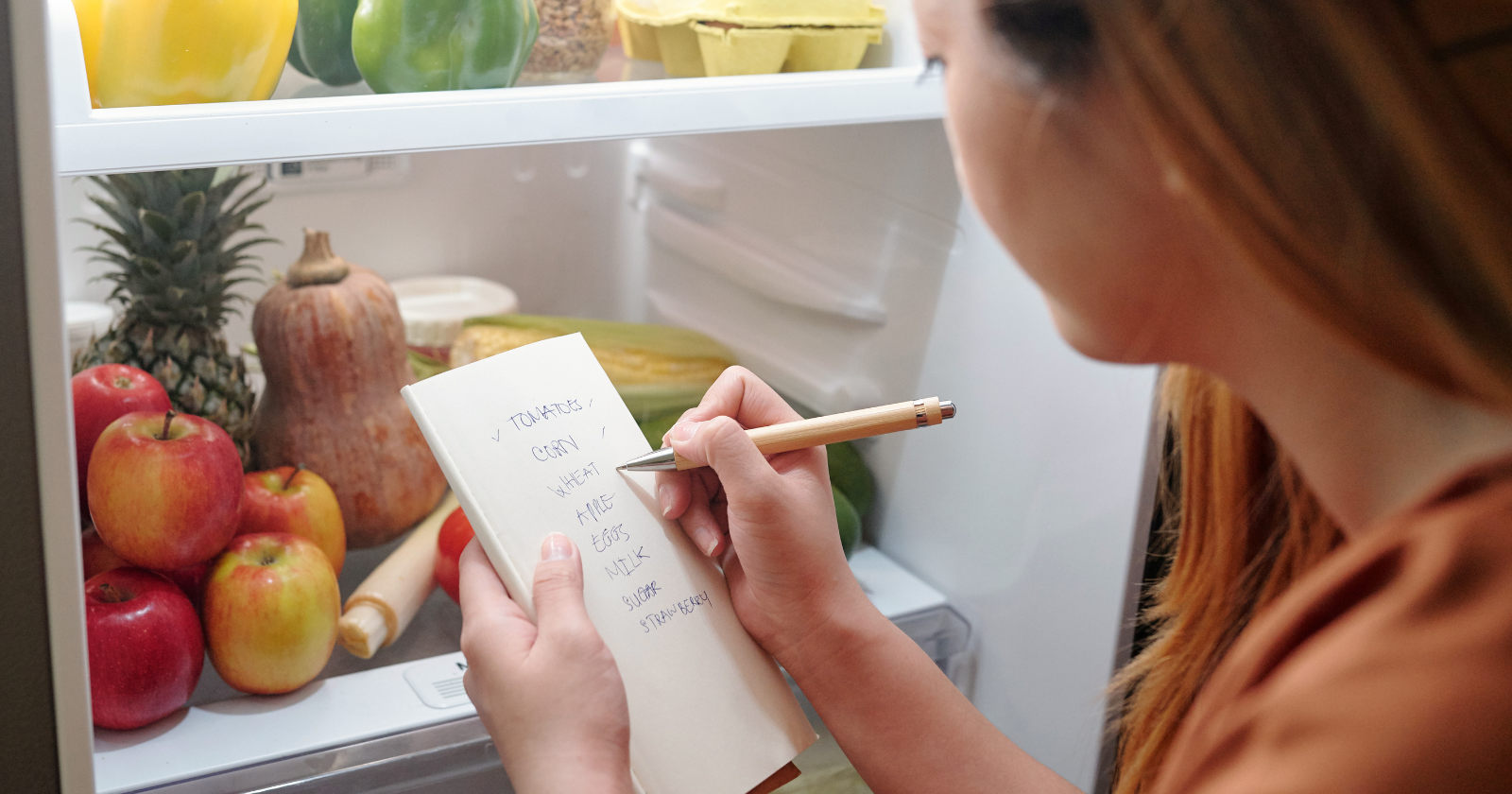
A written grocery list can demonstrate a method. It cannot showcase a character.
No scholarly research has confirmed that individuals who write their shopping lists by hand exhibit seven stable traits. The claim is more robust than the supporting evidence. What researchers have examined is more focused and practical: the reasons people externalize their intentions, how shopping lists influence purchases, and the alterations that occur when a list is handwritten rather than typed.
The seven characteristics listed below are a thoughtful interpretation of that research, not a diagnostic measure. A user of a phone could display any of them, while a paper user might not exhibit any beyond a preference for paper.
## There exists substantial research on paper versus digital shopping lists
The closest direct evidence arises from a 2018 study by marketing researchers Yanliu Huang and Zhen Yang published in the *Journal of the Association for Consumer Research*. Across [three studies contrasting paper and digital shopping lists](https://doi.org/10.1086/698877), participants were instructed to create one type of list or the other. Two studies subsequently tracked their actual grocery excursions. The final analyses encompassed 106 and 126 individuals.
Participants assigned to paper recorded more items and listed products that were, on the whole, less hedonic. They also purchased a greater quantity of what they had planned. The authors noted up to 24 percent more planned purchases among shoppers using paper lists and up to 30 percent more unplanned purchases among those utilizing digital lists.
This appears to favor paper, but it is not conclusive. Many participants were lost from the two shopping follow-ups before the final assessment. The authors’ explanations, including increased engagement and commitment when writing, serve as plausible mechanisms rather than universal facts applicable to every shopper. The outcome is a finding derived from these datasets, not a blanket rule for everyone.
## A list is memory manifested externally
### 1. You intentionally reduce cognitive load
Psychologists refer to [cognitive offloading](https://pubmed.ncbi.nlm.nih.gov/27542527/) as actions that modify a task to require less internal processing. Adjusting a map, setting a reminder, and jotting down groceries all qualify. Instead of keeping “coffee, onions, batteries” mentally active, you allow the paper to preserve them.
This does not indicate weak memory. It is frequently a logical reaction to memory’s constraints. Lauren Block and Vicki Morwitz validated this in a field study published in the *Journal of Consumer Psychology* in 1999. Over two months, they analyzed a sample of shoppers’ lists in comparison to their purchases. Shoppers recorded about 40 percent of the products they ultimately acquired, and bought more than 80 percent of the items they had listed. The list served as an effective [external memory aid](https://doi.org/10.1207/s15327663jcp0804_01), even though it didn’t encompass every item that made it into the cart.
### 2. You make sensible assessments about what you might overlook
Choosing to write “olive oil” instead of “bread” necessitates gauging future memory. Researchers term that estimate metamemory.
In four experiments detailed in *Cognition*, participants selected which word pairs to retain on a computer. They tended to offload the more challenging pairs, and their confidence regarding future recall influenced those choices. The research links [external memory usage with metacognitive assessment](https://pubmed.ncbi.nlm.nih.gov/31271925/).
A person who regularly uses a paper list might thus be engaging in a subtle form of calibration: this is important, this can be forgotten, and the cost of noting it is minimal. That interpretation stems from the experiments. The researchers did not explore the personalities of paper-list users.
## The medium can transform how a plan is perceived
### 3. You favor intentions that appear tangible
In the 2018 comparison, participants using paper lists ultimately made more planned purchases. Huang and Yang suggested that handwriting required more engagement, thus boosting commitment to carrying out the list.
The purchasing outcomes reinforce a distinction between the groups. The psychological explanation is less definitive. While handwriting might enhance commitment, paper and digital lists also differ in visibility, ease of modification, familiarity, and the various functionalities of a phone. The study cannot eliminate all those distinctions.
Nonetheless, the trend aligns with a preference for converting a vague intention into a defined plan: these are the items I intended to acquire.
### 4. You opt for selection rather than simple capture
Paper provides no prompts, saved catalog, or autocomplete features. Each entry must command a small moment of attention. In Huang and Yang’s experiments, paper lists included more items, but those items were generally less hedonic. The authors interpreted this as more diligent planning focused on practical needs.
It would be excessive to label paper users as less impulsive individuals. The study gauged lists and purchases in a specific context. A more focused interpretation is that handwriting might foster a more selective planning approach during this task.
### 5. You appreciate