**Chemical Analysis Reveals Migratory Secrets of Limpet Shells Across Ocean Depths**
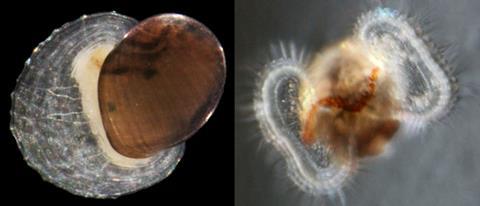
Researchers from the University of Tokyo have disclosed revolutionary findings regarding the migratory behaviors of limpets, small marine snails, by examining the chemical makeup of their shells. Limpets, recognized for living in the harsh conditions of deep-sea hydrothermal vents, have demonstrated the ability to travel thousands of miles between these distinct environments, and this study illuminates how such migrations happen.
Similar to how tree rings preserve the chronological environmental history a tree has gone through, limpet shells consist of layers that document the circumstances of an oceanic journey. These shells retain information about the environmental conditions throughout various life stages, with apex markers signifying early life and the shell lip indicating recent living circumstances. By interpreting these chemical records, researchers can chart a limpet’s travel history over its lifespan.
The research team, led by marine scientists Takuya Yahagi and Yasunori Kano, gathered limpets from the hydrothermal vent areas in the western Pacific. Earlier research had indicated that although limpet larvae start their lives near the ocean surface, they are carried widely by currents until they settle on the ocean floor to grow. This theory necessitated the investigation of oxygen isotopes within the shell layers.
Considering the temperature-dependent behavior of oxygen isotopes, specifically oxygen-18 relative to oxygen-16, the shells’ isotope ratios facilitated the reconstruction of temperature conditions experienced during different shell-formation phases. Results showed that the initial shell layers indicated warmer water conditions aligned with surface ocean temperatures. In contrast, the later layers, rich in barium and manganese—elements prevalent in hydrothermal vent environments yet rare in surface waters—indicated a mature return to the deep-sea.
This research significantly aids in understanding deep-sea organism dispersion, highlighting the ecological system’s resilience in the face of potential environmental threats such as deep-sea mining. Published in *Science Advances*, the study emphasizes the importance of incorporating knowledge regarding vent-endemic organisms’ migrations into conservation efforts to protect these unique deep-sea populations from human-induced impacts.