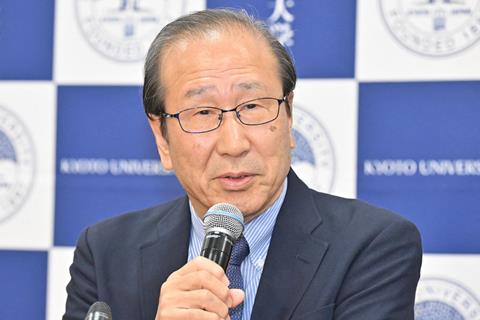
Humanity’s shift from a ‘digging civilization’ to a ‘separating civilization’ depends heavily on the advancement of new materials. This idea has been promoted by Susumu Kitagawa from Kyoto University, who, alongside Omar Yaghi and Richard Robson, received the Nobel Prize in Chemistry in 2025 for their groundbreaking work with metal–organic frameworks (MOFs). Kitagawa’s pioneering research concentrated on creating stable MOFs and subsequently, a third generation of MOFs that exhibit greater flexibility than their earlier versions.
MOFs are formed by combining metal ions with organic linkers, resulting in large, open, porous, crystalline structures that are advantageous for capturing gases. Just one gram of MOFs can possess a surface area comparable to that of a football field. Kitagawa envisions employing these porous materials to extract ‘invisible gold’ from the atmosphere—elements such as carbon, oxygen, and hydrogen—to support various industries while conserving natural resources.
At the 10th EuChemS Chemistry Congress held in Antwerp, Belgium, Kitagawa emphasized that although humanity has adeptly mastered solid and liquid control, gases continue to be challenging. The exploitation of porous materials like MOFs may provide a remedy by harvesting raw materials from the abundant air supply, offering equitable resource access. Kitagawa referenced established methods like the Haber-Bosch process, which effectively utilizes atmospheric nitrogen yet depends on underground hydrogen sources. He foresees future technologies that could derive hydrogen from atmospheric water vapor, then use it in processes like the Fischer–Tropsch method to produce fuels and chemicals from captured carbon dioxide.
Kitagawa recognizes the challenges posed by political environments, as governments frequently favor short-term goals over long-term strategies, making the implementation of such innovations more complex. The potential transition to a ‘dilute molecule economy’ faces both economic and technical challenges, particularly in cost-effective carbon dioxide capture from the atmosphere, where it is only a minor component. Nevertheless, progress in MOF technology may lower costs and enhance the efficiency of selective gas isolation.
The research spearheaded by Kitagawa’s team has led to the development of new, soft porous MOFs, with some demonstrating significant expansion when guest molecules are incorporated, while others maintain structural stability. Their adaptability enables them to act as actuators or to selectively separate gases, and they can withstand repeated adsorption cycles. A significant challenge is overcoming the impact of water vapor, which complicates carbon dioxide capture. The team has tackled this by designing hydrophobic MOF pores that improve CO2 capture efficiency while repelling water.
Gill Reid, a researcher in coordination chemistry, commended Kitagawa’s vision, noting the impressive evolution from his initial discovery to the intricate, dynamic structures that can selectively adsorb various molecules. Kitagawa’s work stands as a source of inspiration, showcasing the potential of coordinated chemical frameworks to transform our approach to resource management and environmental sustainability.