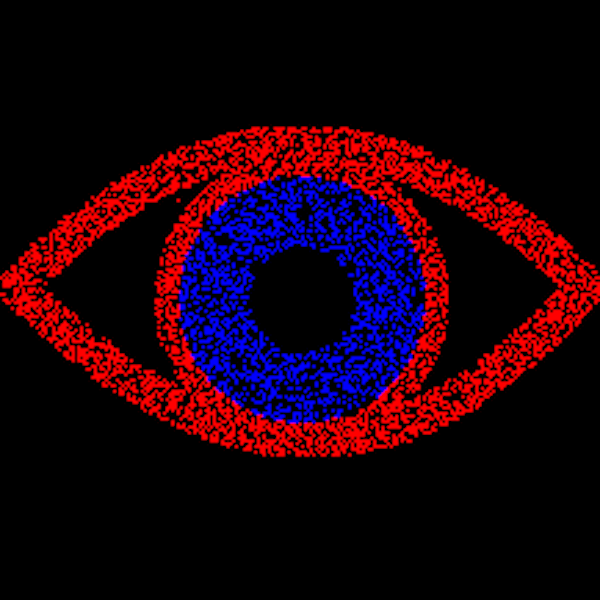
**The Science behind Chromostereopsis: An Extraordinary Depth Illusion Encounter**
Chromostereopsis presents a captivating optical illusion where flat images seem to leap into three-dimensional space. This occurrence enchants some individuals, including the author, offering an engaging experience of perceiving a static picture as if it possesses depth. When examining a specific image showcasing a blue iris within a red eye, observers may discern a remarkable depth illusion, with colors positioned on different planes appearing to occupy varying distances.
Several factors influence the illusion: quick blinking, modifying screen brightness, and observing in a dimly lit environment can amplify this effect. The contrasting hues might seem to move independently as the viewer shifts their head, enriching the illusion’s intricacy. This phenomenon is termed chromostereopsis and provides distinct experiences for various individuals. A noteworthy element of this illusion is the personal difference in perception; while many might interpret the red as nearer, for some, including the author, the blue seems to exist at a greater distance.
This phenomenon is remarkable since stereo-depth illusions generally require separate images for each eye. Conversely, chromostereopsis occurs without these distinct images, merging information from both eyes. The visual system interprets the colors, with their unique placements in the light spectrum, due to variations in how light wavelengths converge on the retina.
Historical applications of color in art and media, such as stained glass and video games, might have intuitively employed chromostereopsis. Artists and creators may have instinctively utilized this fascinating visual effect to inject depth into their creations, even if unknowingly.
In summary, chromostereopsis remains an intriguing and mysterious illusion within visual science, with its exact origins still not wholly understood. Investigating this illusion sheds light on the intricate methods our visual systems engage with color and depth, revealing fascinating intersections between art, perception, and science.