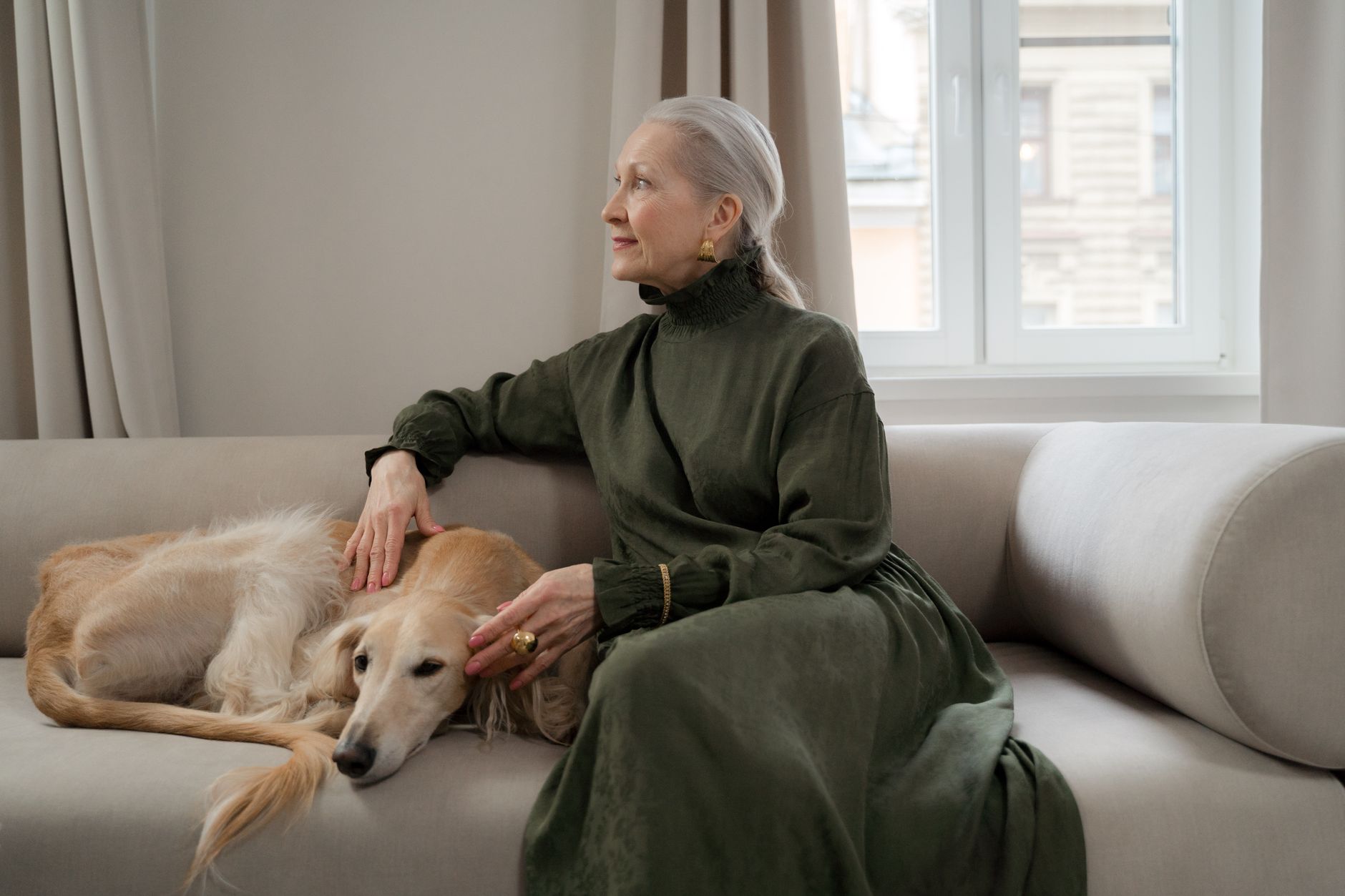
A canine can quickly gauge the atmosphere with unsettling speed. A sharp tone, a quickened pace, or an owner who seems restless may be followed by restlessness, vigilance, or a head gently resting against a knee.
It’s tempting to elevate that familiarity to a broad assertion: dogs don’t simply register our feelings today; they internalize our emotional experiences over time.
The actual studies are captivating, though more detailed. A commonly circulated narrative blends distinct research from two universities. Scholars at the University of Vienna studied owner-dog pairs in brief lab sessions. The research identifying aligned longer-term cortisol patterns originated from Linköping University in Sweden, assessing dogs and their owners twice within a year while measuring hormone levels in hair instead of observing behavior over several years.
This clarification doesn’t diminish the findings’ significance. It clarifies what was genuinely uncovered: a shared life close enough can leave correlated biological patterns across two different species.
What the Vienna team investigated
The 2017 Vienna research involved 132 owners alongside their dogs. Each pair participated in two 90-minute sessions that incorporated separation and reunion, an unfamiliar environment, practical tasks, playtime, and mildly stressful scenarios. Researchers gathered saliva from both subjects before and after various tests, subsequently linking cortisol changes to questionnaires about personality traits, attachment, and interaction styles.
This study was a sophisticated investigation into how relationships may influence stress management. It revealed that attributes of both the dog and owner were linked to cortisol fluctuations, with the human participant appearing more dominant. However, the University of Vienna experiment was carried out in controlled lab sessions. It did not monitor the pairs’ regular behavior over years, nor was it structured to evaluate their persistent emotional states.
Saliva was suitable for this inquiry as it captures cortisol within a relatively brief timeframe. To explore what occurs over extended periods of shared living, another research group utilized a different biological record.
The extended findings emerged from Sweden
In the Swedish research published in 2019, scientists recruited 58 women and their dogs: 33 Shetland sheepdogs and 25 border collies. The sample included both companion animals and dogs trained for agility or obedience contests.
Hair was collected from the dogs and their owners in September or October 2017 and again in February 2018. The first three centimeters closest to the skin were examined for cortisol, providing researchers with two retrospective perspectives corresponding broadly to summer and winter. The dogs were also fitted with activity collars for a week, while owners provided details regarding routines, training, and personality traits.
The key finding was consistent at both collection points. As hair cortisol levels in owners increased, so did those in their dogs. This connection was seen in both summer and winter and was more pronounced among female dogs and competitive pairs. The Linköping University researchers termed this long-term stress synchronization.
Measured activity and reported training frequency did not clarify the observed pattern, eliminating one simple explanation: that dogs accumulated more cortisol due to more active owners exercising them more intensively.
Hair provides a long-term record, not an emotional ledger
Cortisol functions within the body’s system to mobilize energy and respond to challenges. It does not serve as a chemical equivalent of sadness, anxiety, or a troubled life. Physical activity, excitement, illness, temperature variations, and daily patterns can all play significant roles.
As hair develops, some cortisol gets integrated into the shaft. Thus, a sample can offer a more comprehensive assessment of hormonal activity over weeks or months compared to a saliva sample taken at a single moment. This is the ingenious aspect of the Swedish study design.
Additionally, precision in language is crucial. A review of hair cortisol in animals found it valuable as a longer-term indicator while acknowledging that age, sex, body area, hair properties, and season can influence readings. Hair cortisol can demonstrate that two physiological trends coincide. However, it cannot recreate what either individual in the pair felt on a specific Tuesday.
Hence, the phrase “long-term emotional state” is stronger than what the measurement permits. The more accurate term is longer-term cortisol output, interpreted within the context of stress physiology.
Synchrony does not indicate the direction of influence
The authors proposed that dogs may be reflecting their owners since owner personality was linked to dog cortisol while dog…