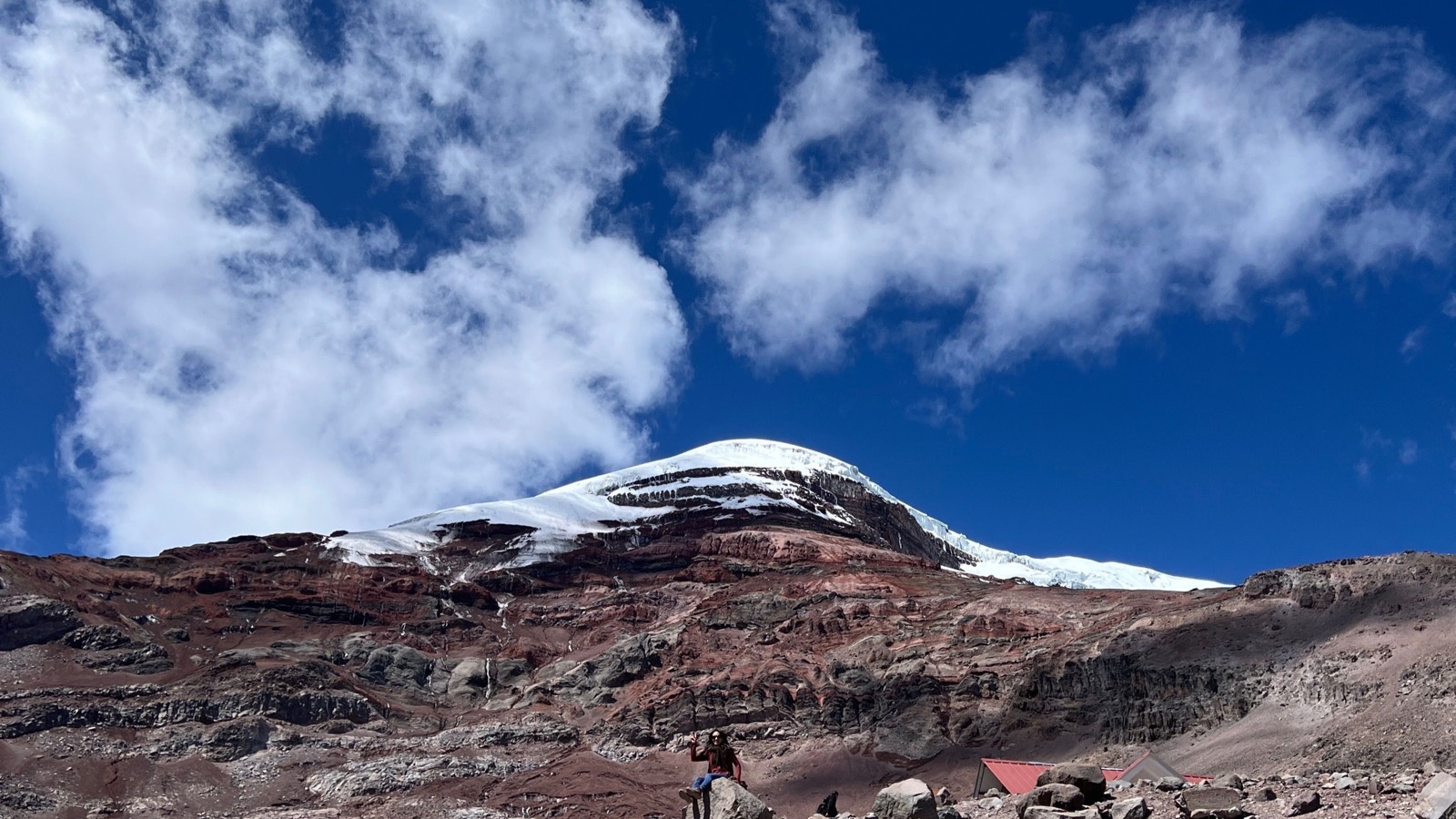
Mount Everest is recognized as the highest point on Earth, with its peak reaching 8,848.86 meters above mean sea level. Yet, when measured from the Earth’s center, another mountain takes the title: Chimborazo in Ecuador. Despite having a height of only 6,263.47 meters above sea level, Chimborazo’s peak is more than two kilometers further from the center of the Earth than that of Everest. This illustrates how the term “highest” can vary based on the reference points used.
The Two Different Measurements
Elevation quantifies a location’s height in relation to mean sea level, where Everest is predominant. Both Nepal and China officially recognized its height as 8,848.86 meters in 2020. Conversely, assessments placed Chimborazo’s elevation at 6,263.47 meters. On the other hand, geocentric distance evaluates how far a peak is from the Earth’s center of mass. A study conducted in 2016 by France’s Geoazur indicated that Chimborazo’s peak is situated 6,384,415.98 meters from the center. Estimates for Everest are around 6,382.3 kilometers. The discrepancies in published values stem from the elevation data and Earth model applied, but there is consensus on Chimborazo’s advantage due to Earth’s form.
Earth’s Shape and Location Matters
The Earth is not a perfect sphere; rather, it takes the shape of an oblate ellipsoid, bulging at the equator as a result of its rotation. The radius at the equator is approximately 21.3 kilometers greater than that at the poles. Being positioned close to the equator, Chimborazo significantly benefits from this bulge. In comparison, Everest’s location at 28 degrees north experiences less of this bulge effect. Therefore, despite Everest’s elevation, Chimborazo’s summit still remains more distant from the center.
Understanding Sea Level
“Above sea level” involves intricate factors such as gravity, tides, currents, and the distribution of Earth’s mass. The geoid symbolizes this theoretical surface but is irregular, causing surveyors to favor mathematical ellipsoids. A GPS apparatus set on Chimborazo’s peak in 2016 by a Franco-Ecuadorian group validated its central distance. Although measurements are precise, variations exist among data sources due to diverse models or coordinate systems, yet Chimborazo consistently stands as the furthest from Earth’s center.
Multiple Mountain Records
Mount Everest retains the highest elevation above sea level, Chimborazo holds the title for the peak furthest from Earth’s center, and Mauna Kea’s height—from base to summit—makes it the tallest when accounting for its underwater extension. No single mountain excels in every category. While Chimborazo is occasionally referred to as the “closest to outer space,” it is not always the location nearest to the Sun because of the Earth’s rotation and orbit.
To summarize, Everest keeps its elevation record above sea level, while Chimborazo contests this standard by altering the baseline. Various reference surfaces lead to different interpretations of “highest,” all of which are valid within their respective contexts.