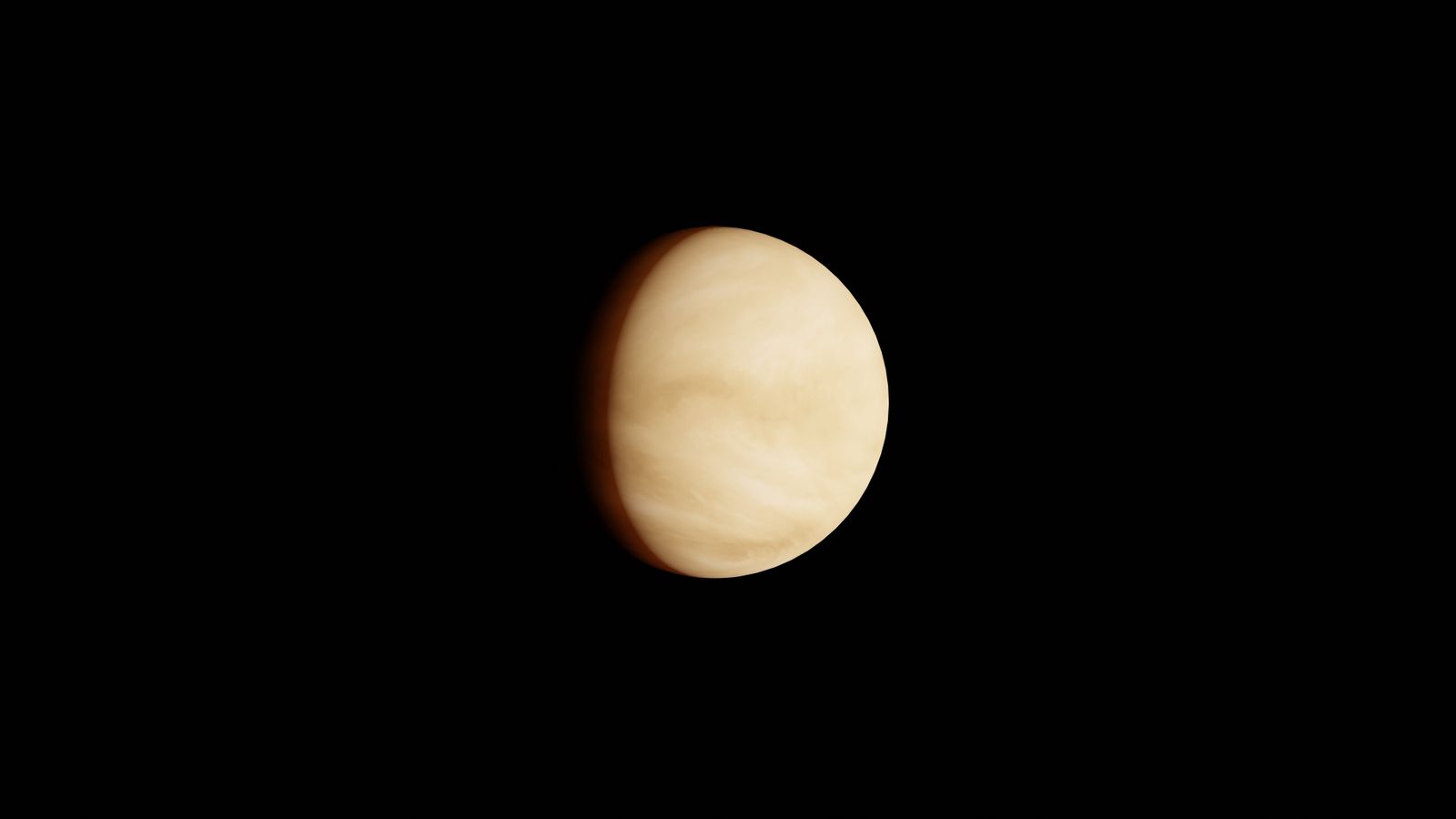
**Venera 13: Defying the Odds on Venus**
On March 1, 1982, the Soviet spacecraft Venera 13 made its mark by landing on the harsh terrain of Venus. This metallic disc, akin to an oversized skillet, endured the planet’s brutal environment for 127 minutes, far exceeding its predicted lifespan of 32 minutes. Here’s a comprehensive examination of this extraordinary accomplishment and its significance for space exploration.
**Landing on Venus: The Obstacle**
The descent and landing of Venera 13 on Venus were remarkable feats of engineering. Launched on October 30, 1981, the spacecraft journeyed around 300 million kilometers before entering the thick atmosphere of Venus at a scorching 11.2 kilometers per second. The descent was slowed utilizing heat shields, parachutes, and an aerobrake disc prior to landing near Phoebe Regio at a speed of 7.5 meters per second.
Surviving under 465°C temperatures, 90 times the atmospheric pressure of Earth, and surrounded by sulfuric acid clouds, Venera 13’s durability was surprising. Constructed as a sealed titanium pressure vessel, the lander employed pre-cooled nitrogen and a heat-absorbing lithium nitrate trihydrate heat sink to withstand the harsh conditions until its electronic systems ultimately failed.
**Investigating the Venusian Surface**
In spite of the severe environment, Venera 13 provided invaluable information. Fitted with panoramic cameras, a soil drill, and scientific instruments, it gathered unmatched images and acoustic data from Venus’s surface. The panoramic images showed flat, angular basaltic rocks set against an orange sky, adjusted for atmospheric distortions. Its soil analysis indicated a potassium-rich alkaline basalt, diverging from initial assumptions and greatly enhancing the understanding of Venus’s geological composition.
**The Engineering Success and Its Constraints**
Soviet engineers designed Venera 13 as a combination of a diving bell and thermos to endure Venus’s harsh elements. Its operational span of 127 minutes showcased their cautious design, ideal landing location, and a touch of fortune, allowing it to function well beyond expectations.
**The Legacy of Venera 13**
Venera 13’s success represented the pinnacle of the Soviet Venera program, yielding the sole acoustic data from Venus and remarkable images that continue to be analyzed for further insights. Although discussions, including those of Russian scientist Leonid Ksanfomality, have hinted at the possibility of life, no reliable evidence has substantiated such theories.
**Obstacles to Revisit Venus**
Since the conclusion of the Venera program, Venus’s surface has remained largely uncharted, primarily due to the technological challenges and high costs associated with landing equipment that can endure its extreme conditions. New missions, such as NASA’s DAVINCI probe, are intended to explore Venus’s atmosphere with limited surface engagement, targeting a timeline in the 2030s. However, as of now, the 127-minute record set by Venera 13 remains unbroken.
**Recording Sounds of Venus**
One of Venera 13’s distinctive findings was the sound recording of the Venusian wind—slow yet powerful due to the dense atmosphere—limited but invaluable, as no subsequent missions have replicated this achievement. This auditory snapshot of Venus remains a unique entry until future missions can broaden the sound library of our solar system’s most inhospitable neighbor.