**The Boiling River of the Peruvian Amazon: A Geological Puzzle**
Deep within the Peruvian Amazon, roughly a four-hour drive from Pucallpa, resides a phenomenon that has intrigued scientists: a river that maintains a steady temperature of about 86 degrees Celsius (approximately 187 degrees Fahrenheit) without any visible volcanic origin. This remarkable river, referred to locally as Shanay-timpishka, spans between four and six miles in length, depending on the inclusion of its tributaries, and can instantly cook small creatures that enter its waters.
**The Unusual Site of a Thermal Oddity**
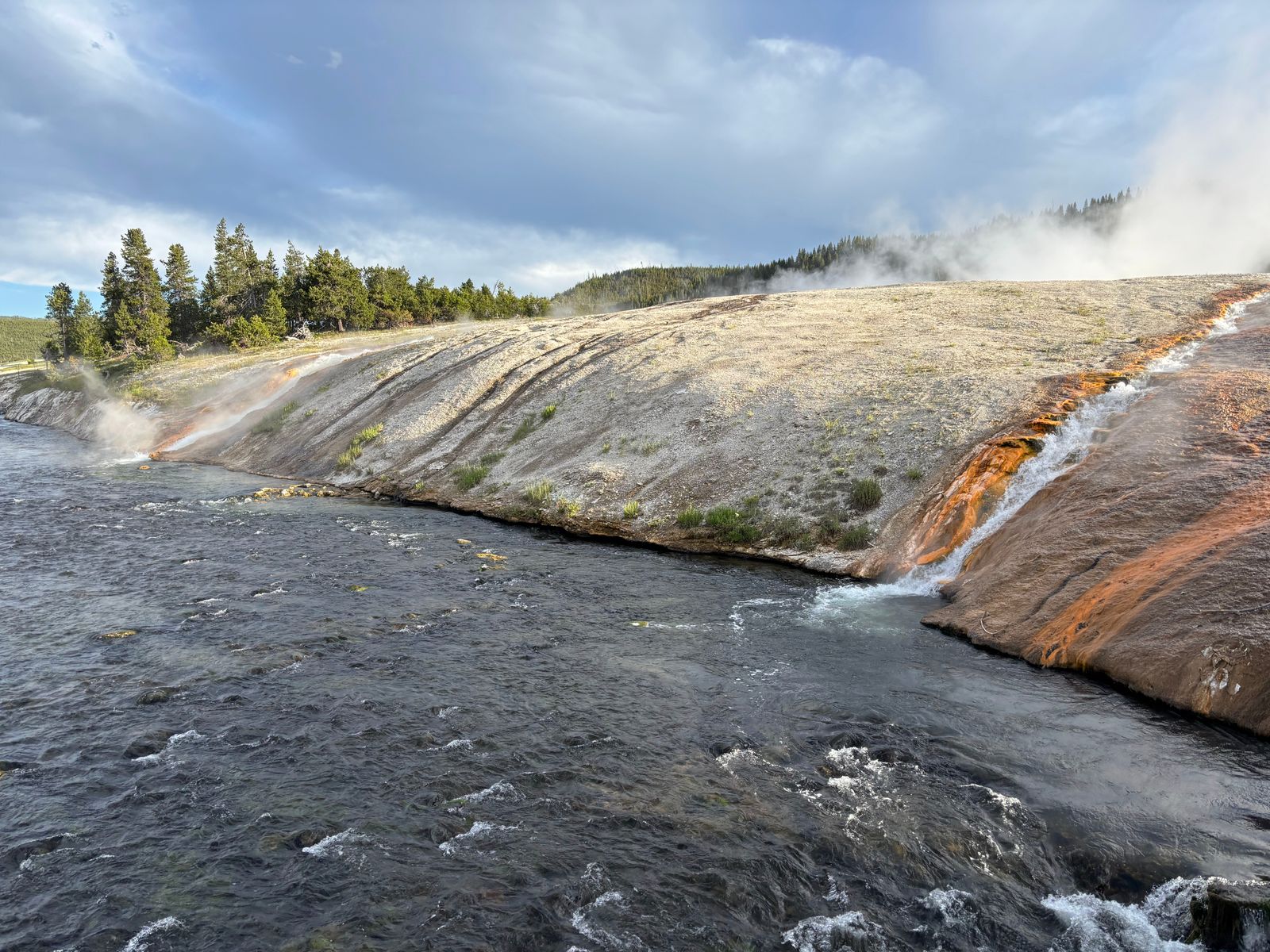
While boiling rivers are not uncommon, given geothermal hotspots like Yellowstone, the location of this warm river is what captivates researchers. Generally, thermal rivers of this nature are direct outcomes of nearby magma bodies. Yet, the closest active volcano is over 700 kilometers away from Shanay-timpishka. This oddity points to a distinctive and intricate geological framework beneath the surface instead of direct volcanic influence.
**Revealing the Source of the Heat**
Investigations led by geothermal scientist Andrés Ruzo, who first recorded Shanay-timpishka in 2011, indicate that this river is not of volcanic origin. Rather, it is probably part of an extensive non-volcanic hydrothermal system. This mechanism entails rainwater and Andean meltwater infiltrating deep into the Earth’s crust, warming due to the geothermal gradient, and resurfacing through faults and fissures, independent of volcanic activity. This explanation corresponds with the behavior of hot springs worldwide, yet the magnitude of Shanay-timpishka is unmatched.
**Ecological Effects and Findings**
The existence of such high temperatures significantly impacts the local ecosystem. A study spearheaded by researchers Alyssa Kullberg and Riley Fortier utilized the river as a natural experiment to examine effects of climate change. They observed significant shifts in temperature and vegetation in the forest enveloping the river, suggesting a move toward heat-resistant plant species. While this river cannot be extrapolated to forecast future climatic conditions in the Amazon, it stands out as a fascinating case study.
**The Myths and Conservation Initiatives**
Local folklore connects the river to legendary tales reminiscent of El Dorado, depicted by Ruzo’s grandfather as a realm inhabited by enchanting yet dangerous creatures and terrains. Indigenous groups such as the Asháninka and Shipibo-Conibo have long acknowledged the river, using its waters for healing and ceremonial practices.
Ruzo persistently champions the river’s conservation amid threats from deforestation and possible alterations due to receding Andean glaciers that could influence the river’s flow. Suggested actions include designating the region as a national monument to safeguard its distinctive natural attributes.
**Conclusion: Earth’s Hidden Narratives**
The Boiling River symbolizes not merely a fascinating natural wonder but also a testament to Earth’s concealed marvels and intricate geology. It contests previous scientific beliefs and paves new paths for understanding hydrothermal processes far removed from volcanic regions. As research continues, the enigmas of this river persist in revealing the complex interconnections within Earth’s ecosystems.