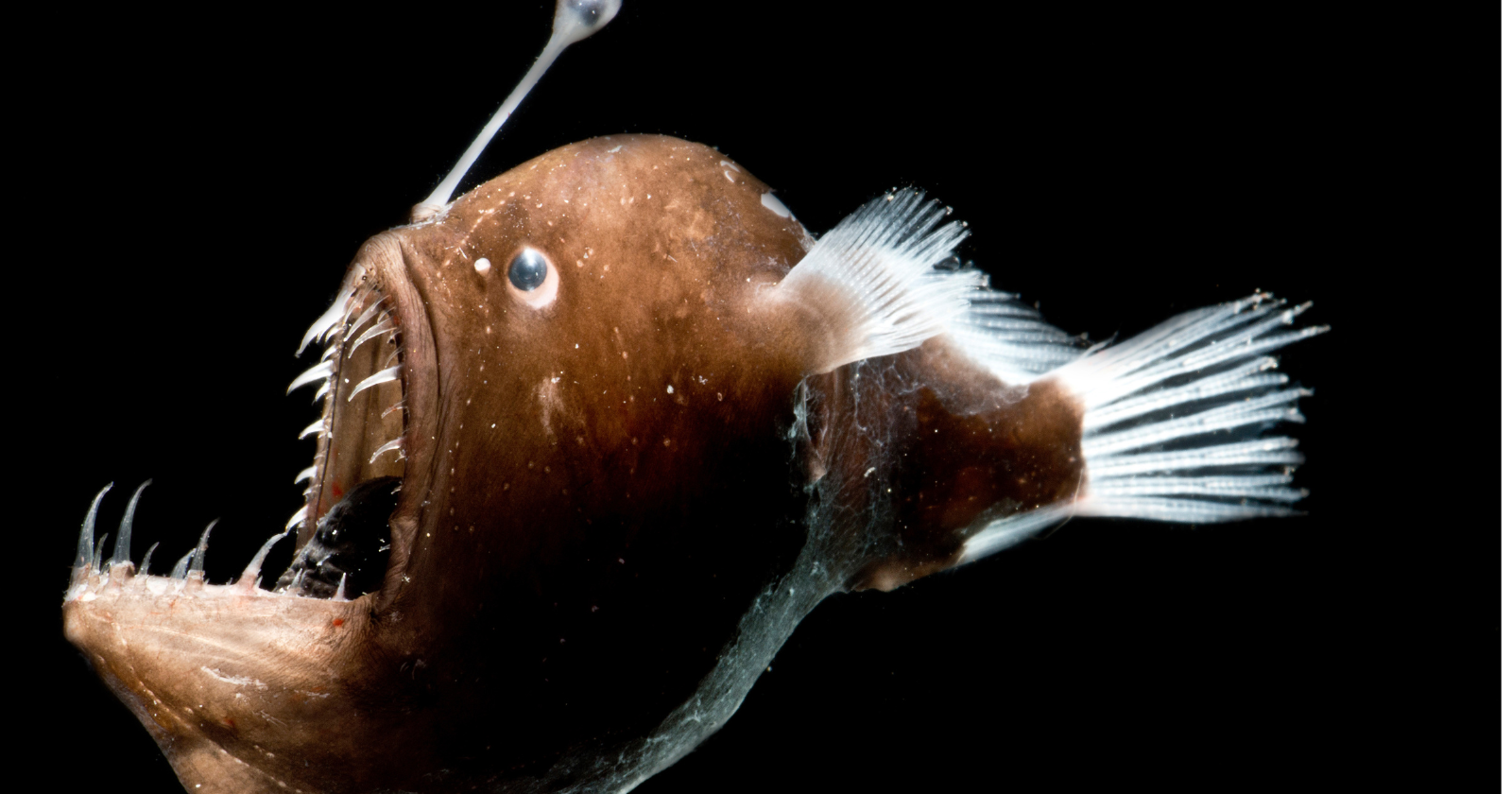
Eight hundred meters below the ocean’s surface, where light scarcely reaches, a remarkable biological spectacle occurs between the deep-sea anglerfish and her tiny partner. In this shadowy environment, a male anglerfish, significantly smaller than the female, embarks on a transformative quest. Equipped with sensory adaptations dedicated to finding a mate, the male affixes himself to the female via a single bite, triggering an extraordinary metamorphosis.
The male, frequently possessing rudimentary physical characteristics, lacking a luminous lure and exhibiting limited utility, seeks the female through olfactory or visual signals. The ensuing fusion process intensifies the strangeness; the male secretes enzymes that initiate the amalgamation of his tissues with hers, ultimately combining their circulatory systems. In this parasitic-like association known as parabiosis, the male becomes reliant on the female for nourishment.
Over time, the male relinquishes most of his bodily functions, retaining primarily his reproductive organs. This permanent anatomical union resembles that of identical conjoined twins, presenting a striking biological anomaly among vertebrates.
A crucial adaptation that facilitates this union is the anglerfish’s distinctive immune response. Studies conducted by researchers, including those from the Max Planck Institute, suggest that some anglerfish species have evolved to lack specific immune mechanisms, likely inhibiting tissue rejection between the genders. Their immune systems seem to operate mainly on innate mechanisms rather than the adaptive responses observed in other vertebrates.
Despite the remarkable nature of sexual parasitism, not all anglerfish species partake in this extreme behavior. Research indicates that permanent attachment is observed in only a subset of anglerfish families, with many species either forming temporary attachments or refraining from attachment altogether. This phenomenon, while representative, does not characterize the entire group.
In a significant observational breakthrough, a living pair was documented in 2016, providing a rare real-time insight into this mysterious reproductive strategy. The footage showcased a male in the initial stages of attachment, highlighting the uniqueness of this natural occurrence.
The evolutionary trajectory of anglerfish illustrates how natural selection can lead to the development of unusual and seemingly extreme reproductive tactics, emphasizing nature’s unyielding quest for reproductive success.