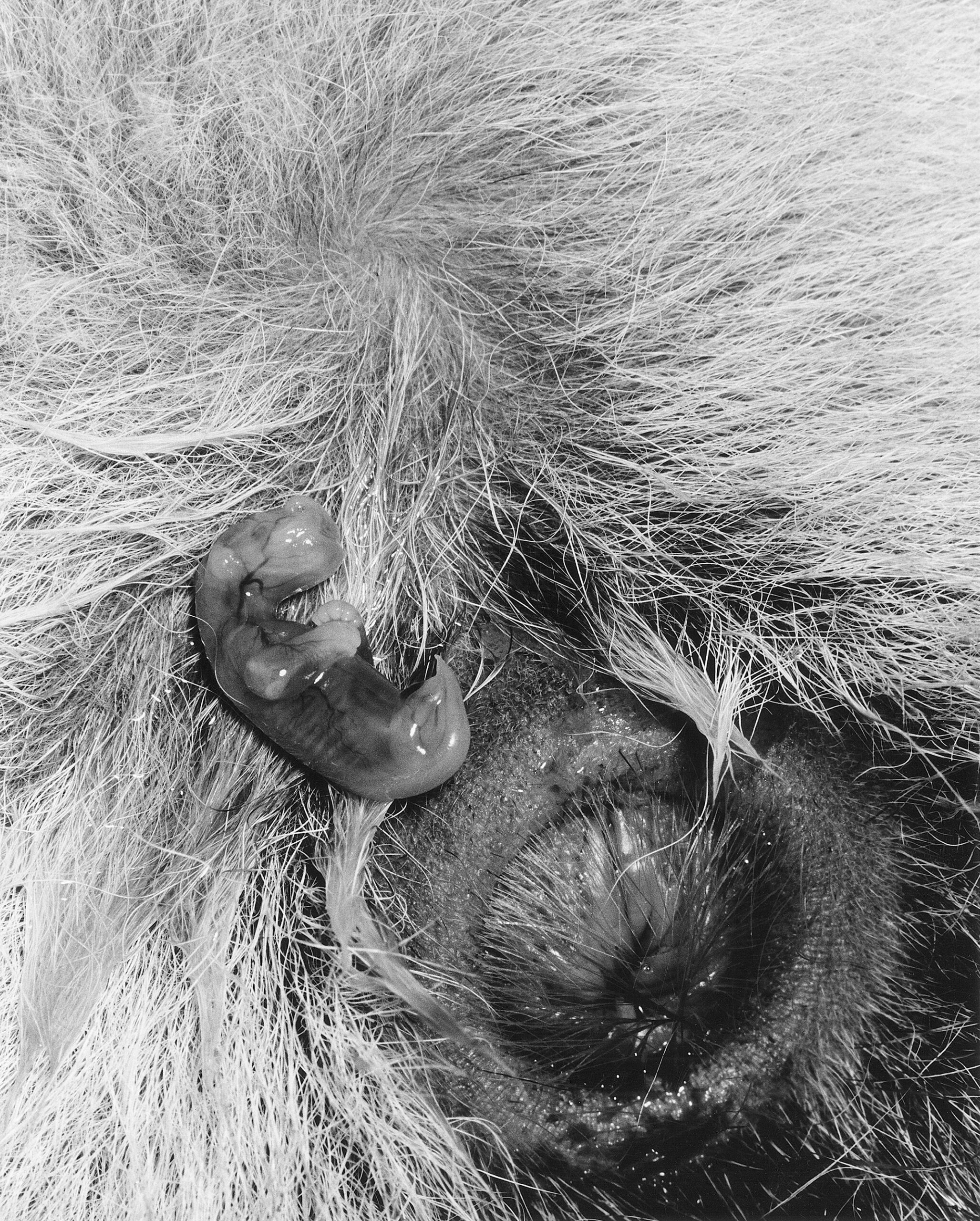
An adult red kangaroo can stand taller than an individual, yet its life commences at a scale that appears almost incompatible with the creature it will become. Shortly after a month of gestation, the newborn emerges hairless, with closed eyes, an incomplete nervous system, and hind limbs that are little more than buds. Its initial mission is also its most critical: reach the pouch and latch onto a teat.
The well-known jellybean analogy serves as a visual shorthand, but the sizes differ between species. A red kangaroo neonate typically weighs about 750 milligrams following a 33-day pregnancy. An eastern grey arrives at about 36 days and still weighs under one gram. The remarkable aspect is not solely its diminutive size. Development has provided precisely the structures required for one brief journey.
“Kangaroo” encompasses various birthing schedules
The four living creatures commonly referred to as kangaroos are closely related, yet they are not identical. The Australian Museum’s account of the eastern grey indicates a 36-day interval post-mating and a birth weight below one gram. Western greys gestate for approximately a month, while the more thoroughly researched red kangaroo gives birth after about 33 days.
Classic observations of red kangaroo reproduction recorded newborns weighing around 750 milligrams, taking roughly three minutes to reach the pouch. A 1964 life-history study found no evidence that mothers actively carried the young upward.
Thus, “barely a month” and “less than a gram” are accurate for the larger kangaroo species, while “jellybean-sized” is a metaphor rather than a scientific measurement. Body length and posture can make different images appear larger or smaller than the weight suggests.
The initial ascent begins at birth
Prior to delivery, the mother typically relaxes and cleans the area between the birth opening and pouch. The neonate emerges through the urogenital opening, often still partially wrapped in membranes. It then commences an alternating, pulling motion with its forelimbs, gripping fur and hauling its body upwards.
A remarkable CSIRO film of red kangaroo birth captures the journey directly. The hind limbs do not propel the animal. At this stage, they are diminutive, poorly formed buds trailing behind. The newborn’s tail has not yet developed into the muscular balancing organ it will eventually become. Almost all effective locomotor effort originates from the shoulders, forearms, and clawed digits.
Referring to the climb as unaided involves locomotion: the mother does not lift the joey and place it inside. She still prepares the path through her posture and grooming, and her fur provides the surface the forelimbs cling to. The newborn accomplishes the essential movement under its own power.
Blind does not equate to senseless
The joey cannot visualize the pouch. Its eyes are sealed, and it lacks hearing in the way it will later possess. Yet it reacts to a limited sensory toolkit. Evidence across marsupials suggests that gravity, smell, temperature, and touch around the muzzle and mouth play a role. These inputs can guide a highly immature creature without requiring a developed cerebral cortex.
A review of sensory function in newborn mammals outlines pouch orientation, climbing, teat finding, and oral attachment while distinguishing those responses from sight and hearing. Experiments with quokkas have shown that gravity alone can provide a significant directional cue, although kangaroos may also utilize odor and the alignment of the mother’s fur.
It is more precise to view the joey as developmentally selective rather than simply helpless. Many systems remain unfinished, but the necessary sensory and motor circuits for this immediate survival challenge are already functioning.
Researchers are still determining the relative importance of these cues, and findings from one marsupial should not be automatically applied to every kangaroo. Odor may aid in identifying the pouch or teat, gravity provides a reliable upward direction, and tactile receptors assist with final attachment. What the climb clearly demonstrates is coordinated behavior, not adult-like awareness. A tiny operational circuit can resolve a narrowly defined task even while much of the brain remains significantly immature.
The forelimbs receive an extraordinary head start
Marsupial development is not purely placental development halted prematurely. Its schedule is rearranged. The anterior part of the body, including the mouth, shoulders, and forelimbs, develops significantly ahead of the posterior. Muscles and bones required for crawling materialize while much of the rest of the body remains embryonic.
Ultrasound studies in tammar wallabies have shown that forelimb climbing movements commence prior to birth, less than three days before delivery. Thus, the initial journey is not improvised once the joey encounters the external environment. The motor pattern has already begun rehearsing within the uterus.
Genetic studies corroborate this view. An earlier ScienceBlog report on marsupial embryos noted that forelimb development initiates unusually early and gathers cells from a wider region of the embryo. The hind-limb program is also defined, but receives fewer of the limited cells available at that stage. The outcome is a newborn with functional arms and rubbery