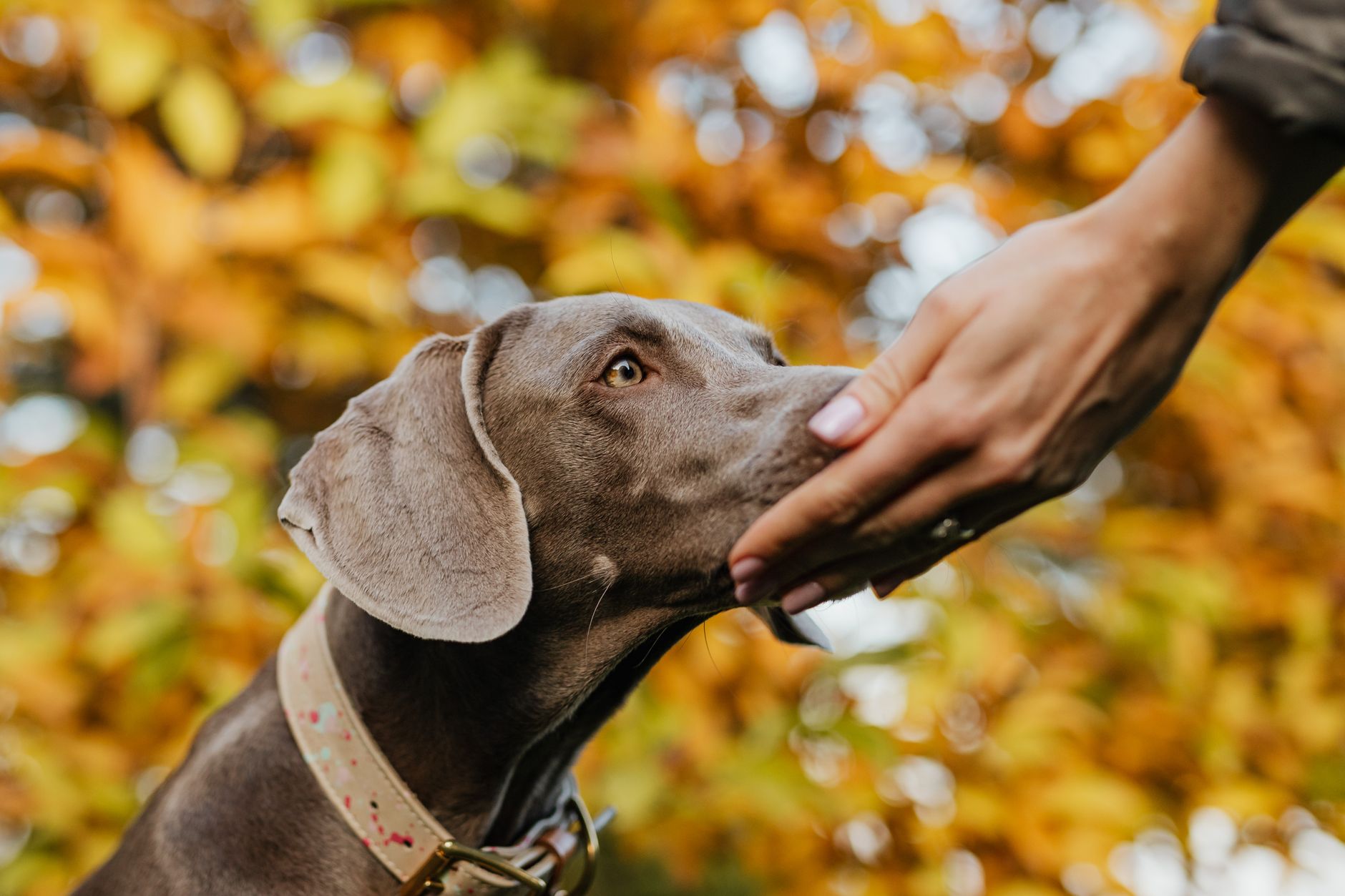
Envision one-tenth of a liquid droplet spread throughout two Olympic-sized swimming pools. Considering a typical droplet to be around 0.05 millilitres and each pool approximately 2.5 million litres, this dilution is nearly one part per trillion in volume. Under controlled circumstances, dogs have identified odorants at concentrations approaching this level.
Researchers have leveraged this sensitivity to explore a notion that once seemed unlikely: that diseases might alter the chemical composition of a person’s breath, allowing a trained dog to discern the difference. Experiments under controlled conditions have indicated that dogs can differentiate breath samples from individuals with lung and colorectal cancers compared to control samples.
The findings are compelling, yet the context is crucial. These were studies on scent detection, not dogs autonomously diagnosing patients in standard healthcare settings. They reveal a detectable biological signal and a potential pathway for new breath analyses. However, they do not supersede CT scans, colonoscopies, pathology, or medical evaluations.
One part per trillion is not a universal threshold
A review concerning canine detection and disease-related volatiles indicates a verified lower limit close to one part per trillion, equating to about one drop in 20 Olympic pools. One-tenth of a drop in two pools maintains the same ratio. While it conveys a useful scale, it requires limitations.
No singular canine detection threshold exists. It varies by the chemical in question, whether presented in air or liquid, the apparatus, the dog, the training received, and the criteria used to define a successful detection. Therefore, stating “approaching” one part per trillion is more precise than claiming every dog can detect every substance at that concentration.
Laboratory thresholds are tasked with a more straightforward question than cancer identification. A dog may be asked to confirm the presence of a known odorant against a pure background. Human breath encompasses countless volatile compounds, moisture content, and chemical variations influenced by diet, medications, smoking, infection, and environmental factors.
A nose adapted to distinguish breathing from smelling
Dogs provide more than just additional smell receptors. Their nasal airflow is structured for repeated sampling. A study on the fluid dynamics of canine olfaction elucidates how inhaled air separates into a respiratory pathway and an olfactory pathway directed toward sensory tissue located in a recessed section of the nose. When sniffing, exhaled air escapes through lateral slits, aiding the entry of fresh odors into the nostrils.
Within that airflow lies an extensive, folded olfactory epithelium containing hundreds of millions of sensory neurons. The brain interprets activity across various receptor combinations. This enables a trained dog to react to a chemical pattern rather than necessitating that researchers determine one definitive “cancer molecule” beforehand.
Training plays a vital role. Dogs learn that a specific type of sample corresponds to a designated alert, such as sitting or lying down, while control samples should be disregarded. Trustworthy experiments must ensure that neither the handler nor the observer inadvertently communicates which sample is positive.
Breath samples from individuals with lung cancer
A notable experiment from 2006 tasked five average household dogs, using food rewards and clickers. They were trained to differentiate exhaled breath from 55 individuals with lung cancer and 31 with breast cancer, with samples provided by 83 healthy controls. Testing utilized samples unfamiliar to the dogs from training, while handlers and observers were kept unaware.
In the lung cancer study, the reported sensitivity and specificity both approached 99 percent. Sensitivity indicates the proportion of cancer samples accurately identified; specificity reflects the proportion of controls accurately dismissed. This result provided a significant proof of concept, although it stemmed from a carefully structured study rather than a screening clinic.
Another 2017 lung-cancer study exposed one trained dog to exhaled-gas samples from 85 lung cancer patients and 28 controls. Over repeated presentations, researchers recorded a sensitivity of 95 percent and specificity of 98 percent.
Results can vary. In a more recent study involving seven dogs and 154 patients at a general respiratory clinic, the mean detection rate of cancer-positive breath samples was 78 percent, while the mean correct classification of non-target breath samples was 68 percent. This more screening-like population illustrates why performance estimates are highly dependent on the individuals being tested.