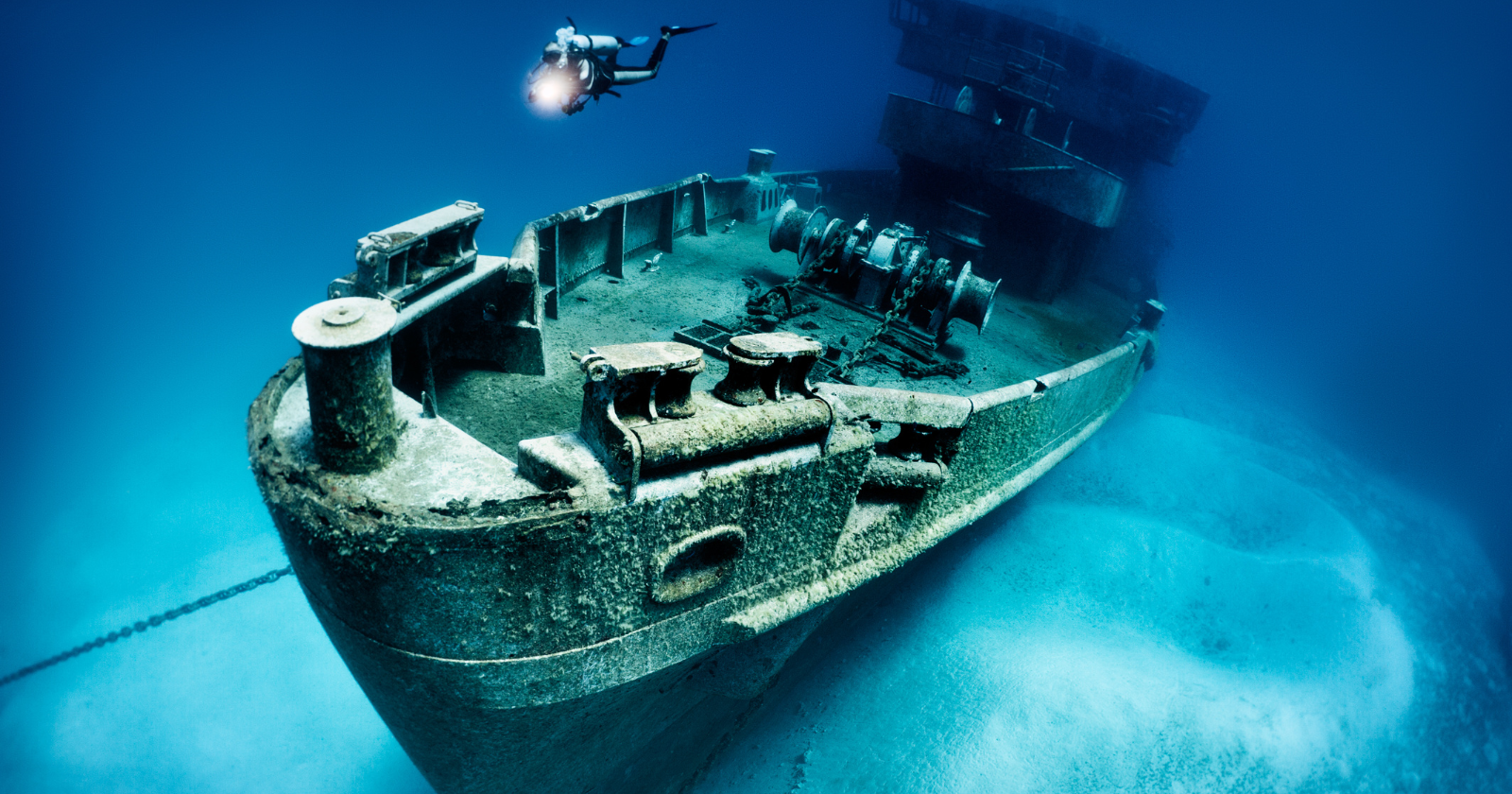
At approximately midday on June 21, 1919, the crews of 74 interned German warships anchored in a bay in the Orkney Islands opened their vessels’ seacocks and commenced the sinking process. The German High Seas Fleet had been surrendered to Britain seven months prior under the stipulations of the Armistice that concluded the First World War. Its future was uncertain as the Allies debated the division. Rear Admiral Ludwig von Reuter, the German commander, feared the ships would be confiscated entirely as war prizes. He ordered the scuttling. The British were unprepared. Their guarding vessels managed to beach a few German ships, but 52 out of the 74 sank to the depths of Scapa Flow. This event marks the largest single-day loss of naval vessels in history. Most of these ships were subsequently raised and dismantled. However, a few remained. Decades later, for unforeseen reasons in 1919, the vessels left behind became unexpectedly valuable.
Events in Scapa Flow
Scapa Flow is a natural deep-water harbor situated among the Orkney Islands, north of the Scottish mainland. It functioned as the Royal Navy’s main base during the First World War and became the holding location for the interned German fleet following the Armistice. The 74 ships anchored there were the pride of the Imperial German Navy — comprising battleships, battlecruisers, light cruisers, and torpedo boats, many of which were under five years old. Their crews endured reduced living conditions aboard during the winter of 1918-19 while diplomats in Paris negotiated peace. When von Reuter discovered that the Treaty of Versailles would necessitate the ships’ surrender, he acted on standing orders established before the Armistice. Should the ships be at risk of seizure, they were to be destroyed. On the morning of June 21, he sent the coded signal for scuttling to the fleet. The operation was successful. During the scuttling, nine German sailors lost their lives due to British gunfire, while the others were interned as prisoners of war. Most of the fleet settled at the bottom of Scapa Flow within hours.
The salvage operations that halted
In the following decades, most wrecks were salvaged. Marine salvage rights were allocated to private enterprises. One of the most active was Cox and Danks Ltd., established by English scrap merchant Ernest Cox, who acquired 28 wrecks and devised innovative compressed-air methods for raising them. By the onset of the Second World War in 1939, most sunken ships had been retrieved, towed to dismantling yards, and converted into scrap metal. Salvage efforts persisted intermittently until the 1970s. By 1979, when the final commercial salvage attempt concluded, 45 of the 52 sunken vessels had been recovered, with seven remaining on the seafloor. These wrecks still exist today — three battleships (the Kronprinz Wilhelm, the Markgraf, and the König) and four light cruisers (the Brummer, the Karlsruhe, the Dresden, and the Cöln), alongside various smaller vessels and torpedo boats. They are now classified as protected historic sites under Scottish law, and become popular destinations for recreational diving. The renewed commercial interest in these wrecks in recent decades is not mainly historical or archaeological, but metallurgical.
How 1945 transformed everything
Contemporary steel manufacturing relies heavily on atmospheric air. Both the Bessemer converter and the basic oxygen process, which together constitute nearly all mass-produced modern steel, utilize blasts of surrounding air to eliminate carbon from molten iron. Prior to 1945, that atmospheric air was uncontaminated. After 1945, it became tainted. The initial atmospheric nuclear tests, commencing with the Trinity test in New Mexico in July 1945 and continuing through American, Soviet, British, French, and Chinese testing programs in the decades that followed, released substantial amounts of specific radioactive isotopes into the Earth’s atmosphere. Isotopes such as cobalt-60, caesium-137, americium-241, and other fission and activation products spread globally within weeks and persisted in circulation for years. Any steel manufactured after 1945 was permeated with air containing these isotopes. Minute amounts of this contamination became embedded in the end product itself. These amounts are minimal — measured in fractions of a becquerel per kilogram — but they are detectable. For the majority of uses, this level of contamination is inconsequential. However, for particular applications, it is critically important. Instruments developed to detect extremely low levels of radiation — including particle physics detectors, medical whole-body counters, and space-based radiation sensors — require casings made from materials that emit as little.