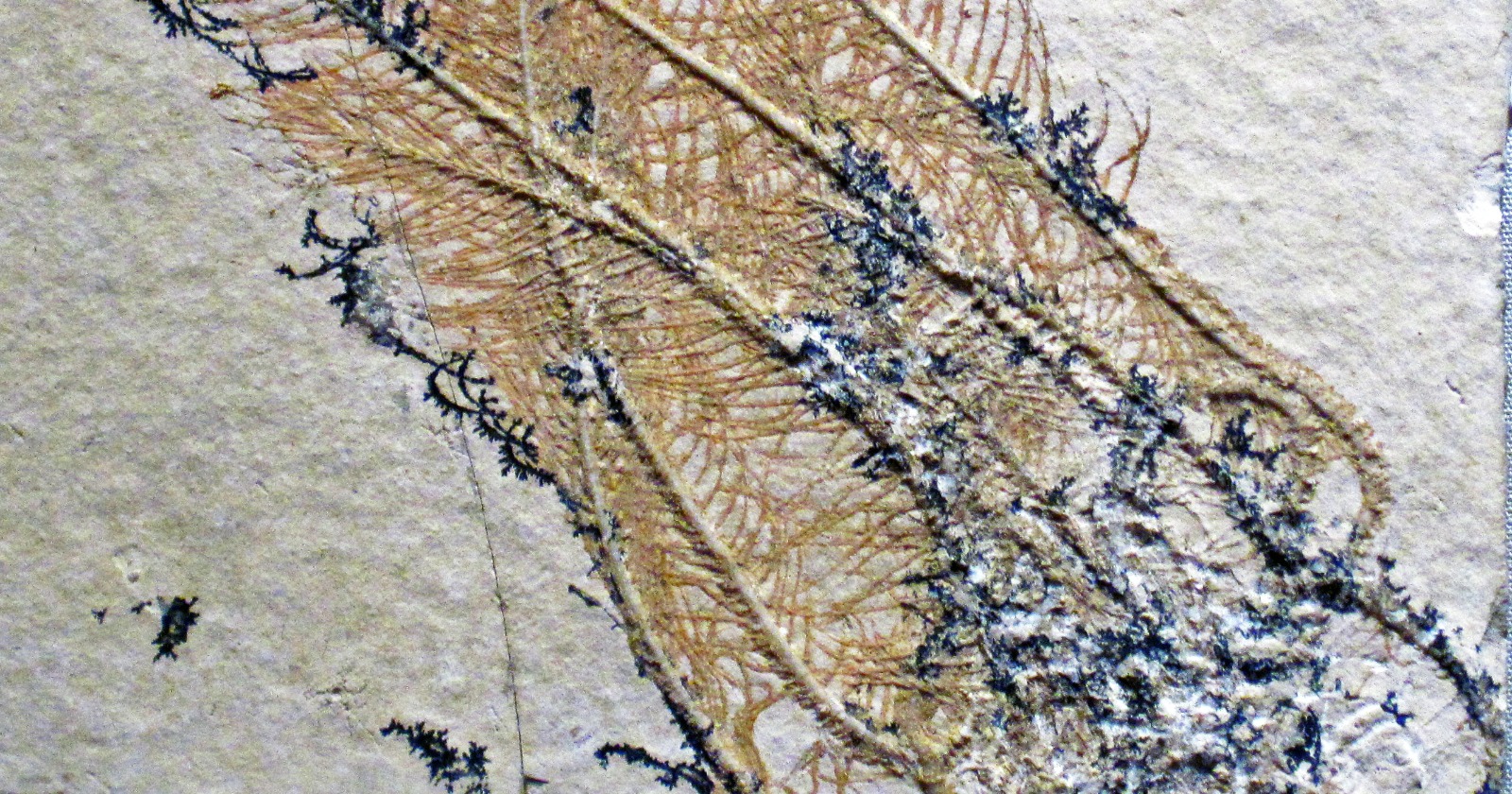
In an extraordinary paleontological discovery, the second-ever crinoid fossil featuring tube feet has been found, establishing a new age benchmark at around 452 million years. Until now, only a single such fossil was documented, hailing from the Lower Devonian of Germany. This recent finding includes two specimens of Dendrocrinus simcoensis sourced from a quarry close to Quebec City. Cataloged in Royal Society Open Science by Selina Cole, David Wright, William Ausich, and Mario Cournoyer, these fossils now signify the earliest known occurrence of tube feet in crinoids.
The specimens were recognized during an examination at the Musee de paleontologie et de l’evolution in Montreal. Located in the upper Grondines Member of the Neuville Formation, these fossils were embedded in a deep-water carbonate environment favorable for remarkable articulation. Crinoid tube feet, essential for feeding, emerge from the hydraulic water vascular system, seizing particles that flow past their arms in the current. In extant crinoids, tube feet are arranged in podial triplets, although typically only the principal tube foot is discernible in fossils.
The presence of tube feet in fossils is uncommon owing to their soft tissue nature. In these specimens, the tissue was substituted by a pyrite film, distinguishable from the calcite skeleton upon microscopic inspection. The visibility of these features necessitates immersion in alcohol to improve contrast, as shown by the various photographic methods utilized in capturing the findings.
The fossil crinoids exhibit tube feet averaging 0.45 mm in length and 0.15 mm in width, spaced about four per millimeter. This aligns with certain traits of contemporary crinoids but presents an unusual combination not found in living species. D. simcoensis displays short, widely spaced tube feet, contrasting with the long, closely arranged tube feet of modern counterparts. This unique morphology indicates a feeding strategy and habitat not directly comparable to any known current crinoids.
The spacing and size of D. simcoensis imply a capability to thrive in low-energy environments, in line with the depositional setting of the Neuville Formation. Nevertheless, additional studies are required to completely comprehend the ecological ramifications and functional morphology due to the scarcity of comparative data connecting tube foot structure to crinoid posture and habitat.
A statistical assessment utilizing John Brower’s 2006 model confirmed the classification of D. simcoensis within the Eucladida clade. These results highlight the evolutionary diversity and versatility of crinoids throughout their long geological timeline, paving the way for new insights into their ancient ecosystems and evolutionary trajectories.