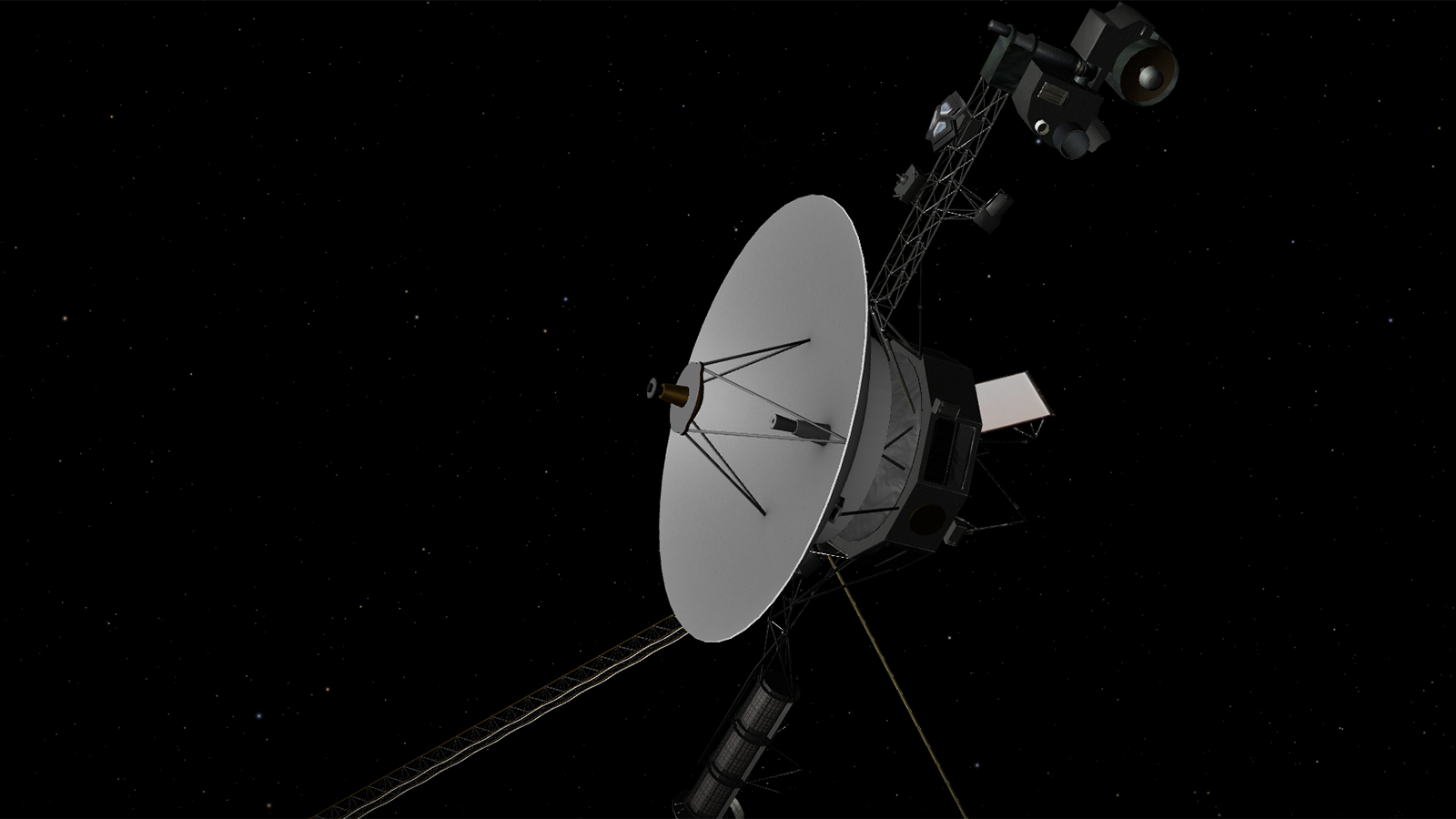
**Voyager 2: Mission Extension in Unexplored Regions**
For nearly fifty years, Voyager 2 has exceeded expectations, accomplishing astonishing achievements beyond what its original creators could have envisioned. Launched in 1977, this trailblazing spacecraft provided humanity with its sole close-up images of Uranus and Neptune after passing all four gas giants, before embarking on its journey into interstellar space. Despite its age and the technological limitations of its 1970s equipment, Voyager 2 continues to relay priceless scientific information from beyond the heliopause.
By 2026, the mission encountered a critical depletion of its most essential resource—power. Voyager 2’s radioisotope thermoelectric generators (RTGs), which generate electricity from the decay of plutonium-238, lose around four watts of electrical power each year. Although this may seem minor, this reduction is substantial for a spacecraft operating with minimal margins, often influencing whether additional scientific instruments need to be turned off.
In a strategic initiative reminiscent of its mission management, NASA engineers implemented a process referred to as the “Big Bang” to extend Voyager 2’s scientific pursuits. This required a complex power and thermal reconfiguration involving the simultaneous shutdown of specific power-hungry devices and the activation of lower-power alternatives, achieving a reduction of 10 watts. This meticulous orchestration maintained Voyager 2’s operational integrity while preventing its critical components from freezing—a vital necessity given the extreme cold of space and the lack of new replacements or repairs.
NASA’s update from August 2026 highlights that this maneuver is expected to keep Voyager 2’s three remaining scientific instruments operational for a further year. These instruments—the magnetometer, the plasma wave subsystem, and the cosmic ray subsystem—are essential for investigating the environment beyond the heliosphere, providing insights that cannot be gained from Earth-based observatories.
The requirement for such precision is intensified by the logistical challenges of communicating with a spacecraft nearly 12 billion miles away. Command-and-response cycles, governed by the slow speed of radio waves, take nearly 39 hours, necessitating meticulous planning with no margin for error. Every decision takes into account Voyager 2’s four decades in space, with the aging of components introducing uncertainties that were unforeseen at launch.
Currently, Voyager 2 occupies a distinctive position, unparalleled by any other mission and irreplaceable in its journey through interstellar space. Each year of operation contributes critical data to an ongoing collection of solar and cosmic observations that cannot be duplicated. While the eventual silence of Voyager 2 is unavoidable as its power wanes, the recent reconfiguration signifies a notable triumph—every additional measurement deepens our comprehension of the universe, even as the countdown progresses.