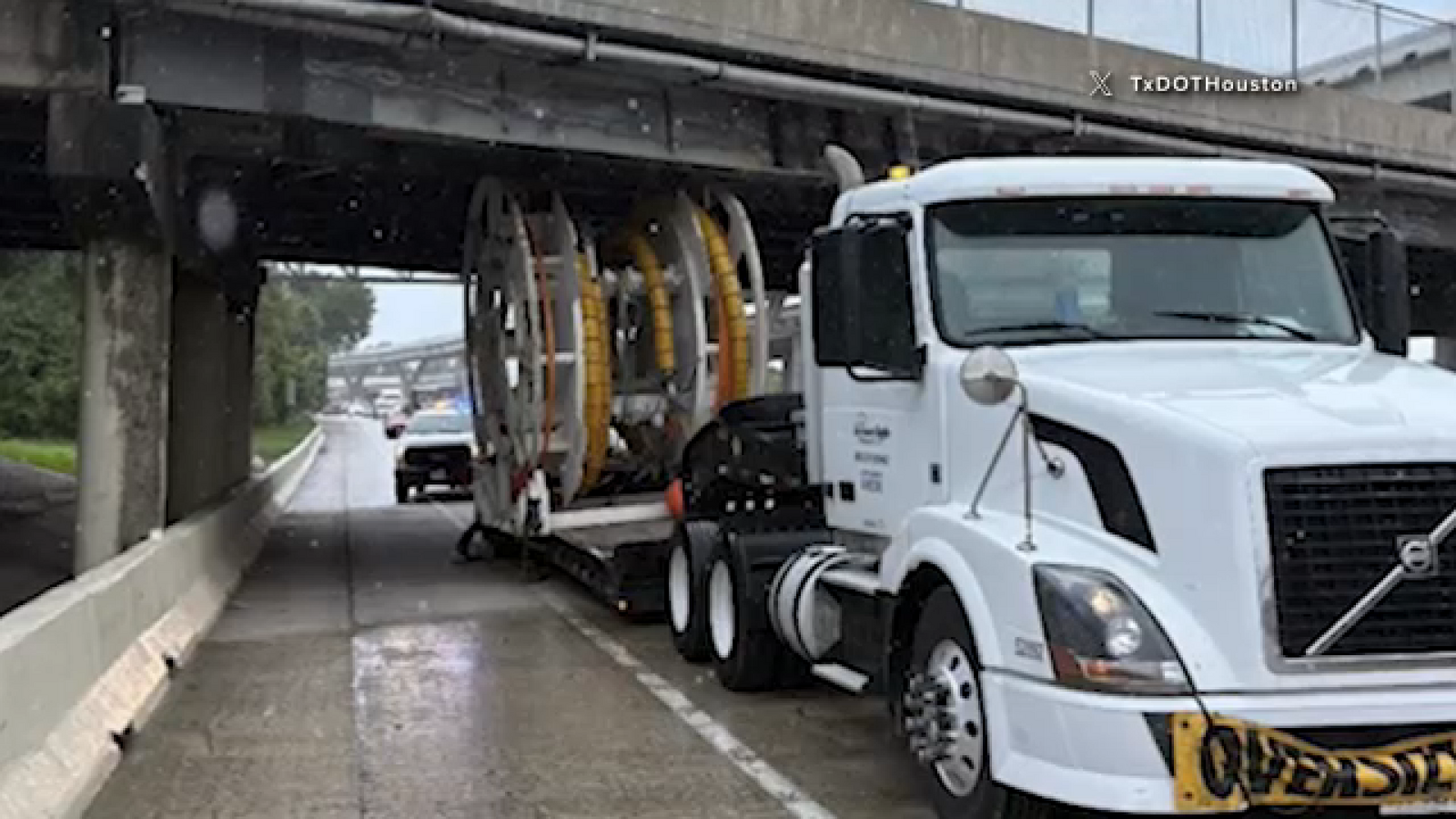
**Collision Involving Oversized Cable Spool Under Houston Avenue Bridge Disrupts I-10 Traffic**
On August 14, 2026, a semi-truck transporting an oversized cable spool crashed beneath the Houston Avenue Bridge, blocking eastbound I-10 in Houston. This bridge, which has a clearance of 14 feet and 3 inches, was built in 1965 and has a well-known record of similar occurrences. The Texas Department of Transportation (TxDOT) has taken measures to mitigate these collisions, including the implementation of oversized-load detection systems, but incidents remain a concern.
**Bridge Impact and Traffic Delays**
The Houston Avenue Bridge was impacted at approximately 11:40 a.m. by the oversized load, leading to the closure of two lanes in the eastbound direction. The oversized spool became clearly lodged under the bridge, significantly impeding traffic until the issue was addressed, with all lanes reopening by 3 p.m.
**Repeated Collisions and Economic Consequences**
In October 2025, Click2Houston highlighted that the bridge had experienced 72 strikes that year, accumulating costs of $401,379.79 for repairs and inspections. The incident on December 8 marked the 73rd occurrence of the year. Each strike necessitates immediate inspections by TxDOT, typically resulting in I-10 closures for two hours or more. The expenses for damage and monitoring weigh heavily on taxpayers, with frequency rates underscoring the ongoing susceptibility of the bridge.
**Demolition Plans and Future Infrastructure Initiatives**
The Houston Avenue Bridge is slated for demolition in early 2027 as part of the White Oak Bayou project, projected to cost around $400 million. Upcoming initiatives include elevating I-10 and replacing the bridge to do away with the current collision-prone structure. This program seeks to improve flood resilience and create pedestrian and biking amenities, while not increasing vehicle capacity. Until the bridge is replaced, the low-clearance issue remains a danger for oversized loads traveling eastbound on I-10.