**The Mediterranean Sea: A Continuous Water Shortage and the Messinian Salinity Catastrophe**
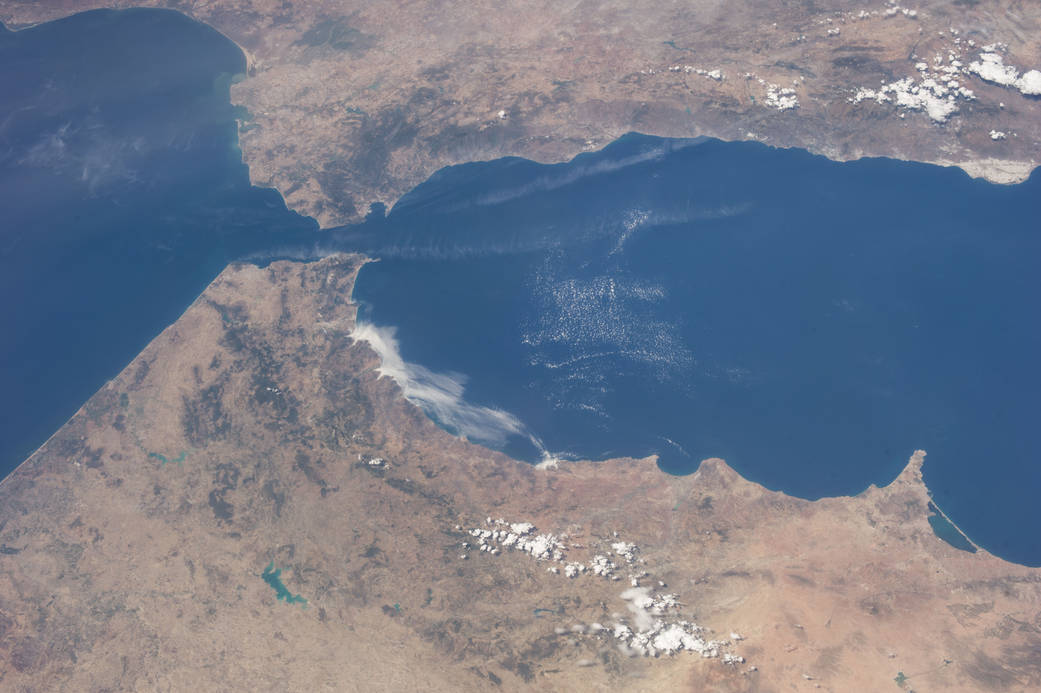
The Mediterranean Sea is a distinctive water body that is sustained by a fragile equilibrium upheld by the narrow Strait of Gibraltar. This strait allows the influx of Atlantic water which offsets the high evaporation rates characteristic of the Mediterranean area. In the absence of this ongoing inflow, the Mediterranean would gradually diminish and grow more saline, reminiscent of conditions during the Messinian Salinity Catastrophe between 5.97 and 5.33 million years ago.
During this geological phenomenon, the Mediterranean’s separation from the Atlantic caused a significant drop in water levels, disrupting standard marine circulation and leading to the formation of extensive evaporite mineral deposits, which in certain locations create a layer exceeding two kilometers in thickness beneath the seafloor.
The event concluded with a calamitous reconnection to the Atlantic, thought to have occurred via a rapidly escalating flood through Gibraltar. A notable study from 2009 simulated this occurrence, suggesting that as much as 90% of the water volume entered during an accelerated phase lasting several months to a few years. This model emphasizes how swiftly the basin was refilled, despite relying on estimates rather than direct geological dating.
**A Sea with an Ongoing Water Deficit**
The Mediterranean’s deficit in freshwater can be attributed to its climatic and geological conditions. The Strait of Gibraltar, although only 13 kilometers wide at its narrowest, is vital for maintaining the sea’s level by enabling water flow from the Atlantic Ocean. This exchange operates as a two-layer process: fresher Atlantic water enters at the surface while saltier Mediterranean water exits at greater depths. The critical importance of this passage was notably highlighted in the late Miocene when tectonic shifts limited access, triggering a phase of significant hydrological and geochemical transformations.
**The Aftermath of 640,000 Years of Isolation**
The Messinian Salinity Catastrophe transpired over roughly 640,000 years, leaving a rich geological record. Peripheral deposits of gypsum and other minerals, extensive evaporite formations in deeper areas, and various deposition stages reflect the intricate history during this era. Initial gypsum deposits were succeeded by halite layers in deeper basins, with variable climates and changing water inflow influencing the formation of these layers.
The concept of a uniformly dehydrated sea is contested by layers indicating fluctuating conditions, demonstrating that while the Mediterranean faced severe drawdowns, it likely did not completely desiccate in all areas or simultaneously.
**The Degree of Desiccation**
Indications suggest that Mediterranean water levels could have plummeted substantially, by several kilometers, as rivers carved into the exposed borders, indicating substantial environmental shifts. However, this viewpoint remains debated. Some evidence suggests that Atlantic water interchange remained active at times during the crisis, implying a less severe scenario than complete desiccation.
**Modeling the Two-Year Flood**
The remarkable reconnection involving a colossal flood through Gibraltar is based on research by Daniel Garcia-Castellanos and team, who discovered signs of a major erosional channel potentially resulting from such an event. Their model points to a self-reinforcing erosion mechanism that could rapidly deepen the channel and facilitate swift water transfer, possibly clarifying the Mediterranean’s rapid refilling.
**Crossing into the Eastern Basin**
The water from Gibraltar initially filled the western Mediterranean, while the eastern basin was divided by the Sicily Sill. Recent studies have pinpointed geological structures consistent with a subsequent massive flood across this barrier, lending further credence to the concept of a catastrophic and swift refill.
**Interpreting Kilometers of Salt**
The sequence of precipitated minerals illustrates cycles of repeated evaporation and concentration, revealing the extended and significant negative water balance. Thick salt strata suggest a prolonged accumulation process rather than a singular drying episode, with later deformation complicating geological interpretations.
**Post-Flood Recovery**
Although water levels may have risen rapidly, adjustments in oceanographic and ecological conditions required much longer. Following the Zanclean flood, a strong salinity stratification persisted, with a complete return to contemporary Mediterranean conditions taking tens of thousands of years.
**Ongoing Geological Discourse**
The evidence remains complex and difficult to interpret due to the depth and intricacy of the deposits. While the notion of large-scale floods gains increasing support, discussions endure over the initial conditions and dynamics of the flood, with several contrasting interpretations present within the scientific community.
In conclusion, the Mediterranean’s historical geological crisis underscores both the susceptibility and resilience of regional marine systems, continually enhancing our comprehension of large-scale environmental transformations.