# Australia is Not Static Beneath Its Maps
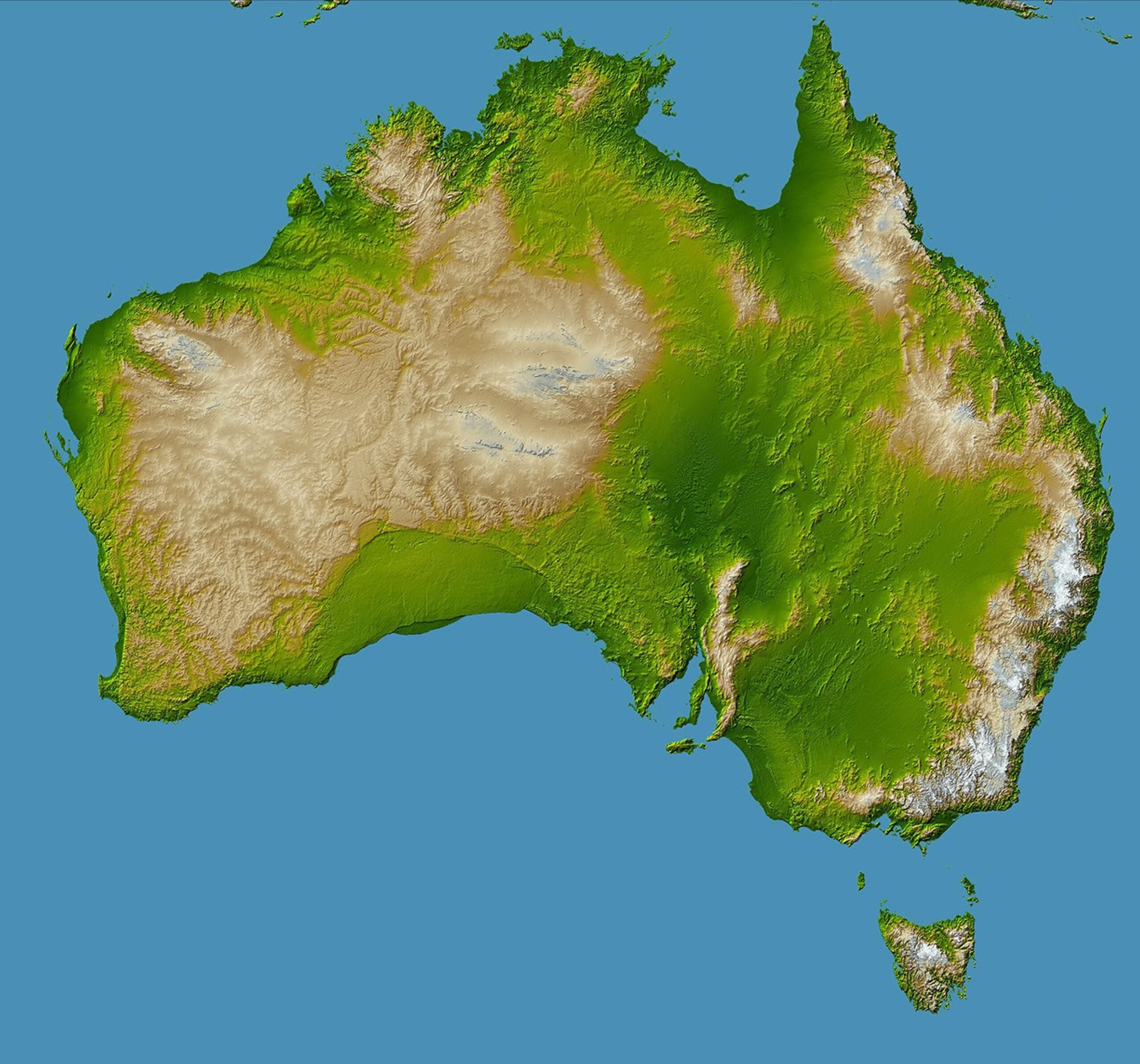
Australia stands out as an exceptional continent, recognized not just for its diverse ecosystems and renowned landscapes but also for its remarkable geodynamic behavior. Contrary to the widespread belief that continents are unchanging landmasses, the Australian continent is persistently advancing north-northeast at an approximate speed of seven centimeters annually. This motion is noteworthy enough for Geoscience Australia to deem it the fastest-moving continental landmass on the planet.
To illustrate this speed, let’s consider the growth rate of human nails. A clinical analysis of healthy young individuals revealed that fingernails grow at an average of 3.47 millimeters monthly, equating to around 4.2 centimeters per year. In comparison, the movement of Australia is roughly 1.7 times quicker than this biological process. While both movements are not perceptible to the naked eye, their cumulative effects over time are significant.
### Fast for a Continent
Tectonic plates, the enormous sections of Earth’s lithosphere, shift at different velocities. Some plates move at less than a centimeter yearly, whereas others, such as sections of fast-moving oceanic plates, may exceed 10 centimeters annually. Australia’s uniqueness lies in being the fastest-moving continental landmass rather than the swiftest fraction of lithosphere. A recent seismic examination validated this motion, showing a velocity of approximately seven centimeters per year toward the north-northeast when referenced against a hotspot framework. This speed is an overall average, varying across the plate and changing slightly with different reference systems.
### Measuring the Movement
To quantify such tiny movements, Australia utilizes permanent satellite-positioning stations distributed throughout the continent. These stations constantly determine their locations, and while individual measurements involve uncertainty, thousands of observations over time demonstrate a distinct velocity trend. This collective plate movement must be distinguished from smaller signals caused by events like earthquakes or groundwater shifts, and scientists employ advanced tools to factor in these influences. For example, seasonal water redistribution can slightly tilt and displace segments of the continent.
### Update on Coordinates
The effects of Australia’s movement extend beyond mere academic interest. Previously, the Geocentric Datum of Australia 1994 fixed positions to the continent’s location in 1994, yet as the land continued to shift, inconsistencies developed between this system and more modern global reference frames, culminating in a difference of approximately 1.8 meters by 2020. This disparity impacted areas such as surveying, precision agriculture, and construction. Australia tackled this with the GDA2020, a static datum aligned with the continent’s estimated position on January 1, 2020, and created a time-dependent reference frame to adapt to ongoing movement.
### Beyond Australia
It is vital to understand that a tectonic plate and a continent are not the same. The Australian Plate includes not only the continental crust but also the adjacent oceanic lithosphere and segments of Zealandia. This plate is far more structurally intricate than just a rigid entity. Along its northern and eastern edges, the plate interacts with trenches, volcanic arcs, and numerous faults.
As Australia progresses northward, it engages with Southeast Asia, forming an active deformation zone abundant with seismic and volcanic activity. The Java Trench, Timor, and the Banda Arc are just a few regions affected by Australia’s swift northward journey. Comprehending these interactions is essential, particularly regarding the potential for future supercontinents like Amasia.
### Conclusion
At a rate of seven centimeters per year, Australia’s movement may appear trivial, but over extensive geological timeframes, it leads to significant changes that reshape the Earth’s surface. Whether influencing surveyor’s maps or playing a role in future tectonic configurations, Australia’s drift illustrates the dynamic essence of our planet, transforming centimeters into movements on a continental scale. The island continent’s journey stands as a testament to the force of tectonic motion and the ongoing narrative of the Earth.