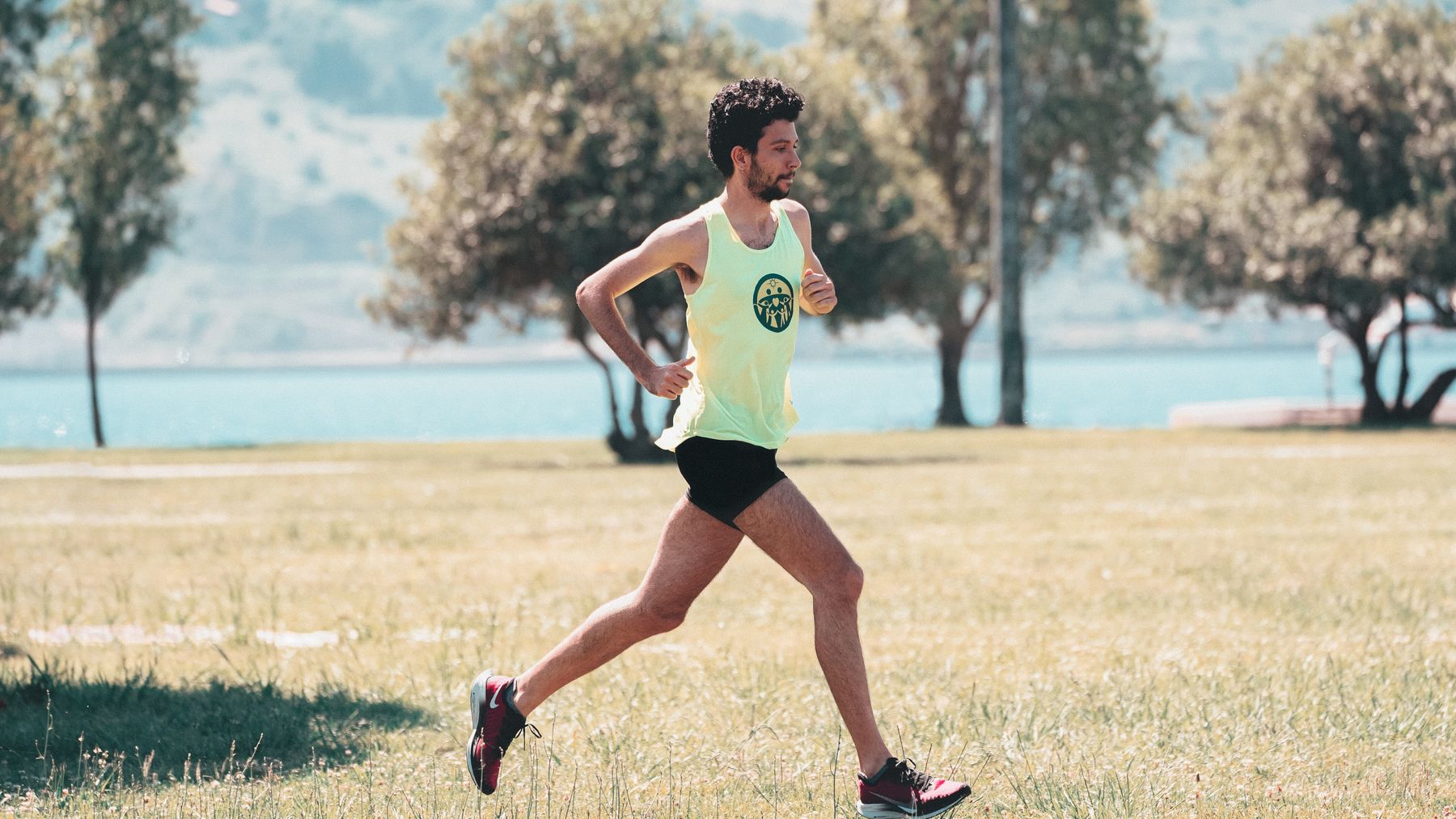
“Burning more fat” implies “losing more body fat.” In the realm of exercise physiology, these phrases are indicative of varying time scales.
A minor study released in 2025 discovered that young men exercising prior to breakfast relied more on fat for energy compared to when they ran post-breakfast. Their overall energy expenditure remained similar. Even in a fasted state, carbohydrates contributed to the energy supply.
This finding serves as a valuable indication of what occurred during and shortly after a controlled running session. It does not provide proof that a month of running before breakfast would lead to greater fat loss than identical training conducted after eating.
This clarification may seem meticulous until “fat burning” is framed as weight-loss guidance. The body continuously alters its fuel composition on a minute-by-minute basis. Body composition reflects the storage and expenditure over days, months, and all meals and activities interspersed between workouts.
The same 18 men engaged in five test scenarios
Hao Lan, Kaibin Wu, Chunyun Deng, and Songtao Wang executed the study at South China Normal University. Their open-access publication was featured in Frontiers in Physiology on 23 April 2025.
The subjects were 18 healthy male university students. The paper’s abstract and demographic table report their mean age as 23.47 years. A noteworthy inconsistency is seen where the primary methods section states it as 21.3 years. Both figures characterize a young, limited sample.
The study employed a randomized crossover design. Instead of allocating different groups to various routines, every participant underwent all five conditions: a sedentary control day, exercise before breakfast, exercise after breakfast, exercise before dinner, and exercise after dinner. There was at least a three-day gap between the trials.
This arrangement adds value in a smaller study. Each individual acts as their own comparison, decreasing the likelihood that an inherently efficient fat oxidizer is grouped with others while a strong carbohydrate user is placed elsewhere.
The run was moderate, standardized, and accurately timed
Prior to the main experiment, the researchers assessed each participant’s maximum oxygen uptake through an incremental treadmill test. The subsequent running speed could then be adjusted relative to the participant’s capability rather than applying a common pace for all.
Each exercise session extended for 50 minutes: a five-minute warm-up at 40 percent of maximal oxygen uptake, followed by 40 minutes at 65 percent, and concluding with a five-minute cool-down back at 40 percent. Running distance was standardized, and energy values were adjusted according to body weight.
The pre-breakfast session took place from 6:50 to 7:40 am. Breakfast was arranged for 8:10 am. The post-breakfast session commenced at 9 am, thereby making it both a fed run and a run conducted more than two hours later.
The afternoon session started at 3:40 pm, prior to the 5 pm dinner, while the final running condition began at 6 pm, post-dinner. This design investigated feeding state and time of day together, rather than focusing solely on breakfast.
The researchers additionally attempted to minimize avoidable variances. Participants maintained a two-day dietary log to assist in standardized meals, abstained from caffeine and alcohol, adhered to scheduled hydration, and remained inactive outside the exercise intervals during testing.
The fuel estimate derived from oxygen and carbon dioxide
A portable COSMED K5 metabolic system gauged oxygen uptake and carbon dioxide production. Standard stoichiometric equations converted these respiratory gases into estimates of carbohydrate oxidation, fat oxidation, and total energy expenditure.
This relies on chemical principles. Oxidizing fat and carbohydrates utilizes oxygen and produces carbon dioxide in differing ratios. A respiratory quotient nearer to 0.7 signifies a higher contribution from fat; a value closer to 1.0 indicates a larger contribution from carbohydrate.
This represents a recognized method of indirect calorimetry, but the term “indirect” is significant. The device did not directly observe fat disappearing from a participant’s waist nor identify which fat depot supplied a molecule. It estimated overall substrate utilization through breath analysis.
Measurements encompassed the run, brief samples taken every hour during a four-hour recovery span, and a ten-minute measurement the following morning. A technical constraint hindered the researchers from analyzing energy expenditure during sleep.
Before breakfast, the identical calorie cost utilized a different fuel composition
During exercise, the pre-breakfast condition resulted in significantly greater fat expenditure than the post-breakfast condition. It was also greater than both evening exercise scenarios. Carbohydrate expenditure showed an inverse trend.
The total calorie cost remained comparable.