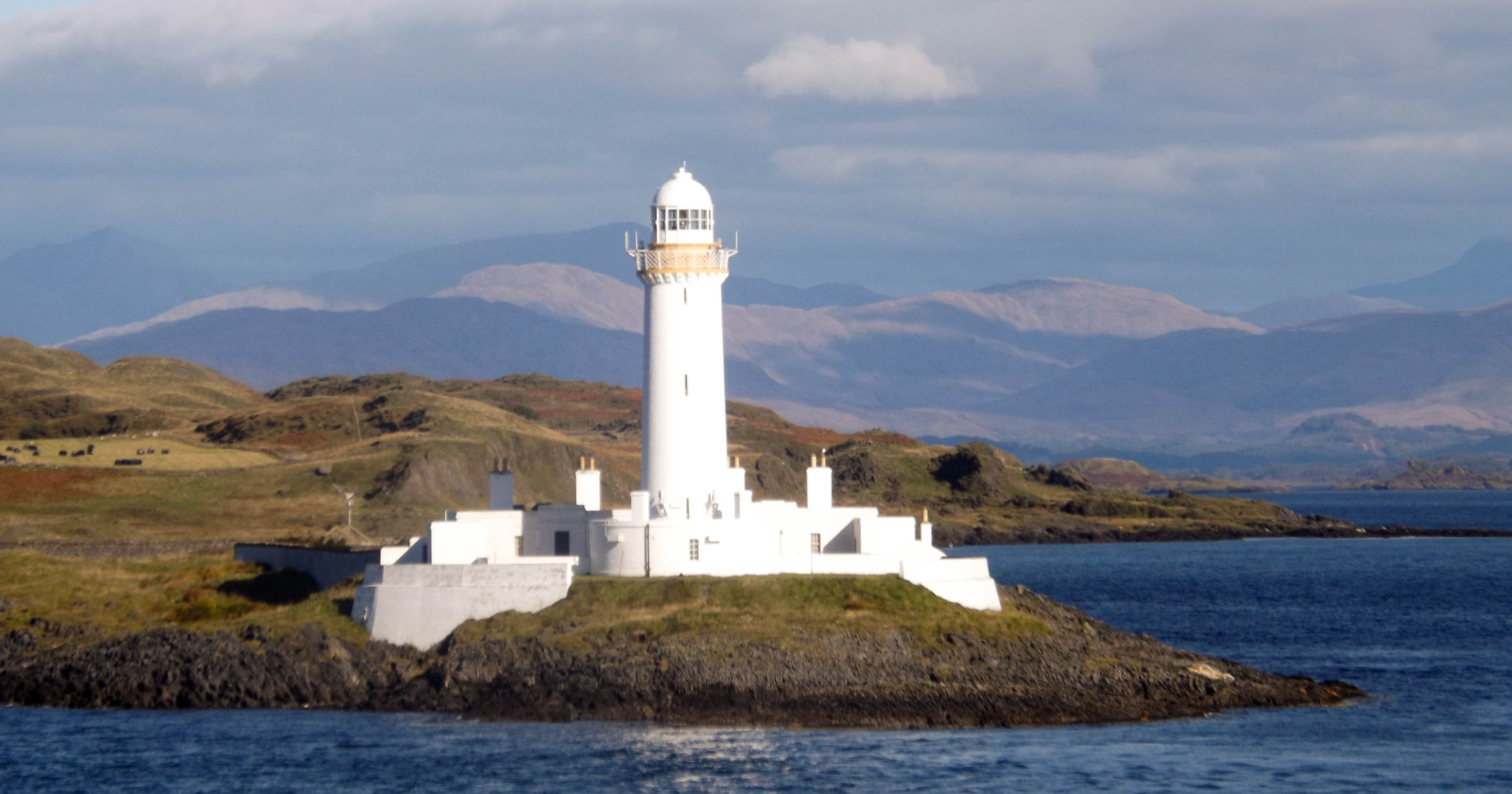
Somewhere in a wooden container in Scotland resides a printed document from 1911. A lighthouse keeper completed it by hand, chronicling the birds that flew past his isolated rock in the Pentland Firth. He was not a scientist. He likely never set foot in a laboratory. Yet, his meticulous records are still preserved, over a century later, by a national ornithological organization. Why?
The brief answer: for many years, the individuals who maintained Scotland’s lighthouses were among the finest bird watchers in the country. They were asked to do so on official documents by a scientific committee that recognized the unique vantage point from which they operated.
The initiative traces back even further than the extant Scottish records. In 1880, prompted by Alfred Newton’s suggestion, the British Association for the Advancement of Science established a group to investigate bird migration. It reached out to the keepers of lighthouses and lightships along the coast, requesting them to document what flew by on printed forms. This account comes from Professor Robert Montgomerie in a post by the British Ornithologists’ Union titled “Blinded by the Light,” which outlines how the committee encouraged keepers to record the birds they observed while on duty.
Bringing all of this together was Scottish ornithologist William Eagle Clarke, who became part of the committee in 1883 and later led the natural history department at the Royal Scottish Museum, now known as the National Museum of Scotland. He went beyond mere paperwork, dedicating months to residing at lighthouses to personally observe the birds. This effort culminated in his two-volume work, Studies in Bird Migration, first published in 1912.
Why focus on lighthouses, of all places? The explanation lies in timing and location, and it becomes clear once understood.
Migrating birds frequently fly at night, adhering to the coastline. A lighthouse exists precisely where the land meets the sea, making the keeper on night duty one of the rare individuals awake and outside when this movement occurs. The light itself attracts birds, sometimes with deadly consequences.
Eagle Clarke articulated this point directly. In 1903, he wrote that night migration transpired “so that it escapes the notice of all save those few peculiarly placed observers, the light-keepers.” Keepers were nearly the sole individuals positioned to witness phenomena that most of us, sleeping inland, never saw.
And they embraced it. An annual report from the committee, the migration report for 1887, lists the Pentland Skerries keepers among those contributing to the effort during their watches, and includes notes from other northern stations such as Dunnet Head and Noss Head. They were not unwilling participants. They were documenting birds in the early hours, in adverse weather, on rugged rocks.
This is where the Pentland Skerries document comes into play. One preserved example is the “Schedule for Observations on Birds Completed at Pentland Skerries Lighthouse 1911,” filled out by keeper John Bain. The lighthouse is situated on Muckle Skerry, a low-lying island in the Pentland Firth, the tumultuous stretch of water between the Scottish mainland and Orkney. It is one of the most exposed postings available in Scotland.
It’s a printed chart, not a journal. The keeper records the species, counts, dates, wind direction, and weather conditions. Data collection in its simplest form: an individual documenting what was in front of him in a standardized format, allowing it to be compared with returns from every other coastal station. Multiply Bain’s single record across numerous lighthouses and many years, and one begins to see the scale of what the committee was compiling.
Eagle Clarke collected the forms via the museum. Many of the Scottish records later contributed to The Birds of Scotland by ornithologists, Leonora Rintoul and Evelyn Baxter, the first comprehensive survey of Scottish avifauna. The duo was connected to the lighthouse network in multiple respects.
As stated by National Museums Scotland, “Numerous birds were collected by lighthouse keepers from Scottish lighthouses who forwarded them to the ‘good ladies’ for their collection.” This collection ultimately totaled around 1,200 bird skins, donated to the museum.
From Rintoul and Baxter, the forms were transferred to the Scottish Ornithologists’ Club, the national organization established in 1936. The Scottish Council on Archives notes that the club “holds several hundred of these Schedules housed in one wooden box (shown below) and one cardboard box.” Two boxes. That represents what a national initiative of coastal observers, filtered through a century, ultimately reduces to physically.
What is the value of several hundred old forms today? More than it may seem. Each form serves as a dated, located snapshot of which birds were migrating along a section of coastline at a specific moment in time. Compile enough of them, and you gain something a single lifetime of observation could never yield: a comprehensive record of coastal migration, spread across the landscape, assembled prior to radar, prior to large bird