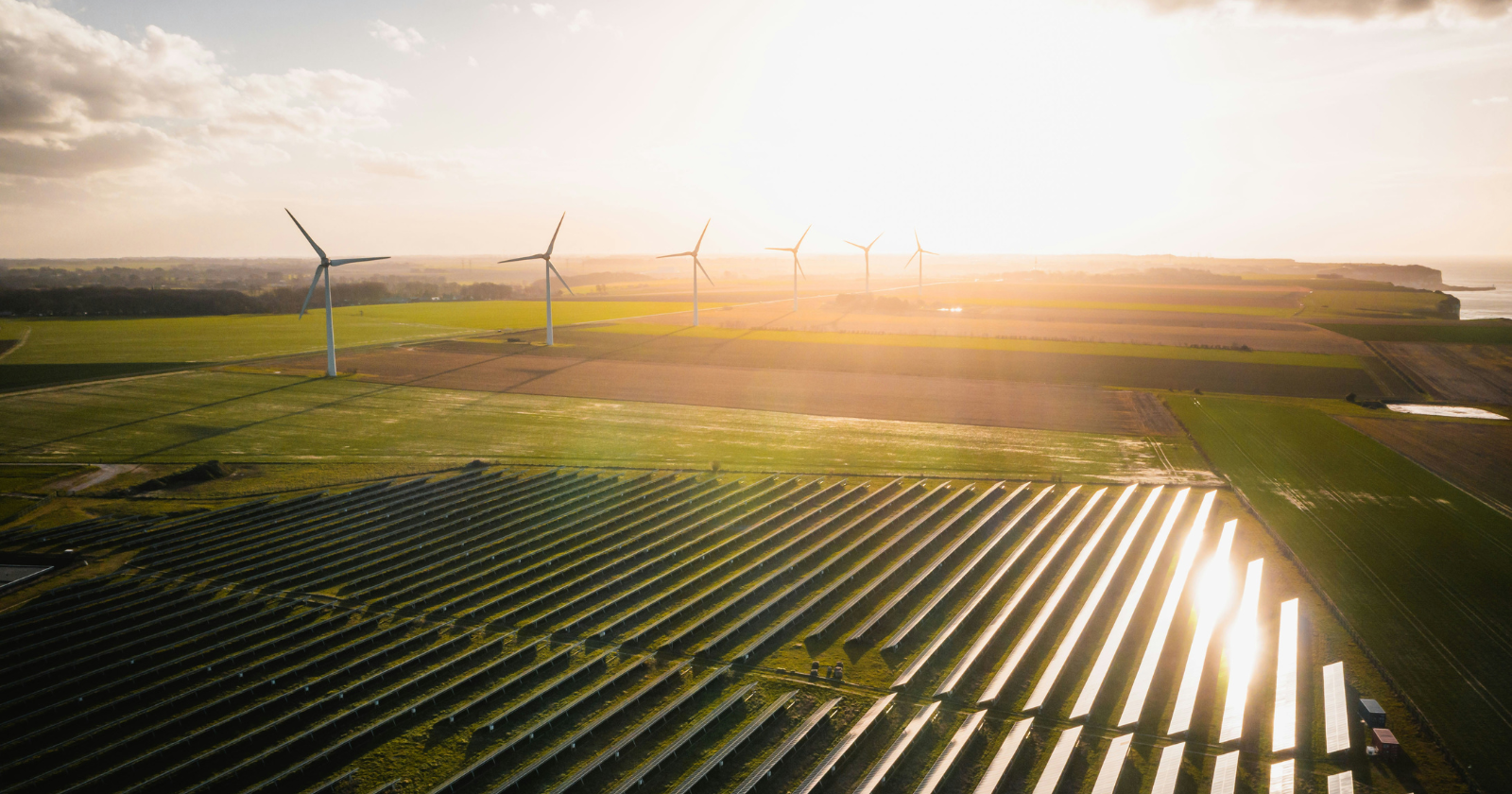
The belief that most individuals bring into discussions about solar energy on agricultural land is a straightforward one: solar panels and crops vie for the same soil, leading landowners to choose either one or the other.
This assumption is easily made, as it is often accurate. A typical ground-mounted solar array occupies the land completely and removes it from agricultural use for the entire duration of the project, which is precisely why rural areas continue to oppose new solar initiatives suggested for productive croplands.
Germany, which has aggressively sought to enhance solar power capacity while attempting to preserve the farmland it still depends on, had every incentive to seek a genuine solution rather than yet another debate.
Why the assumption typically proves true
The majority of solar setups are designed to optimize energy output, not to coexist with other uses of the land. Solar panels are positioned low, densely packed, and angled for optimal sunlight, leaving no space for machinery and not allowing sufficient light for crops beneath. Under such circumstances, a solar installation and a wheat farm truly represent a zero-sum situation, and the resistance to placing panels on agricultural land stems from real experiences rather than misunderstandings.
The discourse often gets framed as a values dilemma, weighing energy self-sufficiency against food security, as though these objectives are irreconcilable and one must inevitably falter.
What Heggelbach actually discovered
A research team headed by Fraunhofer ISE, in collaboration with the University of Hohenheim, experimented with an alternative design at an operational organic farm named Hof Heggelbach, situated on the shores of Lake Constance. Rather than using a conventional low-profile array, they elevated the panels on a framework with a clearance of 5 meters, allowing a combine harvester to pass beneath, while continuing to cultivate the land below as previously done: rotating winter wheat, potatoes, celeriac, and clover grass just as before.
When outcomes from that initial growing season were reported, Fraunhofer ISE indicated that the combined efficiency of land use increased by over 60 percent compared to farming and solar power generation on two distinct plots of equal total size. Individual crops experienced a slight drop in yield due to shading. Petra Högy, an agricultural scientist at the University of Hohenheim, quantified the least impacted case: “The crop yield of clover grass beneath the PV array was only 5.3 percent lower than the reference plot.” Potatoes, wheat, and celeriac faced more significant declines, around 18 to 19 percent each. None of this detracted from the electricity generated by the same plot, which is the fundamental reasoning behind evaluating food and energy collectively instead of in isolation.
The following year strengthened the argument against dismissing the findings as a coincidence. The summer of 2018 became one of the hottest and driest recorded in that region of Germany, and researchers observed that the panels transitioned from being a compromise to serving as a form of protection. Andrea Ehmann, an agricultural scientist involved in the project, noted that the team could “assume that the shade under the semi-transparent solar modules helped the plants to better withstand the hot and dry conditions of 2018.” The combined efficiency of land use for that drought-stricken year reached 186 percent, and Stephan Schindele, the project lead at Fraunhofer ISE, particularly credited the increase to the potato yield, which was significantly 26 percentage points higher than the already robust figure from the first year.
The caveat that shouldn’t be overlooked
The findings do not advocate for shading every crop everywhere. Clover, which barely reacted to shade in 2017, experienced an 8 percent yield decline during the hot, dry season of 2018 instead of any gains, highlighting that different crops may respond to the same solar panels in varied, occasionally contradictory, ways. Axel Weselek, another researcher from the University of Hohenheim engaged in the project, was careful to avoid overstating the significance of a two-year pilot: the result, he remarked, “shows the potential for APV in arid regions, but also the necessity to conduct more trials in other climate areas and with different crop types.” One farm, two growing seasons, and four crops yield tangible results. However, it is not a universal principle yet, and treating a singular lakeside field in southern Germany as definitive proof that shading is universally effective would be exactly the type of overreach the researchers aimed to avoid.
Not every component of the system needs to excel individually
What resonates with me about Heggelbach is that no one there was striving to optimize each individual input to its maximum potential. The clover endured a significant hit in some years. The potatoes and celeriac sacrificed close to a fifth of their standard yields. However, none of this was as crucial as what the entire acre yielded once both food and electricity were aggregated rather than evaluated crop by crop. I believe that many everyday decisions become more complex than necessary because we insist every element must be optimized independently.