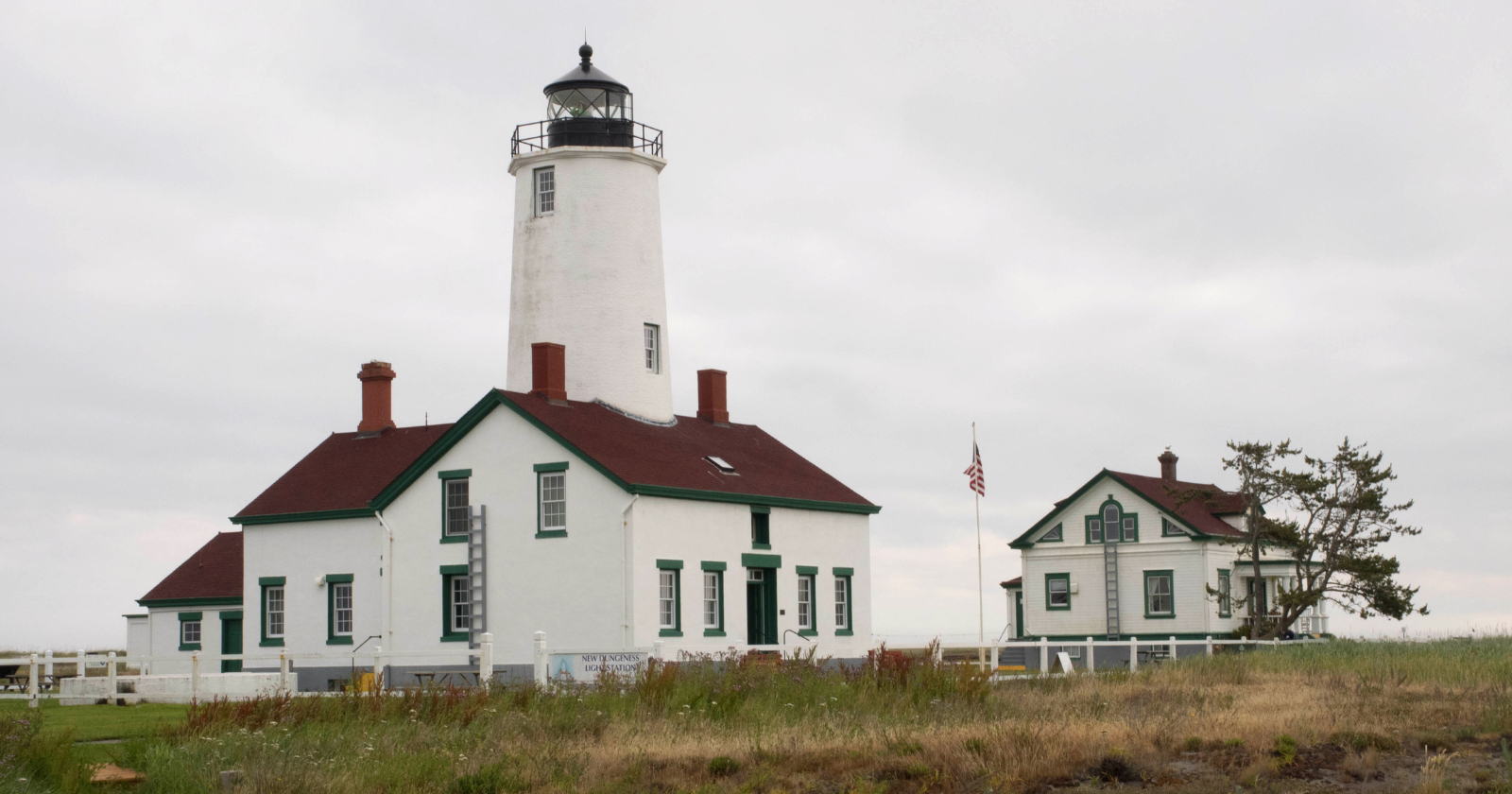
**The New Dungeness Lighthouse: A Legacy Upheld through Volunteer Stewardship**
On March 1, 1994, the New Dungeness Lighthouse experienced a notable shift as Seth and Michelle Jackson, the final Coast Guard keepers, exited, marking the end of an era of human stewardship at this iconic West Coast landmark. Standing since 1857, the lighthouse signifies the farthest point of the Dungeness Spit in Washington State, a slender expanse of sand extending into the Strait of Juan de Fuca.
**The Shift from Coast Guard to Volunteer Stewardship**
Instead of yielding to the prevalent automation wave that closed many other lighthouses, the New Dungeness Lighthouse opted for a distinct path of continuity. Following the Jacksons’ exit, a smooth transition took place, enabled by Coast Guard Auxiliary volunteers, aptly referred to as “Watchstanders,” who upheld operations temporarily. The formal transfer to civilian governance took place on September 3, 1994, when the newly established New Dungeness Light Station Association took on responsibility.
Originally a segment of the U.S. Lighthouse Society, this committed group transformed into a nonprofit organization, supported by membership dues and rejecting governmental funding. While the Coast Guard retains ownership of the property and upholds its critical rotating beacon, the nonprofit association undertakes all additional obligations, from conserving the structures to welcoming and educating curious visitors.
**Volunteers: Protectors of History and Heritage**
The distinctive volunteer model, originally planned with extended shifts, eventually transitioned into a more feasible week-long rotation. Volunteers devote themselves to this role under the guidance of the station’s general manager Chad Kaiser, who observed that shorter periods align better with contemporary lifestyles.
With roughly 670 members, the association generally sees about 275 individuals actively participating as keepers each year, often in familial units. For these volunteers, motivations are diverse—from conducting tours to enjoying moments of quiet connection with the surrounding nature. As association president Sarah Miller articulates, the experience ranges from engaging tours to peaceful storm-watching, which many keepers find exceptionally fulfilling.
**Caretaking: A Blend of Responsibility and Preservation**
Daily duties for volunteers encompass both practical upkeep and ceremonial stewardship. They manage the conservation of the historic buildings, introduce hikers to the site’s rich history, and diligently maintain the logbook—a continual record of human presence, weather patterns, and daily observations.
Although it became automated in 1994, the lighthouse’s history extends back to its original towering structure, which was altered in height in 1927 due to structural issues. Recognized on the National Register of Historic Places in 1993, the designation highlighted its historical significance just as the lightkeeping duties were about to be entrusted to these dedicated volunteers.
**Maintaining the Human Connection**
While the lighthouse now operates independently as an official navigational aid, the essence of human involvement persists through the association’s initiatives. As expressed by the Wilsons for the National Trust, the station’s worth is enhanced through human interaction—active maintenance prevents deterioration, and a consistent presence nurtures the fragile balance of history and conservation.
The unbroken history maintained in the logbook, dating from the lighthouse’s initial lighting in 1857, emphasizes the lasting commitment of these volunteer keepers. Their stewardship transcends simple obligation, representing a fervent choice to preserve a legacy. By dedicating themselves to keep the beacon’s light, they uphold not only the physical edifice but also the cherished tradition of watchkeeping for future generations.