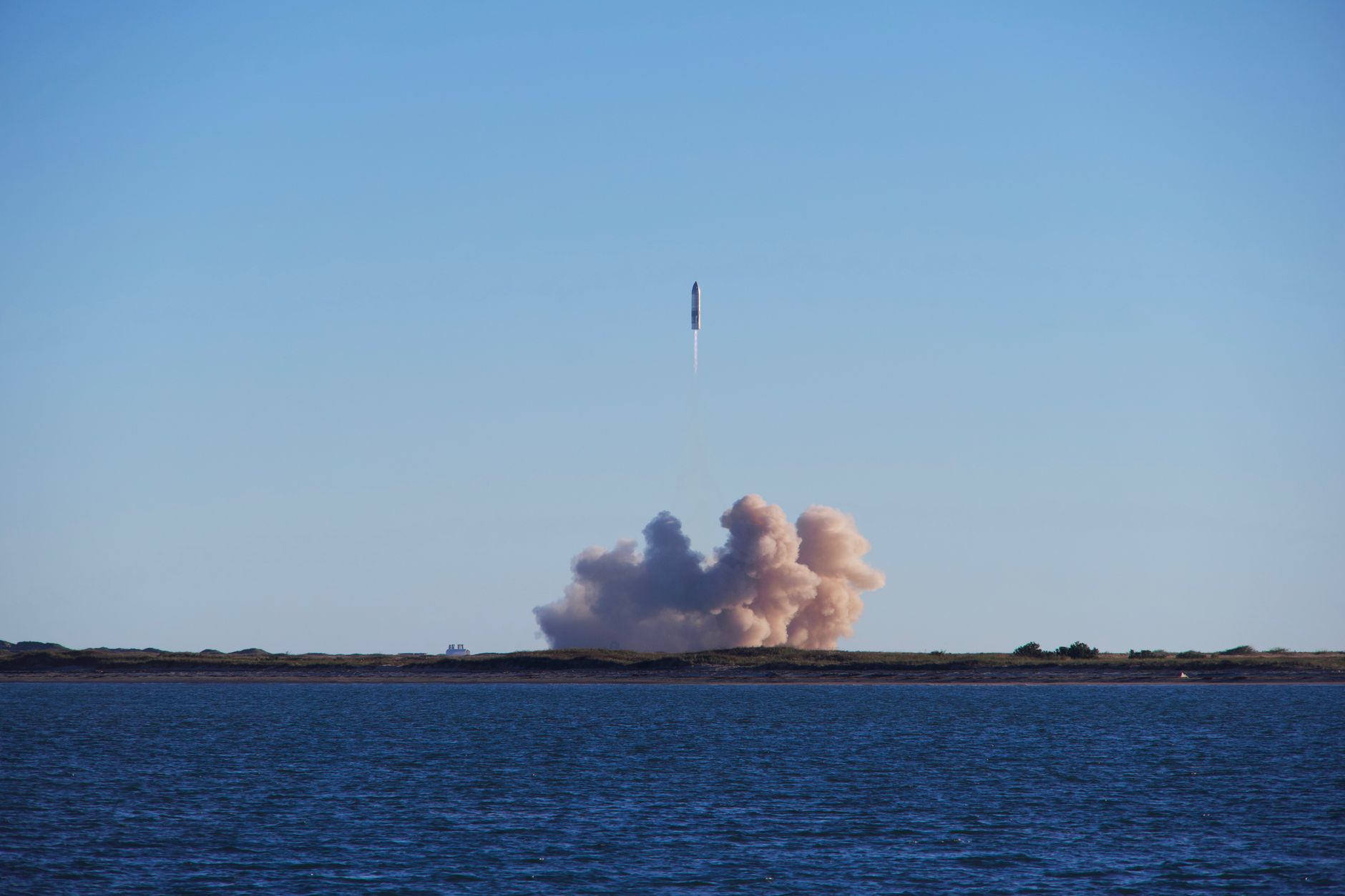
**SpaceX’s Starship V3: A Significant Advance on the Journey to Orbit**
SpaceX’s Starship V3 features an impressive thrust that eclipses even the iconic Moon rockets from earlier decades. With its Super Heavy booster producing 18.1 million pounds-force from 33 Raptor engines fueled by methane, it exceeds the cumulative thrust of NASA’s renowned Saturn V and SLS Block 1. Nevertheless, this extraordinary launch power represents only one aspect of the intricate journey toward accomplishing a successful orbital flight.
**Grasping the Thrust Comparison**
Although Starship’s thrust is remarkable, it is essential to recognize that these figures relate solely to liftoff and do not incorporate payload capacity, efficiency, or reliability. The Saturn V was designed to launch Apollo missions toward the Moon, while the SLS Block 1 is intended to send Orion beyond low Earth orbit. Starship is conceived as a reusable vehicle capable of handling heavier payloads along with future in-space refueling, underscoring that sheer thrust does not solely define a system’s operational success.
**The Quest for Orbit**
Thrust must counteract a launch vehicle’s weight and rapidly fluctuating mass as propellant is consumed while managing aerodynamic forces and precise steering. Achieving orbit is not simply a matter of brute force; it requires precise coordination of propulsion, guidance, structural integrity, and systems. Starship’s journey illustrates the complex choreography needed to convert raw thrust into orbital velocity.
**Charting the Course to Orbit**
Starship has consistently crossed the threshold of space during various flights, achieving remarkable altitudes and velocities. Yet, genuine orbit requires reaching substantial horizontal speeds. Previous test flights, while not aimed at orbit, showcased essential ascent, coasting, and reentry actions, providing critical feedback for forthcoming missions.
**Developments and Future of Flight 13**
The thirteenth test of Starship encapsulated numerous components of an orbital mission but did not reach orbit. Still, it demonstrated upper-stage functionalities, satellite deployments, and innovative recovery strategies, highlighting how each flight yields vital insights for the program.
**Looking Forward to Flight 14**
The anticipated Flight 14 seeks to break into orbit, representing a crucial step forward for the Starship initiative. By launching operational Starlink satellites on an orbital course, it will illustrate Starship’s emerging role as a delivery mechanism, even though significant groundwork still lies ahead before regular orbital flights can be realized.
**Beyond Orbit: Embracing a New Era**
SpaceX aims to achieve unparalleled launch rhythms, aspiring for multiple flights within a day using fully reusable systems. Although this ambition is still evolving, future launches like Flight 14 are viewed as critical milestones toward establishing the industrial capacity and regulatory framework needed to fulfill this vision.
In summary, while Starship’s journey to orbit will mark a significant success, it heralds the start of a transformative path toward making space travel more routine and accessible. The ultimate aspiration of in-space refueling, quick reusability, and frequent launches continues to propel SpaceX in its quest for the cosmos.