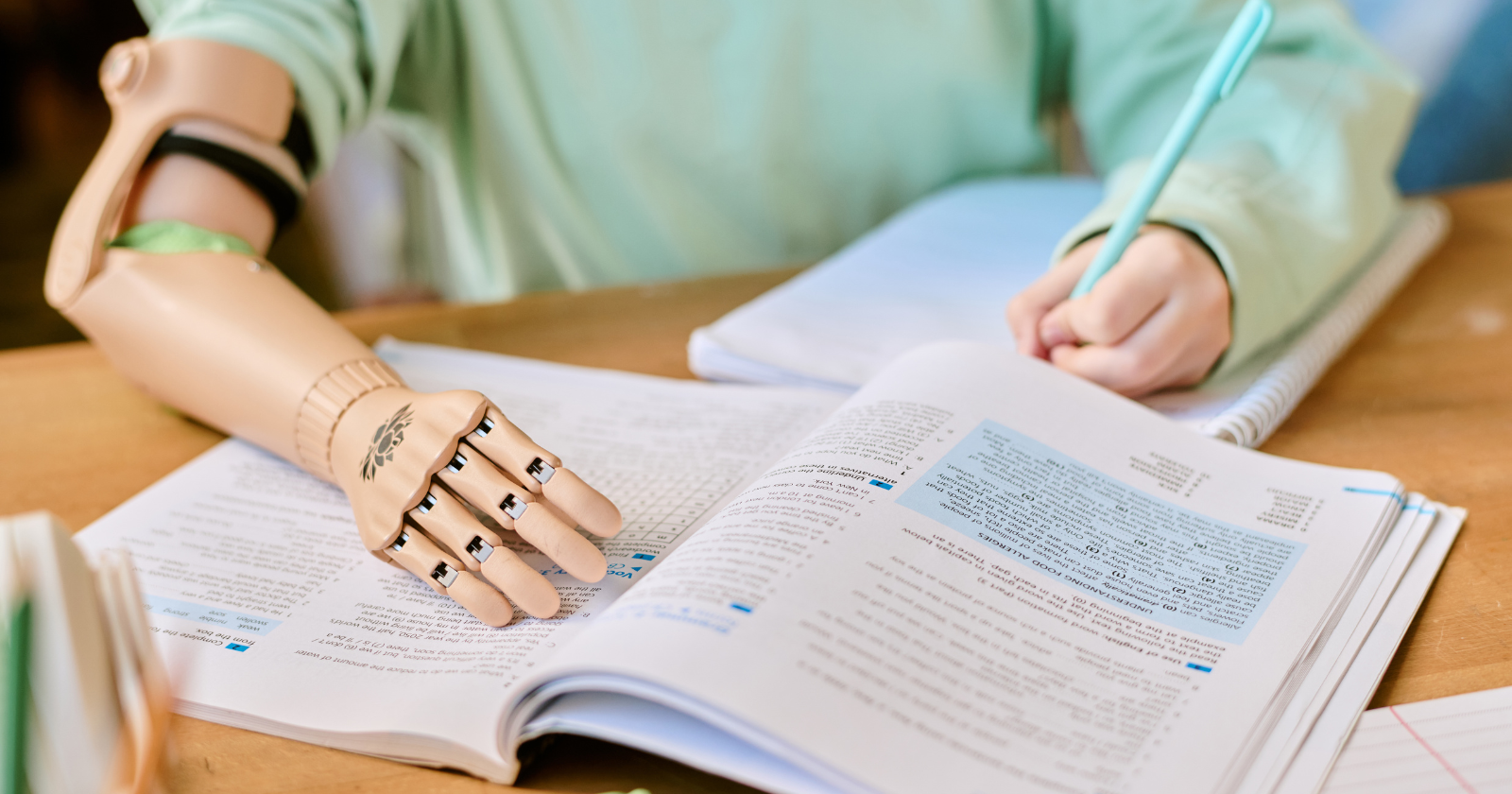
Advancement in Prosthetics: Uniting Innovation and Accessibility
The progress of prosthetic technology has seen remarkable improvements in recent years, marked by the emergence of both sophisticated solutions developed in research facilities and impressively affordable options crafted in informal settings. Two prominent prosthetic arms illustrate this variety: one a testament to state-of-the-art laboratory advancement, and the other a reflection of creativity stemming from home-based ingenuity. Although both are governed by similar principles of thought-driven technology, the contrast between these prosthetic devices highlights the broader field of prosthetics innovation and accessibility in the present day.
The Innovative $300 Brainwave Interface
In 2022, Benjamin Choi, a high school student, garnered national recognition with his invention of a budget-friendly, mind-controlled prosthetic arm produced using his sister’s $75 3D printer. With a price tag of around $300, this device utilizes electroencephalography (EEG) to decode brain signals through non-invasive methods, using standard sensors affixed to the forehead and earlobe. This breakthrough represents a notable advancement in minimizing dependence on perilous surgical interventions while leveraging artificial intelligence to achieve a reported 95% accuracy rate in translating brainwaves into movement commands. It highlights the potential of young innovators to challenge traditional boundaries and advocate for practical solutions in assistive technology.
The $500,000 Modular Prosthetic Limb
The contrast to Choi’s creative method is embodied by the Modular Prosthetic Limb (MPL), a result of significant funding from the Johns Hopkins Applied Physics Laboratory and DARPA, valued at roughly $500,000. This sophisticated limb incorporates complex mechanics with 26 joints, 17 motors, and hundreds of sensors, capable of intricate movements and feedback, even mimicking tactile sensations. Its functionality necessitates surgical intervention for the implantation of electrode arrays, distinctly enhancing its capabilities and accuracy compared to non-invasive options at the expense of accessibility and safety.
Balancing Technology: Accessibility vs. Performance
This distinction between non-invasive and invasive approaches to brain-computer interfacing highlights an essential engineering trade-off: the precision and advanced features provided by implanted electrodes come with the drawback of surgical invasiveness, while scalp-based methods present simplicity and affordability—though with decreased signal clarity and control accuracy. As demonstrated by these innovations, the technological framework in prosthetics relies on achieving a balance between enhancing functionality and ensuring widespread access.
The Broader Perspective: Broadening the Horizons of Accessibility
While advanced prosthetics like the MPL push the limits of what artificial limbs can accomplish, inventions such as Choi’s creation redefine the landscape by delivering valuable functionality to many who might otherwise be left out due to financial limitations. The discourse surrounding prosthetic technology now increasingly recognizes these lower-cost alternatives not as competitors but as vital milestones toward inclusive innovation. Although high-cost devices maintain unrivaled capabilities, more affordable options elevate the baseline, reshaping perceptions of what is feasible and paving the way toward a more inclusive future in prosthetics.