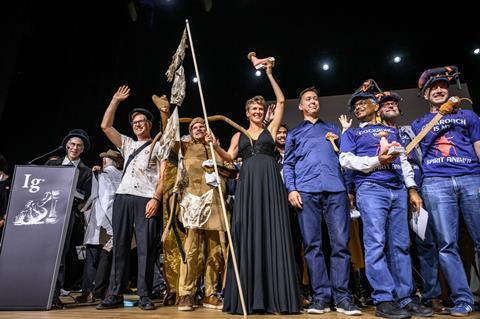
The 36th Ig Nobel Prize Ceremony, a distinctive event that merges humor with critical analysis within the scientific realm, revealed its winners in Zurich, Switzerland — a notable change from its usual venue in the US, made as part of a strategic choice due to safety and visa issues. This year’s highlight in the chemistry category was a global team who found that milk from cockroaches yields more energy than cow’s milk. Researchers Leo Chavis, Subramanian Ramaswamy, and Nathan Coussens accepted their prize in themed costumes and promoted cockroach milk as a viable alternative dairy option.
Further sparking intrigue, the technology prize recognized groundbreaking work employing mosquito noses as 3D-printing nozzles, and Japanese researchers received the medicine prize for examining the aerodynamics of blowing one’s nose. Outstanding initiatives such as a splash-free urinal design secured the physics prize, while the soil science prize was awarded to a team that buried and excavated underpants to investigate soil health.
The Ig Nobel Prizes have consistently spotlighted unusual and thought-provoking research, including a past year’s chemistry award for a Teflon-based dietary supplement and studies into unconventional scientific phenomena. Marc Abrahams, the driving force behind the Ig Nobel Prizes, emphasized the awards’ goal to highlight remarkable, albeit humorous, scientific efforts, stressing the importance of sustaining public interest in science.
With next year’s celebration set to take place in Antwerp, Belgium, the organizers plan to keep rotating venues globally, further engaging international audiences and honoring unconventional research across the globe.