**The Writer and the Mountain Farmer**
Beatrix Potter is frequently hailed as a cherished children’s writer and artist. Renowned for her captivating stories of animals donning human attire, particularly “The Tale of Peter Rabbit,” released in 1902, her literary achievements afforded her the financial stability to follow her dream of farming. In 1905, she acquired Hill Top Farm in Near Sawrey utilizing the earnings from her initial publications. As time passed, Potter expanded her holdings, establishing a vast estate of operational farms.
Potter’s engagement in hill farming was significantly more than a casual hobby; it was a committed and earnest pursuit. She gained fame for breeding Herdwick sheep, a sturdy indigenous breed. Her dedication led to her election as the inaugural female president of the Herdwick Sheep Breeders’ Association, a position she sadly could not fulfill before her death in December 1943.
**The Area She Was Protecting**
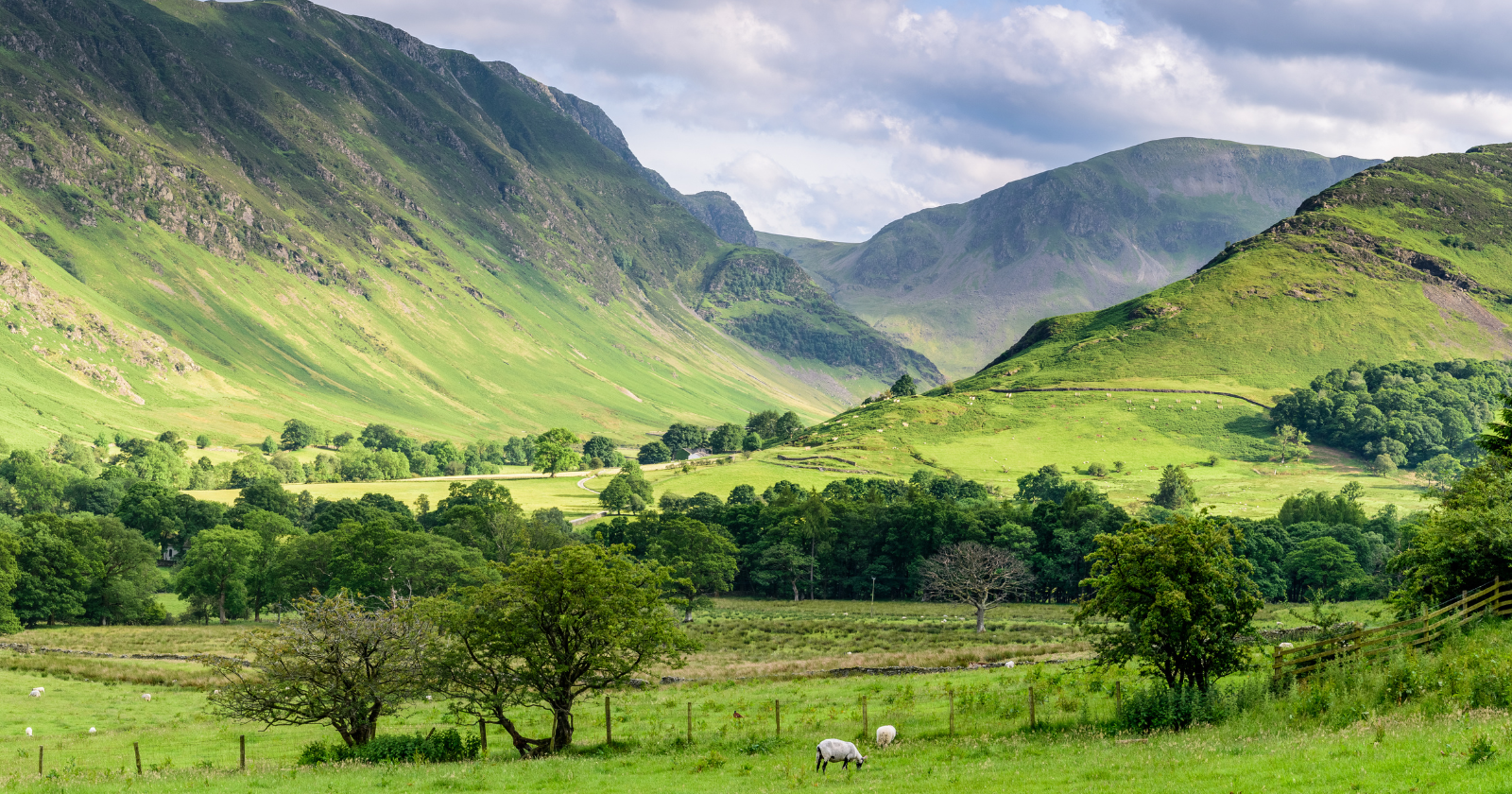
Beatrix Potter’s love for the Lake District was immense. At a time when tourism boomed and real estate developments threatened the scenery, she took proactive measures to ensure its preservation. In 1923, she acquired Troutbeck Park to halt its transformation into developed space. Covering nearly 2,000 acres, it was one of the largest estates, maintained as an active farm for breeding Herdwick sheep.
Potter’s aspirations extended beyond simply acquiring land; she sought to uphold a lasting way of life. She understood that continuity depended on sustaining traditional grazing methods and retaining the land in the hands of those who would honor its history.
**The Herdwick and the Meaning of “Pure”**
The Herdwick sheep play a vital part in grasping Potter’s goals. This hardy breed flourishes on little nutrition, ideally suited for high, open mountainsides. The notion of “hefting” is essential: flocks innately stick to their designated sections of unconfined hillside over generations, upholding unwritten wisdom about the land.
This instinct is fundamental to the region’s grazing practices. Preserving a pure Herdwick lineage guarantees the maintenance of this behavioral trait, critical for preventing the encroachment of scrub and brush, which would alter the landscape.
**The Legacy and Its Provisions**
Following her passing on December 22, 1943, Beatrix Potter’s estate was appraised at £211,636. Her will left over 4,000 acres and fifteen farms to the National Trust, with strict stipulations to prohibit their sale and ensure the continuation of her farming practices.
Important aspects of her will mandated the conservation of pure Herdwick sheep on her properties. Her lands were to accommodate tenants at fair rents, and the areas were to be administered according to her established practices.
**A Will Drafted as a Land-Management Directive**
Beatrix Potter’s bequest was more than a donation; it was a detailed land-management strategy outlined in her will. She intended to guarantee the continuation of her farming systems, passing on the responsibility rather than the ownership, ensuring the landscapes she treasured remained true to their roots.
Her conditions continue to have a significant impact. For instance, Yew Tree Farm in Coniston operates with a flock of pure Herdwicks as stipulated by the tenancy agreement. This approach reflects Potter’s lasting influence.
In 2017, the Lake District attained UNESCO World Heritage Site status, recognized as a landscape shaped by human effort rather than untouched nature. This recognition owes a great deal to the grazing practices that Potter advocated.
By incorporating farming into the conservation strategy, Beatrix Potter envisioned a preservation framework reliant on active participation rather than isolation from historical influences. Her lasting legacy is a landscape deeply connected to its historical foundations, thanks to her foresight in marrying sustainable agriculture with cultural conservation.