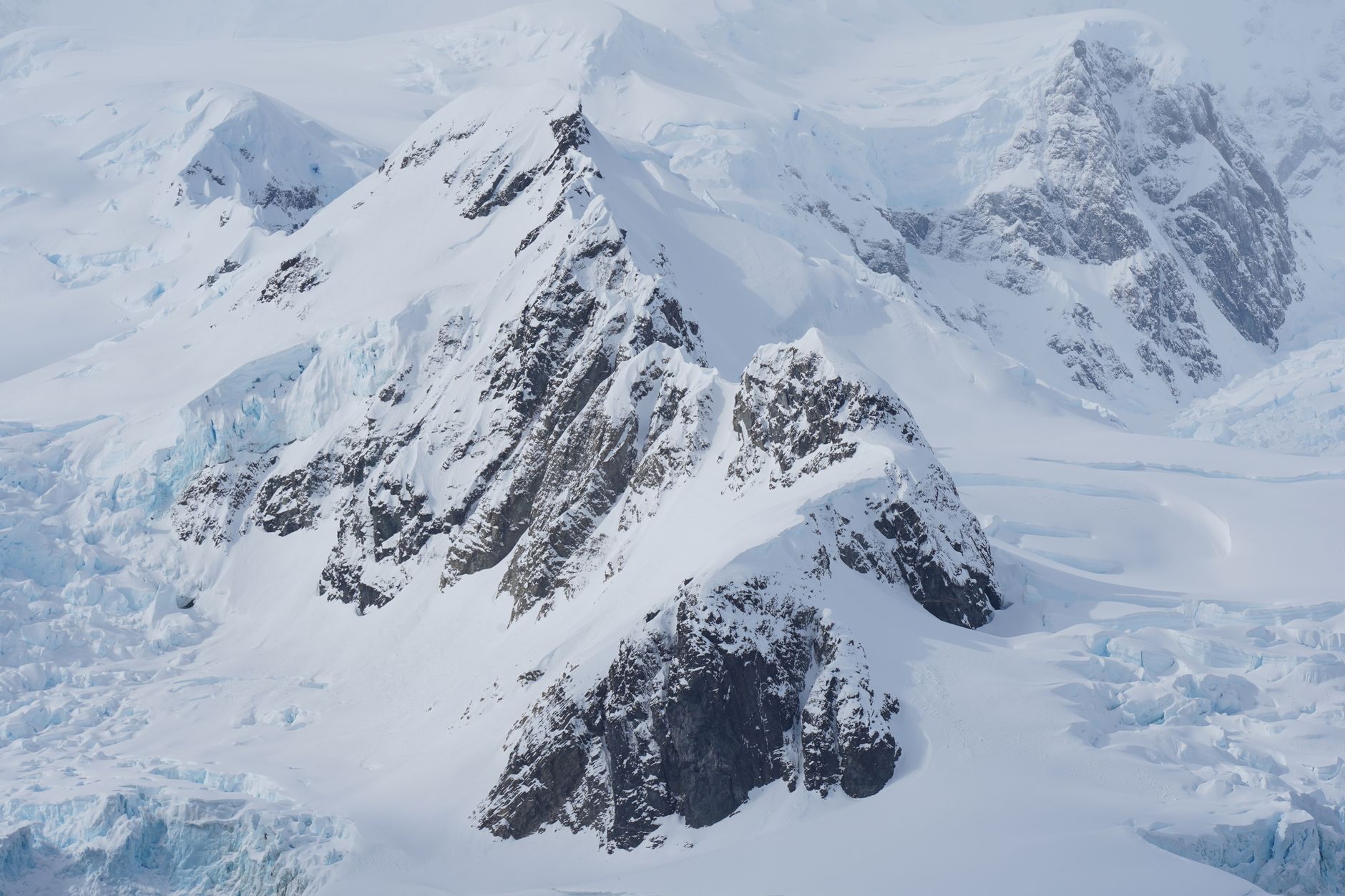
Antarctica, a continent frequently linked with ice and snow, interestingly stands as the largest desert on the planet. Covering roughly 14 million square kilometers, it challenges the conventional image of deserts defined by sand and warmth. Deserts are categorized by their dry conditions, characterized by minimal precipitation levels rather than temperature or topography. Antarctica serves as a prime example, with its elevated Antarctic Plateau receiving under 50 millimeters of water-equivalent snowfall each year, significantly less than many arid hot deserts.
Contrary to what one might think, the ice found here has built up over thousands of years due to ongoing cold and limited melting. Polar deserts such as Antarctica possess abundant water in the form of ice, yet they face a considerable lack of liquid water input. The Antarctic Ice Sheet, which nearly blankets the entire continent, highlights the arid terrain more than any exposed earth.
The arid interior plateau faces extreme dryness, while coastal regions receive greater precipitation, shaped by oceanic air currents. This variation results in coastal areas obtaining over 200 millimeters each year, with some locations near the Bellingshausen Sea exceeding 1,000 millimeters.
The weather patterns in Antarctica obstruct cloud development over the plateau, which adds to its stark dryness. Measuring snowfall is challenging due to strong winds and sublimation, complicating the distinction between true precipitation and accumulation.
Antarctica’s frigid climate allows snow to be preserved as ice layers over time through compression, slowly giving rise to a vast ice sheet. This sheet is dynamic, with ice migrating from the interior toward the sea through glaciers, while snowfall only serves to maintain a balance since the ice deforms and flows under its own weight.
In summary, Antarctica embodies the quintessential characteristics of a desert with its minimal annual precipitation, despite containing a tremendous frozen reservoir. The changes in this ice mass raise alarms about the effects of climate change, presenting the continent as a realm of contradictions—where water serves as a plentiful legacy yet remains limited in its continual replenishment.