**The Ingenious Realm of Cockatoos: Bin-Opening Behavior and Social Learning**
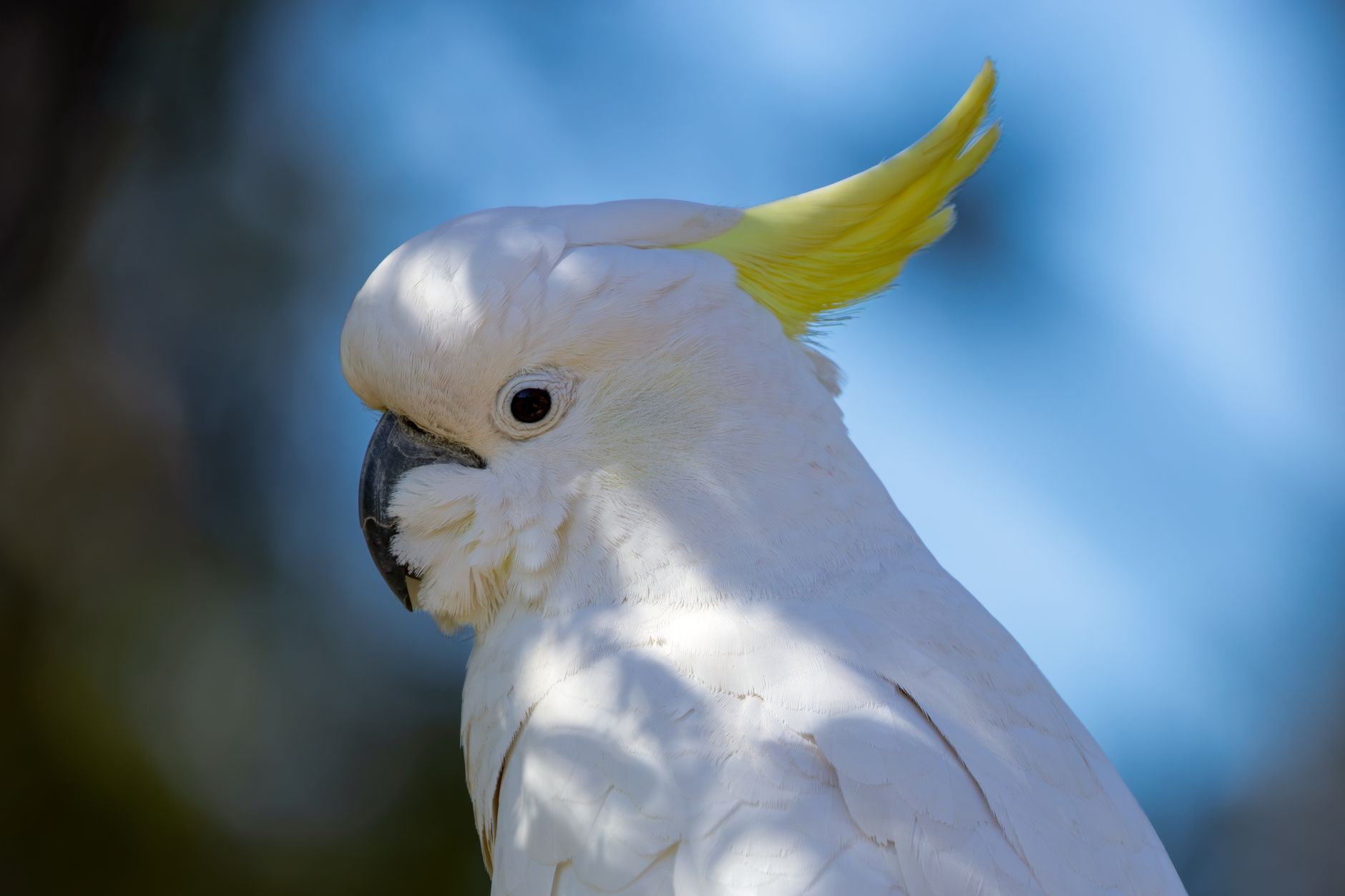
Sulphur-crested cockatoos, prevalent throughout eastern Australia’s cityscapes, are showcasing complex behaviors that illustrate their ingenuity and adaptability. Among these actions is their exceptional skill in opening wheelie bins, a task that entails much more than merely lifting a lid. The bird starts by grasping the bin’s edge with its beak, elevating the heavy lid, adjusting or securing the lid in position, and balancing along the rim until the lid can be tipped beyond its equilibrium point, granting access to food leftovers inside.
### From Local Oddities to Widespread Practices
This clever adaptation was initially documented in a handful of suburbs in Sydney and Wollongong prior to 2018. However, by the end of 2019, the activity had extended to 44 suburbs, following a clear geographical pattern where it advanced into areas adjacent to those where bin-opening had been previously noted. This observed diffusion raised inquiries about how such behaviors propagate within populations.
### The Importance of Social Learning
A crucial study published in *Science* in 2021 indicated that social learning was a major factor in the dissemination of this behavior. Researchers, including Richard Major and Lucy Aplin, performed extensive surveys and detailed observations, noting that cockatoos in various locations devised distinct methods for executing the task, indicating local foraging traditions rather than a one-size-fits-all solution.
### The Intricacy of Bin Opening
Cockatoos encounter a daunting obstacle course in mastering the sequence of bin-opening. Every step—from securing a grip to flipping the lid—demands precise coordination and balance, highlighting the advanced problem-solving skills of these birds.
### Charting the Behavior
With 1,396 reports gathered from 478 suburbs, researchers utilized network-based diffusion analysis to comprehend the behavior’s distribution. They discovered compelling statistical evidence supporting social transmission, estimating that over 90% of positive suburbs adopted the behavior due to influences from social learning.
### Beyond Genetic Transmission
While genes play a role in shaping the abilities of cockatoos, the findings of the study emphasize the importance of social dynamics. The geographical spread and unique local methods imply that cultural factors, instead of genetic ones, are chiefly responsible for the dissemination of bin-opening abilities.
### Individual and Local Discrepancies
Researchers tagged several cockatoos for tracking purposes and examined 160 successful sequences, identifying both individual variances and local ‘subcultures’ in accomplishing the task. Although some aspects of bin opening remained uniform across individuals, differences in technique appeared across diverse sites.
### A Select Few Pioneers
Not every cockatoo in a flock needs to excel in the technique of bin opening; most can take advantage of the efforts of a few skilled individuals. This has led to an uneven distribution where predominantly male cockatoos achieve successful openings more often.
### Independent Creations
Alongside the gradual spread, researchers discovered a likely independent origin of the behavior in northern Sydney, demonstrating that innovations can emerge multiple times independently, further solidifying the notion of cockatoo culture.
### Human Reactions to Bird Behavior
The behavior of the cockatoos has elicited human responses, including the implementation of various strategies to better secure bins. This iterative interplay suggests a dynamic between species that influences each other’s behaviors, resembling an ‘interspecies innovation arms race.’
In summary, the clever and adaptable characteristics of sulphur-crested cockatoos are exemplified through their capacity to learn complex behaviors socially. Their progress from three to 44 suburbs not only underscores their proficiencies but also illuminates the dynamic interactions between wildlife and urban settings.