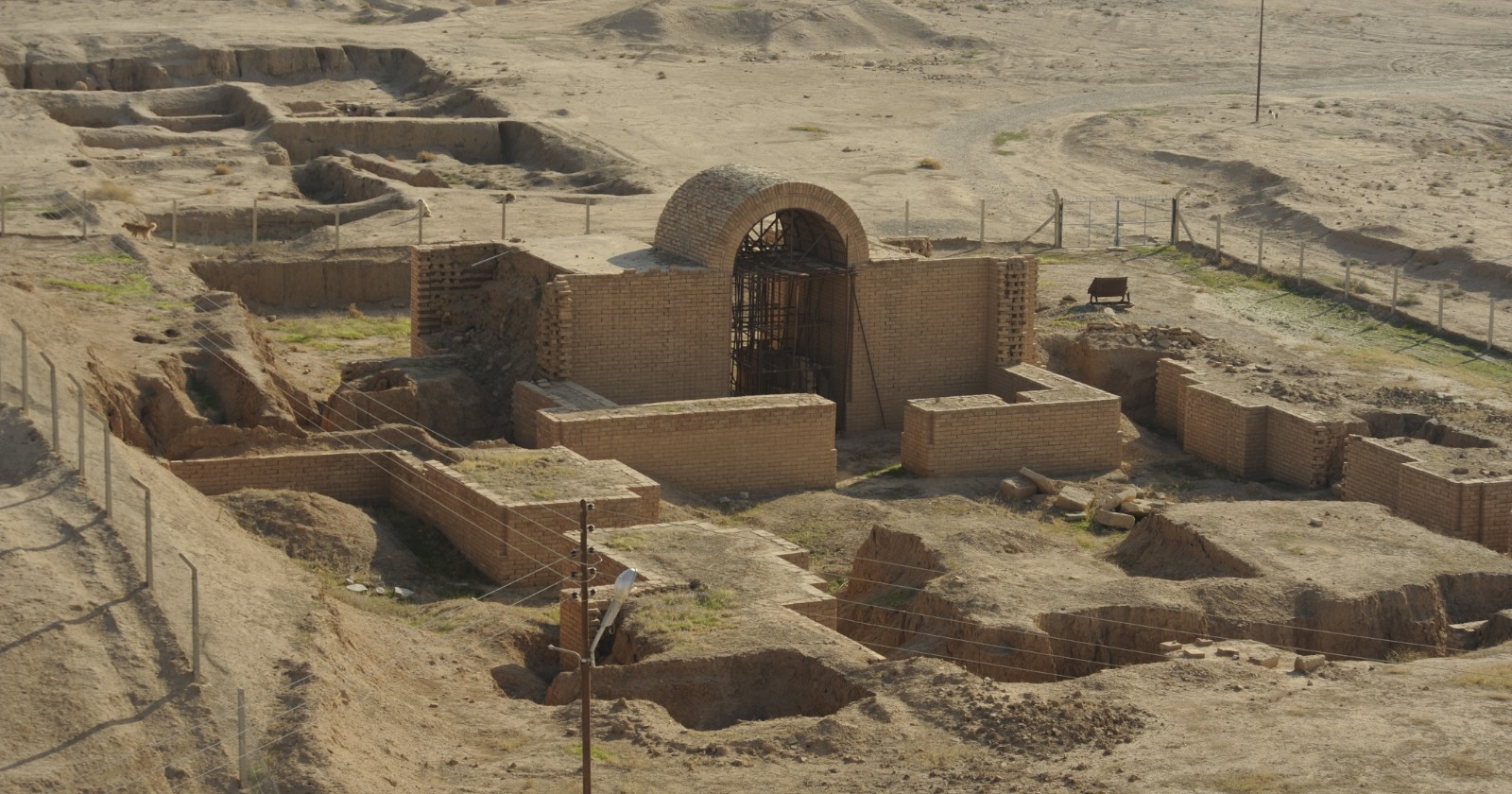
The Assyrian Empire presents a historical mystery, primarily recognized through the lens of its rulers, their royal constructions, inscriptions, and the artistic magnificence portrayed in palace reliefs. This mainly monarchical account has been long influenced by early archaeological endeavors, especially those launched by Austen Henry Layard at Nimrud in 1845. Nimrud, the ancient Assyrian city of Kalhu, functioned as the empire’s center of power from 879 to 707 BC, outlasting other Assyrian capitals as the core of the empire.
Recent initiatives by researchers Daniele Morandi Bonacossi and Francesca Simi have shifted focus from the grand acropolis with its palaces and temples to the vast, largely uncharted lower town of Nimrud. Covering about 340 hectares, similar in size to New York’s Central Park, this region has remained mostly undisturbed since Layard’s era, with only three significant structural exceptions.
The 2025 field season signified a notable change in direction. By employing technologies such as differential GPS, drone surveys, and magnetometry, the project team created a detailed topographic map of the lower town, surveyed it on a grid, and exposed an intricate layout of what once existed—organized street networks, residential neighborhoods, and substantial architectural complexes. This signifies a shift from prior archaeological pursuits primarily centered on the acropolis. The researchers aimed to illustrate a more comprehensive view of Assyrian life beyond the royal sphere—an existence reflected in fortifications, living areas, civic structures, and beyond.
Nimrud stands out for its slight reoccupation after the Assyrian Empire’s collapse in 612 BC, an uncommon occurrence among major Assyrian capitals like Khorsabad and Nineveh. This situation, combined with shallow contemporary agricultural practices, has notably preserved the terrain, facilitating the recovery and examination of artifacts from the third millennium BC to the Islamic period. Initial discoveries include inscribed fragments associated with prominent rulers such as Sennacherib and Ashurbanipal.
Geophysical surveys have been vital, albeit they produce results without chronological indicators, restricting the capacity to date discoveries or accurately ascertain who resided in the unearthed structures. Initial reports suggest the potential that further investigation can unlock, including insights into the city’s water management, challenging the established notions surrounding the Patti-Hegalli canal.
As exploratory efforts persist and the focus advances towards a deeper understanding of everyday Assyrian life, the foundation established thus far showcases an exhilarating chapter of archaeological re-assessment. The endeavor to decode the social and urban landscape of former Assyrian capitals through innovative technologies sets a precedent for future inquiries, potentially revealing aspects beyond royal narratives towards a richer appreciation of the Assyrian lifestyle.